
Colorado: legalization of recreational cannabis is linked to a decrease in opioid prescriptions


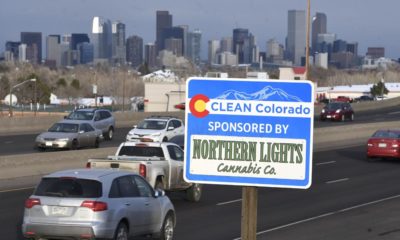
New research shows that the legalization of recreational cannabis is linked to lower opioid prescriptions in Colorado. For this study, researchers chose to compare the states of Maryland and Utah with Colorado, since these three states were among the first to legalize recreational cannabis. Maryland has similar demographics in terms of population, home ownership and education levels. Utah, however, is the most similar state geographically, and has a median body mass index similar to Colorado's, an essential piece of data for analyzing the volume of opioids prescribed. Its median income is also comparable to that of Colorado.
The study authors examined prescription rates in the three states for nine opioid analgesics (oxycodone, fentanyl, morphine, hydrocodone, hydromorphone, oxymorphone, tapentadol, codeine and meperidine), and two drugs used to treat opioid use disorders (methadone and buprenorphine) between 2007and 2017. To provide a baseline for comparison, they converted the quantity of each drug dispensed into what the equivalent would be in oral morphine doses in milligrams (MME). According to the study, Maryland had the highest quantity of pharmaceuticals distributed during the study period, since in 2011, the weight of 11 opioids peaked at 12,167 kg MME. This was more than double the weight found in Colorado and Utah, peaking at 5,029 kg MME in 2012 and 3,429 kg in 2015, respectively. The two most prescribed opioids in all three states were methadone and buprenorphine.
When the researchers looked specifically at drugs prescribed to help people who abuse opioids, i.e. methadone and buprenorphine, they found that Utah reduced the number of prescriptions by 31% over the study period. Colorado and Maryland, however, both increased these prescriptions by 19% and 67%, respectively. This shows, on the one hand, the extent of the problem of opioid addiction in the USA, but also the willingness to get rid of these addictions.
The study concluded that Colorado and Maryland experienced an overall decline in opioid sales, although the decrease was greater in Colorado. It's not yet clear why this decline was particularly significant in Colorado, but the researchers suggest that many residents are now sourcing from recreational cannabis circuits. That's right, a study in the Journal of Psychoactive Drugs had shown that 65% of recreational cannabis users in Colorado did so to relieve pain.
Medical cannabis can be prescribed in Colorado if the patient has a prescription for opioids, as it is already the case in Illinois. The state's positioning may explain this more significant decline than in Maryland or Utah.















From Marathons to Ultratrails: How Extreme Running Affects the Endocannabinoid System

Four days of THC may make breast cancer less aggressive, according to a new study

Medical Cannabis: 14 Organizations Finally Call for Enforcement of the Law

One year after the launch of the Dutch cannabis experiment, the first trends are emerging

High Ground: The Crash of a Plane Full of Marijuana That Made History in Yosemite

The United Kingdom Is Moving Closer to a Regulated CBD Market

Mexico's Supreme Court Authorizes Cannabis-Infused Edibles for Personal Use

French medical cannabis remains stalled at the Ministry of Health

Things are heating up between Sherbinski and Doja

Cookies Ordered to Pay $61.5 Million in a Dispute with Its Investors
-
 Cannabis and driving7 days ago
Cannabis and CBD: French Drivers Can Now Lose Their License Even Without a Positive Test Result
-
Cannabis in France1 week ago
Cannabis Legalization: The LFI Bill Has a Major Problem—THC
-
Cannabis in Europe2 weeks ago
Andorra Paves the Way for Medical Cannabis Cultivation
-

 Cannabis in the Netherlands2 days ago
One year after the launch of the Dutch cannabis experiment, the first trends are emerging
-
Cannabis in France3 days ago
French medical cannabis remains stalled at the Ministry of Health
-
Cannabis in France2 weeks ago
Drought: Could Hemp Become the New Hope for French Farmers?
-
Business2 days ago
The United Kingdom Is Moving Closer to a Regulated CBD Market
-
Cannabis in the U.S.2 weeks ago
United States: Congress Rejects Ban on THC Derived from Hemp













You must be logged in to post a comment Login