
Brazil's Supreme Court decriminalizes cannabis possession

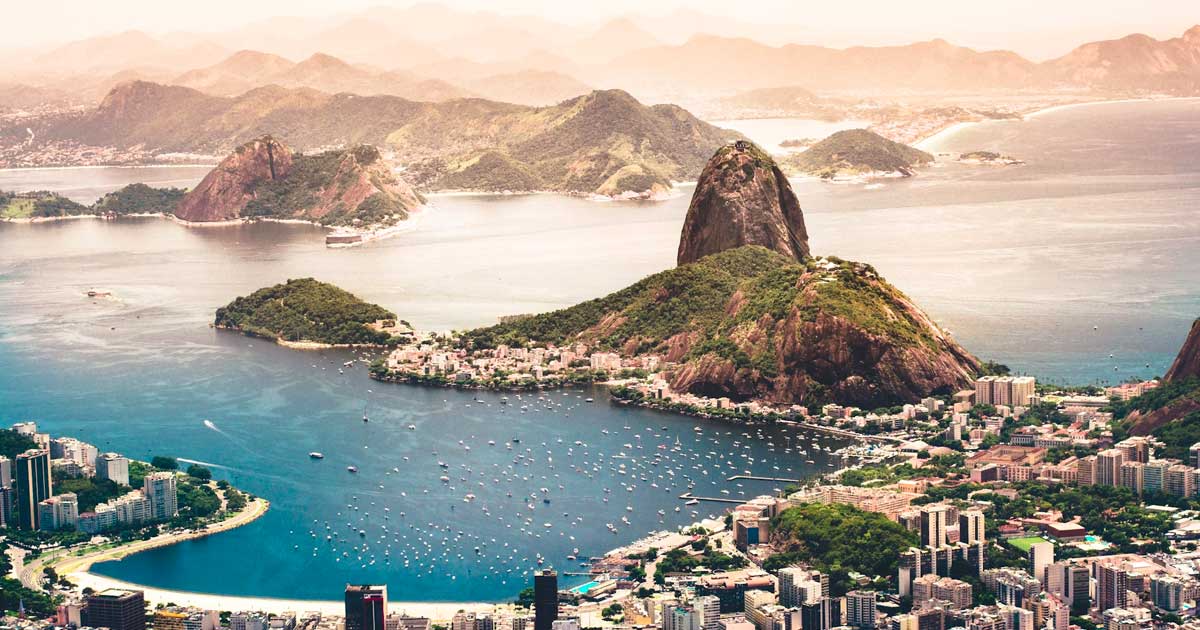
Brazil's Supreme Court has taken an important step toward decriminalizing the possession of cannabis for personal gain, putting the country on the same level as several other Latin American countries. This historic decision, which was finalized with Tuesday's final votes, marks a crucial shift in Brazil's drug policy and has been in the works for years.
Deliberations began in 2015, and since a majority of the Court’s 11 members voted in favor of decriminalization, this is expected to reduce the’the country's huge prison population.
Supreme Court Decision
The Supreme Court justices agreed that the decriminalization should apply only to the possession of quantities intended for personal use. The sale of cannabis will remain illegal. However, the exact amount that will be considered personal use has yet to be determined. This clarification is expected to be finalized shortly.
In 2006, the Brazilian Congress passed a law aimed at combating small-scale drug possession by providing for alternative penalties such as community service. However, the vague nature of the law made it impossible to define specific quantities, leaving law enforcement and judicial authorities to interpret the line between personal use and drug trafficking. This ambiguity has led to numerous arrests for small amounts of drugs on trafficking charges, which has exacerbated Brazil’s already critical prison overcrowding.
The Supreme Court's decision is expected to ease the burden on the Brazilian prison system. Ilona Szabo, president of the Igarape Institute, pointed out that a large proportion of those detained or convicted of drug trafficking are first-time offenders who transport small quantities of illicit substances. They are often unarmed and have no ties to organized crime.
Legislative Challenges
Despite the Supreme Court's ruling, The legislative landscape remains complex. At the same time, Congress is putting forward proposals that could tighten drug laws. In April, the Senate approved a constitutional amendment aimed at criminalizing the possession of any amount of illicit substances. This proposal has passed through the lower house’s constitutional committee and still needs to be approved before it can be put to a vote. If adopted, this legislation would override the Supreme Court’s ruling, although it could be subject to constitutional challenges.
Senate President Rodrigo Pacheco said the issue should be resolved through legislative means rather than judicial decisions, reflecting the current tensions between the judicial branches and Brazil's legislative process regarding drug policy reform.
Activism and Public Reaction
For many activists and legal experts, the Supreme Court's decision is a long-awaited victory in a country where the prison population is one of the largest in the world. Critics of the current legislation argue that users caught with small amounts of drugs are often convicted of trafficking and end up in overcrowded prisons, where they may be forced to join prison gangs. Cristiano Maronna, director of the civil society group JUSTA, emphasized that drug trafficking is the main cause of incarceration in Brazil.
The decriminalization movement also highlights racial disparities in the Brazilian criminal justice system. According to a study by the Insper Institute, Black people found in possession of drugs are slightly more likely to be charged as drug traffickers than their white counterparts.
Regional Context
Brazil's decision to decriminalize cannabis follows trends observed in other Latin American countries. Thus, the’Uruguay has fully legalized cannabis for recreational use in 2013, and the Colombia has decriminalized possession ten years ago. However, recreational sales remain illegal in Colombia despite ongoing legislative efforts.
In Argentina, the Supreme Court ruled in 2009 that criminalizing adults for personal use of cannabis was unconstitutional, even though the law itself had not been amended. Similarly, the’The medical use of cannabis is permitted in Brazil and in other countries such as Argentina and Mexico, although it is often subject to strict regulations.





















EFSA Gives Initial Approval for Synthetic CBD; Natural Extracts Still Pending

Federal Cannabis Reform Once Again on Hold in the United States

Contest: Win a trip to Quebec to experience the hemp harvest firsthand

Bedrocan on Hold Amid Uncertainty Over Medical Cannabis

Newsweed Launches Its Own AI
A new tax of 0.5% could disrupt the hemp industry in Canada

Medical Cannabis and Driving: New South Wales Ends Automatic Penalties for THC

China's Yongji Health Takes Control of Tasmanian Botanics

Autism and Cannabis: Results from the First Placebo-Controlled Trial of NTI164

Which countries legalized medical cannabis before France?
-
 Cannabis and driving3 weeks ago
Cannabis and CBD: French Drivers Can Now Lose Their License Even Without a Positive Test Result
-

 Cannabis in France6 days ago
Which countries legalized medical cannabis before France?
-
Cannabis in France3 weeks ago
Cannabis Legalization: The LFI Bill Has a Major Problem—THC
-
Cannabis in the Netherlands2 weeks ago
One year after the launch of the Dutch cannabis experiment, the first trends are emerging
-
Business6 days ago
South Korea is preparing to begin local production of medical cannabis to meet rising demand
-
Cannabis in Thailand6 days ago
From the boom in dispensaries to a purely medical approach: Thailand is revising its cannabis policy
-
Cannabis in Argentina2 weeks ago
Argentina Opens Its Market to Hemp Flowers Containing 1% of THC
-
Cannabis in France2 weeks ago
French medical cannabis remains stalled at the Ministry of Health













You must be logged in to post a comment Login