

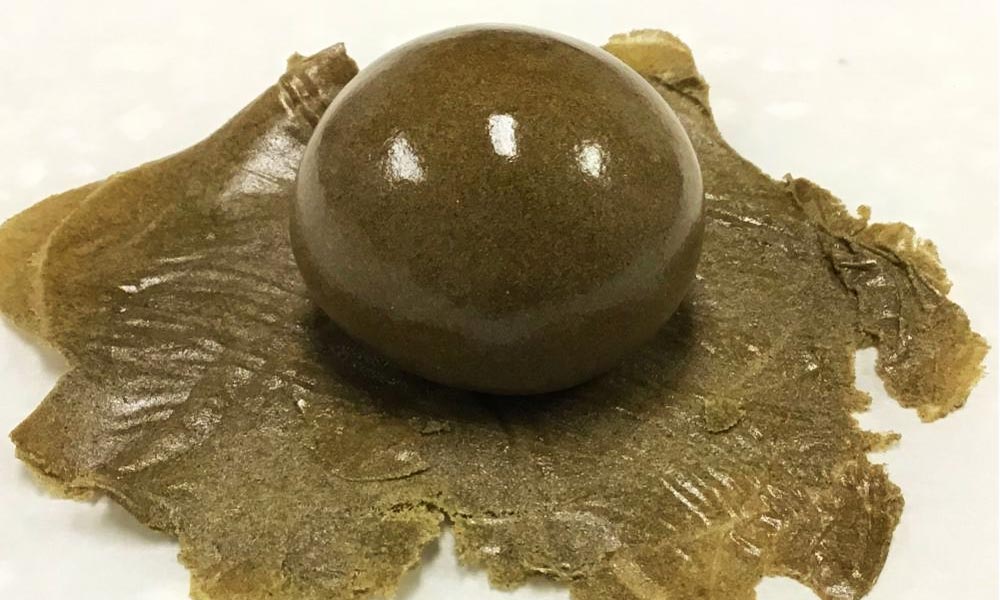
What is hashish?
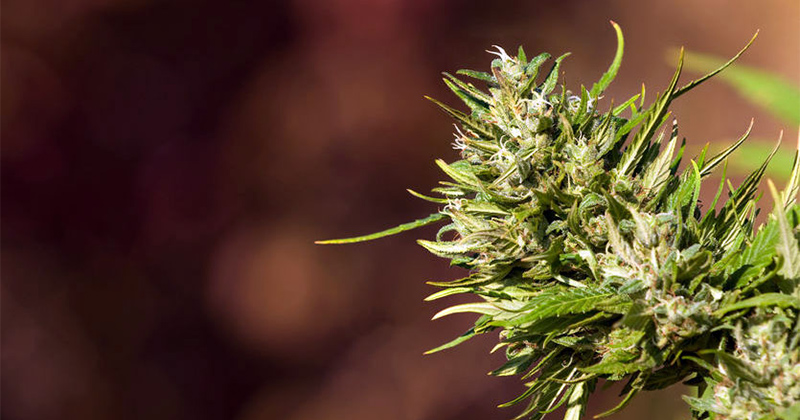
To understand what hashish really is, we need to look at the structure of a cannabis plant, and in particular its flowers. Cannabis flowers have white crystals, the famous trichomes, which are the plant's factory of active ingredients. In fact, it is at the heart of these resin glands that the plant's cannabinoids and terpenes.
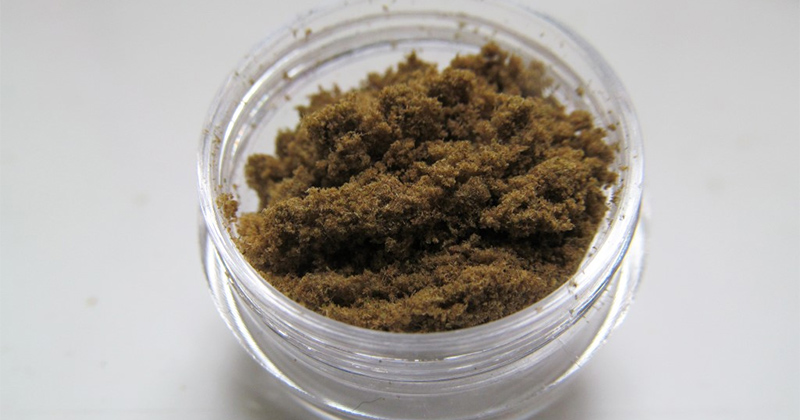
Hashish is made from sufficiently mature trichomes, separated from the plant material and agglomerated to create a compact cannabis resin. This is the oldest and most widespread form of concentrated cannabis in the world, and predates all modern extractions.
Where does hashish come from?
The word «hashish» (also spelled hashish or simply hash) comes from Arabic and translates roughly as «herb». Some documented uses date back to 900 AD, although methods such as the charas seem to have existed for much longer in Himalayan regions.
For the complete history of hashish, from its origins to its worldwide ban, see article dedicated to the history of hashish. To understand specifically how cannabis has arrived in France, We've also devoted a full article to the subject.
The different types of hashish in the world
With the resurgence of cannabis in the 1960s, hashish regained its place in the spotlight. The major cannabis-producing regions each developed their own distinct methods and profiles.
Moroccan hash is by far the most widely consumed drug in France, historically imported in the form of pressed chips. Morocco is the world's leading producer of cannabis resin: plants grown in the Rif are harvested, dried and then sieved to separate the trichomes, the so-called pollen, before being hot-pressed into slabs. Quality varies considerably depending on the Rif region, the varieties used and the degree of refining.
Indian and Nepalese charas is a resin harvested by hand, rubbing fresh flowers between the palms. This technique yields a supple, highly aromatic hash, whose Malana Cream is the most famous example.
Afghan and Pakistani hash (Black Afghan, Afghani) is a pure indica pressed at high temperature, producing dense, dark slabs with highly sedative effects.
Lebanese hash comes in two distinct qualities: red (riper, darker) and yellow (fresher, lighter).
For a complete overview, Newsweed has devoted an article dedicated to the different types of hashish.
Hashish and modern hash: the evolution of methods
It wasn't until the late 1980s that mechanical trichome separation was reintroduced in the West. The master sifter by John Gillardi used vibrations to separate the trichomes from the flowers - the forerunner of the modern dry sift.
Neil Schumacher and Rob Clarke then began experimenting with water extraction methods, the ancestors of the water hash and ice water hash. In 1997, Reinhard C. Delp presented the equipment at the High Times Cannabis Cup. His patents were then adapted in Amsterdam by Mila Jansen with its Pollinator and Ice-O-Lator screens. In the USA, Marcus «Bubbleman» Richardson launches his BubbleBags.
This evolution gave birth to the bubble hash, an ice-water extraction that concentrates trichomes without solvents, and today's premium forms such as hash WPFF and the Piattella.
What is the THC content of hashish?
Hashish is naturally more concentrated in THC than the flower, since it corresponds to a concentration of trichomes. For information :
| Type of hash | Approximate THC content |
|---|---|
| Standard Moroccan Hash | 10–20% |
| Premium Moroccan Hash | 20–35% |
| Charas / artisanal hash | 15–30% |
| Kief pressed | 40–60% |
| Bubble hash (ice water) | 50–70% |
| Full melt / Piattella | 60–80% |
These figures vary according to the quality of the starting cannabis, the extraction method and the degree of purity. Street hash sold in France is very often cut with harmful products, This lowers the actual THC content and may create additional health risks.
How to make hashish?
Making hash today requires very little equipment: a camping washing machine, access to water, ice cubes and sieves. For obvious reasons, we can't tell you more about how hashish is made. countries where cannabis is legal, some hashish masters, such as Frenchy Cannoli, give hash-making course, using traditional methods brought up to date.
How to recognize a good hashish?
Several criteria can be used to assess the quality of a hash, particularly in an unregulated market where cuts are frequent.
The color Quality hash ranges from golden beige to light brown, depending on the type. Hash that is too green contains chlorophyll - a sign of excessive plant matter. Very black, compact hash is often a sign of over-pressing at high temperatures or of added products.
The texture Good hash is supple and malleable at room temperature, and slightly sticky when heated between the fingers. A hash that crumbles into greyish or sandy dust is of poor quality. A hash that completely resists finger heat is suspect.
The flame test When heated over a flame, a quality hash bubbles and burns with an even ember, hence the term "hash". «if it ain't bubble, it doesn't worth the trouble». Cut hash sizzles, emits a chemical or plastic odor, or leaves black charred residues.
The aroma Quality hash gives off distinct, recognizable aromas - earthy, spicy or floral, depending on its origin. Hash with no smell or a chemical smell is a bad sign.
Extractions are not hashish
An important semantic point: Americans often speak of hash to designate extractions like BHO, shatter or wax. Yet these are fundamentally different products.
Technically speaking, hash is the mechanical removal of trichomes, agglomerated without chemical solvents. BHO, PHO and others rosin are solvent or pressure and heat extractions - with distinct processes and consumption profiles. The confusion stems from the American legal markets, where the term hash has expanded, but it remains an inaccurate approximation.
How is hash consumed?
Hashish is traditionally consumed as chillum or infused in a milky drink, the bhang. In France, it is mainly smoked mixed with tobacco or accompanied by cannabis flowers.
Some high quality hashes, especially full melt hashes such as bubble hash 6 stars or Piattella, can be sprayed on a hot surface with a dabber or in a spray compatible concentrates. Less pure hashes leave residues and are less suitable for dabbing.
The effects of hash are stronger than those of flowers due to the higher concentration of cannabinoids - dose with care, especially for novice users.




New Caledonia Adopts a Historic Roadmap for Hemp

Europe authorizes the first cannabis-derived medicine for the treatment of chronic pain

House of Seeds: the European seed bank that selects the world's best cannabis genetics

140 products, 600 points of sale: Morocco's medical cannabis market continues to take shape

Trulieve is set to become the first U.S. cannabis company listed on the New York Stock Exchange

Brazil debates 1% THC limit for hemp

Cannabis in Europe: A German Week (June 2026)

Devil’s Harvest Seeds is back with a new brand identity and more than ten new strains

The WNBA has removed cannabis from its list of banned substances
