New Caledonia Adopts a Historic Roadmap for Hemp


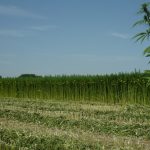
On June 5, 2026, the New Caledonia Congress adopted an ambitious strategic plan aimed at establishing a fully-fledged hemp industry in the territory.
Through a roadmap covering the period 2026–2030, elected officials intend to make industrial hemp a driver of economic diversification, agricultural development, and health innovation in a context marked by the archipelago’s economic challenges.
A response to New Caledonia's economic crisis
New Caledonia has been going through a particularly difficult economic period for several years. Following the riots of May 2024 and the collapse of the nickel sector, the territory is seeking new sources of growth. In this context, the development of a tropical hemp industry emerged as a strategic opportunity.
The adopted document states that the global hemp market could grow from $9.47 billion in 2024 to nearly $48 billion by 2032. Project leaders believe that New Caledonia has the climatic and geographical advantages needed to establish itself in this rapidly expanding market.
According to the plan: “This isn’t about cannabis, but rather a regenerative agricultural crop that creates local jobs, allows us to produce our own building materials and cooking oils, and reduces our imports. New Caledonia has the opportunity to become a pioneer in tropical hemp cultivation.”
The stated goal is to develop locally sourced bio-based materials, food seeds, vegetable oils, proteins, as well as extracts rich in CBD and CBG, while reducing dependence on imports.
Six key areas for building a comprehensive industry
The strategic plan is based on six main objectives.
The first step is to establish a legal framework. The authorities aim to clearly define hemp as a variety of Cannabis sativa L. containing no more than 0.3% THC, in accordance with international standards. A list of authorized varieties is expected to be established and updated annually.
The second priority is to organize agricultural production. Based on the pilot tests conducted, the project calls for the creation of a network of plots spread across the various provinces in order to mitigate climate risks and ensure consistent production. Contracts between producers and cooperatives are expected to guarantee minimum volumes and prices.
At the same time, a local seed bank should be established to ensure the availability of crop varieties suited to the region’s tropical conditions.
One of the plan’s key objectives is to keep the value added within the region. To this end, New Caledonia aims to establish its own processing infrastructure.
Future workshops could produce oils, flours, hemp shiv-based building materials, textile fibers, and products for export. A comprehensive traceability and quality control system is also planned to meet the requirements of international markets.
Authorities are also considering the creation of a label “Chanvre NC”, designed to certify the origin and quality of local products.
An ambition to expand into the Pacific
The project is not limited to the domestic market. The plan’s authors identify several potential regional markets, including Australia, New Zealand, Japan, Korea, and French Polynesia.
The goal is to make New Caledonia a benchmark for tropical hemp in the Pacific region. The document calls for the development of products specifically tailored for export, particularly flowers rich in CBD, and CBG-rich strains, edible seeds, and bio-based materials.
To support this strategy, the authors of the plan also propose the establishment of a free-trade zone-style mechanism to enhance the competitiveness of local exports.
Medical-grade CBD and CBG under scrutiny
The authorities wish to establish a specific framework to allow the use of CBD and CBG for supervised therapeutic use. Clinical trials could be launched to address issues such as sleep disorders, mild anxiety, or certain types of chronic pain.
The plan also calls for the creation of a dedicated scientific committee and the development of a local extraction industry that will utilize technologies such as supercritical CO₂.
Products intended for these uses should have an undetectable level of THC and be distributed exclusively through a regulated medical channel.
A tool for addiction prevention
The authors of the plan also draw a connection between the development of the hemp industry and public health policies.
New Caledonia is facing high levels of illicit cannabis use, particularly among young people. The report notes that more than half of 16- to 18-year-olds have reportedly tried cannabis, and that about one-third use it regularly.
With this in mind, project leaders hope to use products containing CBD and CBG as complementary tools in certain risk reduction and support initiatives.
In particular, an information campaign is being considered with the message: “Hemp soothes; it doesn’t dull the mind.”
The plan also calls for the introduction of an educational module titled “Hemp ≠ Cannabis” in schools to clearly distinguish between the uses of industrial hemp and those of recreational cannabis.
A roadmap through 2030
With this resolution, New Caledonia has, for the first time, adopted a comprehensive strategy covering the entire value chain of hemp: agricultural production, industrial processing, export, medical research, and prevention.
The next step is to turn this roadmap into concrete achievements. If the goals are met, the region hopes to become one of the leading hemp hubs in the Pacific by 2030.


























«Vincy Gold»: Humboldt Seed Company on the Hunt for Saint Vincent Sativas

Cronos Completes the Acquisition of CanAdelaar for 57.5 million euros

Cannabis with a "bloody" twist: Discover Sensi True Blood and Sensi Sangria, the two new strains from Sensi Seeds

Hemp: The Council of the EU Takes a Stand on New Production and Marketing Rules

Missouri's legal cannabis market accounts for 93 % of consumer spending

THC Gummies: How to Read a Certificate of Analysis Before Buying

British patients now have access to THCV-rich cannabis flowers

Spain: Medical Cannabis Is Coming to About 50 Hospitals

JIHE 2026: Japan’s Largest Trade Show Dedicated to Hemp and CBD Returns to Tokyo with More Than 100 Industry Players

New Caledonia: The Courts Clear the Way for the Return of CBD
-
 Business3 weeks ago
The legal cannabis market in New York exceeds 4 billion $ in revenue
-

 Cannabis in France4 weeks ago
Which countries legalized medical cannabis before France?
-
Cannabis in France1 week ago
France already has 3,000 cannabis retail outlets. None of them are legal.
-
Business4 weeks ago
South Korea is preparing to begin local production of medical cannabis to meet rising demand
-
Cannabis in the U.S.1 week ago
A DEA report confirms that there are no fatal cannabis overdoses
-
Cannabis in Thailand4 weeks ago
From the boom in dispensaries to a purely medical approach: Thailand is revising its cannabis policy
-
Cannabis and driving4 weeks ago
Medical Cannabis and Driving: New South Wales Ends Automatic Penalties for THC
-
Cannabis in France3 weeks ago
France’s Drug Policy Chief Defends Cannabis Prohibition... and Runs Into the Facts

















You must be logged in to post a comment Login