THC-A products: why aren't they available in France?


The THC-A, which stands for’tetrahydrocannabinolic acid, The term «CBD» has become as much a catch-all term in the USA as "CBD" is today in France - it should refer only to the cannabidiol molecule, but is used to describe CBD products, high-CBD hemp plants and CBD flowers.
While U.S. dispensaries and online retailers are promoting THC-A-based products as a legal alternative to traditional cannabis, these products have not seen the light of day in France.
So what are THC-A products, how does THC-A differ from THC, why is it gaining in popularity abroad and why is it being used in the United States? the french legal framework leaves no room for these products?
What is THC-A?
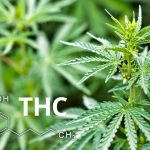
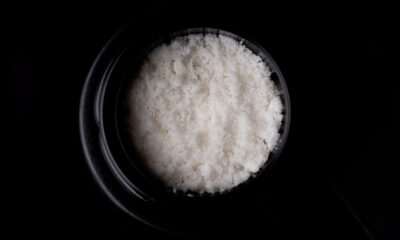
The THC-A is the natural, non-activated form of THC found in raw Cannabis plants. Chemically, it is a precursor: it is only when exposed to heat or light that it undergoes a process called decarboxylation (it loses a carbon atom), transforming into delta-9-THC, the compound responsible for the psychotropic effects of cannabis.
Chewing raw Cannabis flowers or blend them into a smoothie will not produce the «high» associated with THC. However, once smoked, vaporized or cooked, the THCa it contains is rapidly converted into THC.
This distinction explains why the raw cannabis has gained popularity in some health circles, with consumers encouraging its consumption in juice form or adding it to their diet as a «superfood». Although not intoxicating in its unheated form, THCA may nevertheless offer bioactive effects, with preliminary studies indicating possible anti-inflammatory properties, anti-nausea and neuroprotective.
The legal loophole in the United States
The rapid growth of THCA-based products in the United States stems from the 2018 Farm Bill, which redefined hemp as Cannabis containing less than 0.3 % delta-9 THC by dry weight. As the law makes no mention of THCA, it has created a grey area: hemp flowers with low delta-9 THC but high THCA content are federally legal, even if a single taffe turns them into ordinary THC-rich Cannabis.
This led to a fragmented market. Some states tolerate the sale of THCA flowers under the hemp regulations, while others have been have tightened their laws to restrict it. Local jurisdictions add another layer, setting zoning, licensing and packaging standards. The result is a «Wild West» atmosphere, where hemp companies market intoxicating products under the guise of legality, but without the strict oversight applied to state-licensed cannabis and the taxes that go with it.
How do THC-A products work?
THCA now appears in various product categories:
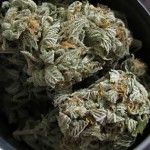
- Flowers THCA flowers: sold in American dispensaries under the name «THCA flowers», they are identical to ordinary cannabis, but are technically non-psychotropic as long as they are not heated.
- Concentrates Vapes pen and other extracts often feature THCA content, designed to be decarboxylated during use.
- Edible products and tinctures In these products, the THCA has already been converted to THC during the manufacturing process, making them functionally indistinguishable from traditional Cannabis edibles, but within the 0.3% THC limit.
This creates a confusing situation for consumers: a product labeled «THCA derived from hemp» may contain less than 0.3 % delta-9 THC, making it compliant with US federal legislation, but once smoked, its psychoactive potential may rival or even exceed that of state-licensed cannabis. The Center for Disease Control and Prevention (CDC) has warned that some hemp-derived flowers sold under the name THCA contain 15 to 20 % of potential THC once decarboxylated.
In other words, the distinction between the THCA derived from hemp and the THCA derived from cannabis is largely a legal fiction. The molecule is identical in both cases, the only difference being the regulatory category of the plant from which it is extracted.
Why doesn't France authorize THC-A-based products?
In France, the situation is, for once, very clear. Faced with a surge in synthetic cannabinoids, France's Agence Nationale de Sécurité du Médicament (ANSM) announced several waves of bans of these new molecules. And to prevent any loopholes around THCa, has included the THCa content in the calculation of the THC content of a product or flower.
Thus, for a product to be legal in France, the decarboxylated matter must not exceed 0.3% of THC. So goodbye (at least legally) to products with 0.2% THC and 18% THC-A.


















CBD in France: Traceability, Retail Stores, THC and Driving… What the New Bill Proposes

Organigram Enters the Race for Aurora Cannabis

Medical Cannabis: Augur Associates’ latest report provides an update ahead of the publication of the decrees

Golden Buds is relaunching its Nova High vape pens with a cannabinoid formula that’s out of the ordinary

Cannabis is now Canada's fifth-largest commercial crop

Bedrocan Finally Declared Bankrupt

After CBD, Can Wellness Exist Without Cannabinoids?

Uganda Launches a Cooperative Dedicated to Medical Cannabis

Ukraine: First Cancer Patient Prescribed Medical Cannabis

Cannabis Oil and Endometriosis: A Promising Study for Pain Relief
-
 Business1 week ago
The legal cannabis market in New York exceeds 4 billion $ in revenue
-

 Cannabis in France3 weeks ago
Which countries legalized medical cannabis before France?
-
Business3 weeks ago
South Korea is preparing to begin local production of medical cannabis to meet rising demand
-
Cannabis in the Netherlands4 weeks ago
One year after the launch of the Dutch cannabis experiment, the first trends are emerging
-
Cannabis in Thailand3 weeks ago
From the boom in dispensaries to a purely medical approach: Thailand is revising its cannabis policy
-
Cannabis and driving3 weeks ago
Medical Cannabis and Driving: New South Wales Ends Automatic Penalties for THC
-
Cannabis in Argentina4 weeks ago
Argentina Opens Its Market to Hemp Flowers Containing 1% of THC
-
Autism3 weeks ago
Autism and Cannabis: Results from the First Placebo-Controlled Trial of NTI164















You must be logged in to post a comment Login