Antigua and Barbuda: When Cannabis Becomes a Cultural Destination and a Tool for Sovereignty

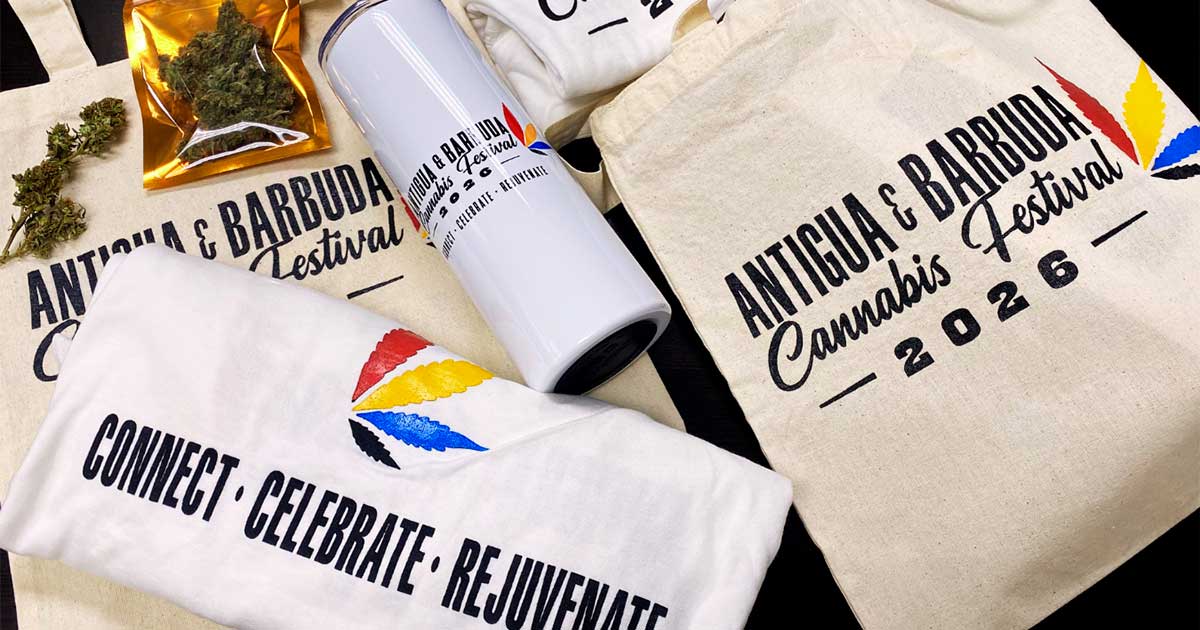
When people talk about legal cannabis markets, their attention almost automatically turns to Canada, certain U.S. states, or, more recently, Germany. With festivals, dispensaries, and standardized products, the collective imagination of legal cannabis remains largely shaped by what these markets have built and chosen to showcase.
We rarely stop to consider the wealth of opportunities emerging in the Caribbean region, which often flies under the international radar. Yet, less than a thirty-minute flight from Guadeloupe, Antigua & Barbuda laid the groundwork for its own legal framework as early as 2018 with the Cannabis Act, incorporating medical use, sacramental (spiritual) recognition, and economic considerations centered on a market conceived in a different way.
I had the opportunity to celebrate 420 on the island and attend the Antigua & Barbuda Cannabis Festival 2026. Through business conferences, cultural immersion, and meetings with industry leaders, this territory is gradually establishing itself in the region as a model shaped by its history, culture, and unique relationship with the plant.
ABC Festival: A Showcase for a Caribbean Model
It would be a mistake to view Caribbean cannabis as a monolithic entity. Each territory operates under its own regulatory constraints, political legacies, and economic ambitions.
In Antigua and Barbuda, this dynamic takes on a particularly revealing form through the Medicinal Cannabis Authority (MCA), thethe agency responsible for regulating the entire market such as licenses for the cultivation and distribution of medical cannabis, product compliance, patient care, and the overall structure of the industry.
But what immediately stands out is the human scale of this institution. Behind this national strategy, the MCA team consists of just five people: Regis Burton, the CEO, along with his team: Casey Maxwell-Roberts, Melissa Hughes, Makeda Brookes, and Curran Benjamin. Five people to oversee an emerging industry, coordinate licensing, ensure compliance, develop cannabis education, and advance the territory’s international ambitions. This disparity speaks volumes about the reality in the Caribbean. Markets that are still young, sometimes fragile, but driven by a very clear political will.
For the past three years, the MCA has been organizing the Antigua & Barbuda Cannabis Festival. Much more than just a cannabis event, the festival serves as a strategic platform where regulators, growers, investors, scientists, entrepreneurs, and spiritual communities come together with a shared goal: to build an industry that reflects the region’s identity.
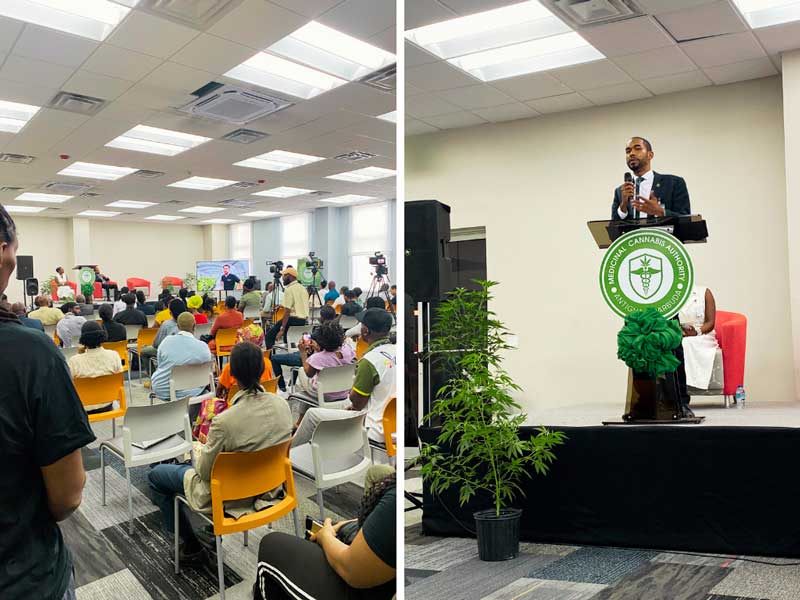
Educational conference & Trade Show. Talk from Regis Burton, CEO of the Medicinal Cannabis Authority
For four days, Antigua becomes a true regional hub. Institutional representatives from Saint Lucia, Saint Vincent and the Grenadines, Saint Kitts and Nevis, as well as professionals from Jamaica, Trinidad and Tobago, the Bahamas, and Barbados, gather there. In a region where inter-island connections are often complicated, this concentration of stakeholders sends a strong message in itself.
The four-day festival is dedicated to networking, business, education, and cultural experiences. From value chain strategy and cultural studies to political debates and regional collaboration, the focus here is no longer on whether the Caribbean should legalize cannabis, but on how it intends to build its industry.
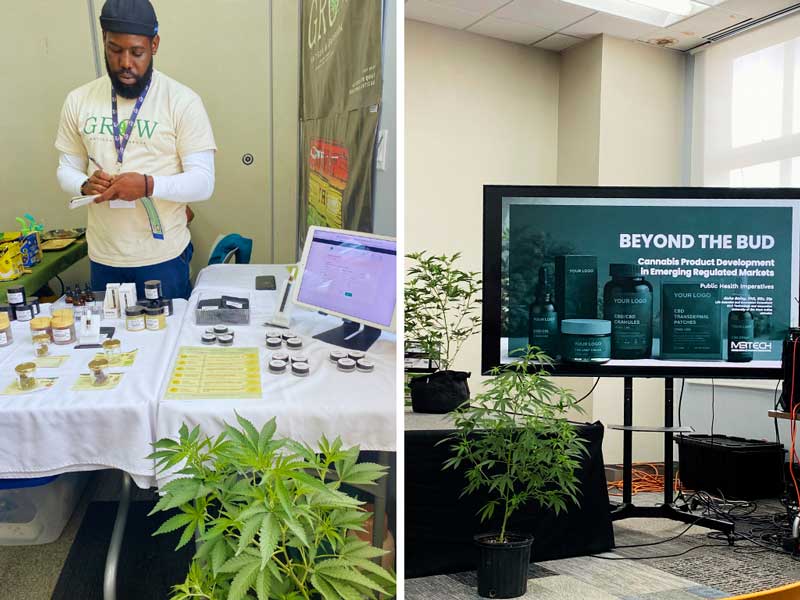
ABC Festival: Exhibitors & Conferences
Exhibitors, an introduction to medical cannabis products, discussions with industry professionals from other islands, product pitches, and panel discussions—from the very first day, the festival immerses visitors in the heart of the Caribbean cannabis ecosystem.
But the ABC Festival isn’t just about conferences and networking. Another day was dedicated to exploring Rastafari culture with an immersive experience at the Tabernacle on Ras Freeman’s lands , a spiritual and community hub where members of the Nyabinghi movement gather. A ceremony organized in honor of the festival and 420 featured Ethiopian songs, an Ital meal, and the sharing of cannabis strains grown on their own land. The generosity and hospitality of this community immediately left a lasting impression.
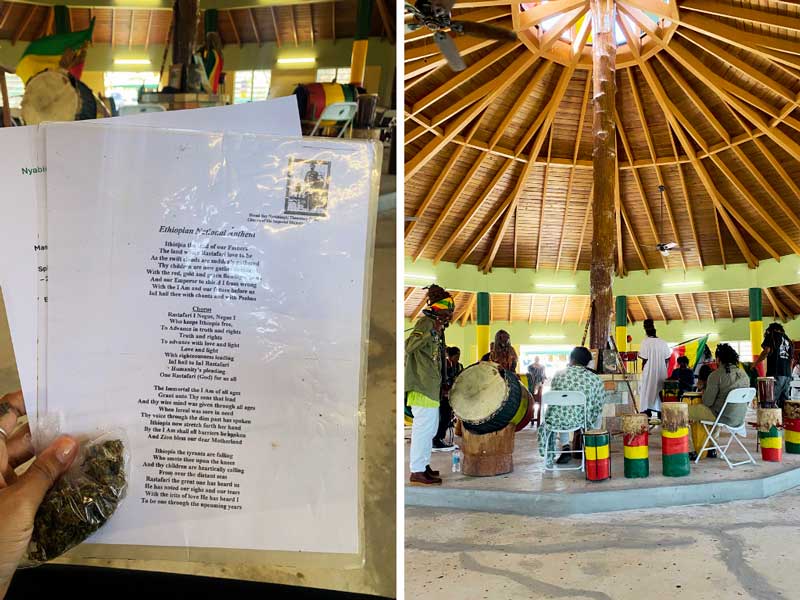
Nyabinghi Ceremony at the Ras Freeman Tabernacle
The festival then deliberately shifts its focus from business to experience: sunset cruises along one of the island’s 365 beaches, infused dinners, the Cannabis Cup, yoga, and cultural immersion. What’s important to understand is that there isn’t really a recreational model in the North American sense. Here, consumption is more about well-being, relaxation, social rituals, and intentional tourism.
This approach is reflected in initiatives such as Humble & Free Wadadli, a cultural ecotourism project led by Kayla Joy and Ras Richie. Through their event Mellow Meds: Touch Grass, they offer an immersive experience centered on yoga, meditation, infused products, meals cooked in Yabba pots (a West African clay pot), sharing the chalice, and exploring Rastafarian cultural practices. Here, cannabis goes far beyond the status of a mere product or commodity. It remains tied to a practice, a philosophy, and a collective memory.
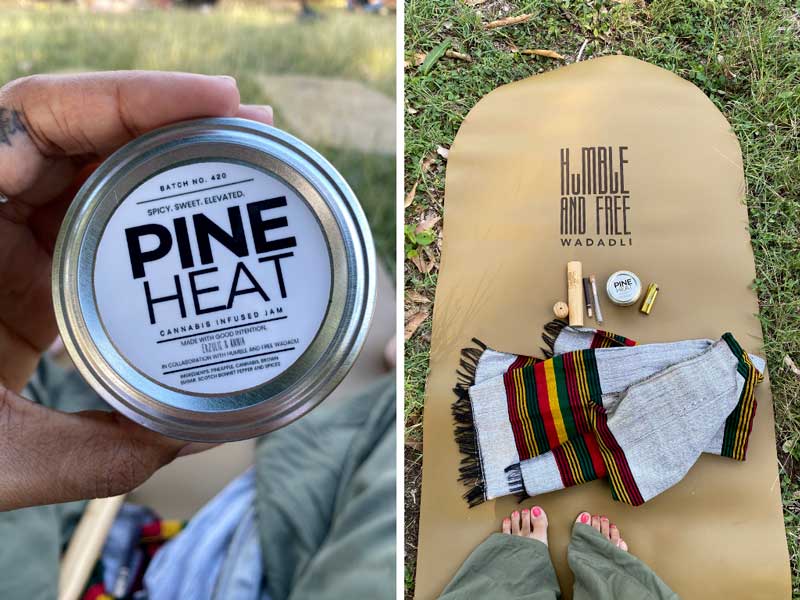
Eco-tourism in Antigua: Humble & Free Wadadli
The Cannabis Cup also serves as a reminder of something many still underestimate: the region’s mastery of outdoor cultivation. The competition brings together indoor and outdoor growers, who are judged on the final quality of their flowers: THC content, terpenes, texture, aroma, and visual inspection. Above all, it confirms that the Caribbean already has a particularly strong outdoor scene, capable of rivaling certain international indoor productions thanks to considerable biological, climatic, and cultural advantages.
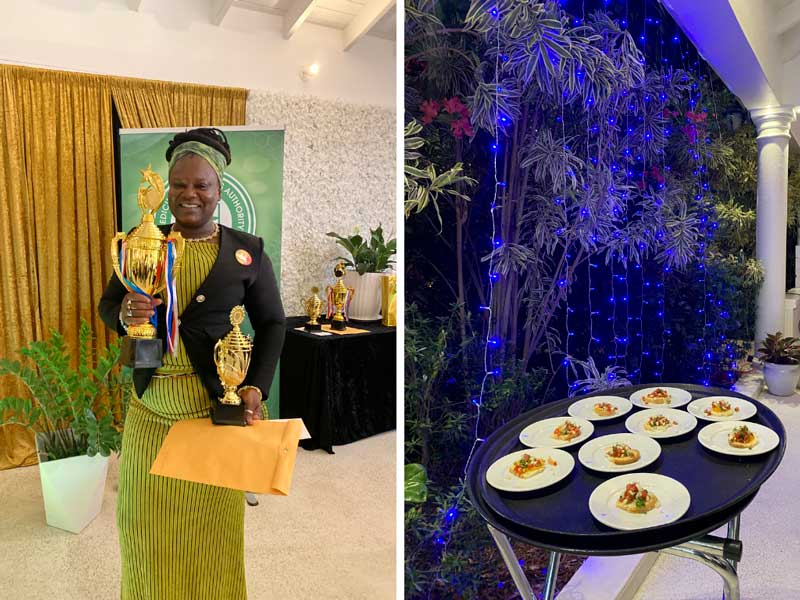
Winner of the "Outdoor" category at the Cannabis Cup, Princess Waszutu Mack
But behind these experiences, these products, and this celebration of regional expertise, a deeper question ran through the entire festival: What role does the Caribbean truly wish to play in the global cannabis industry? For throughout the conferences and discussions, one message kept coming up: “This industry must be shaped by Caribbean people, for Caribbean people.”
There is no question of mechanically replicating North American or European models, nor of turning cannabis into a new export monoculture akin to bananas or sugarcane, with all the historical and colonial baggage that entails.
As Regis Burton pointed out, “the region will not succeed simply because it grows cannabis, but because it will master the science behind it: standardization, intellectual property, formulations, derivative products, and market structuring.”
In other words, the challenge is not merely to legalize. It is to build an industry capable of integrating regional identity, scientific innovation, and economic sovereignty without repeating the dependencies of the past.
Modernizing without erasing the past: Antigua and Barbuda’s challenge
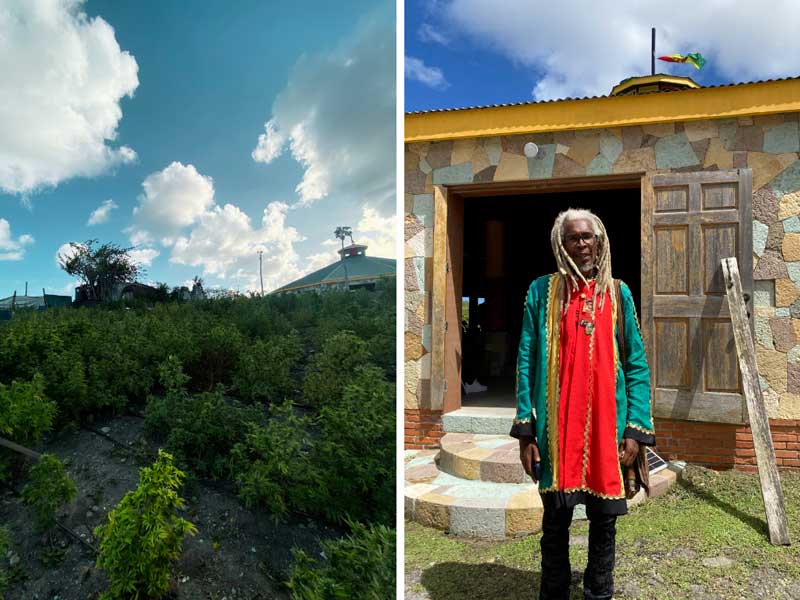
Ras Freeman Tabernacle
To understand how this small territory is building a cannabis market that is unique in the Caribbean, we need to start with a story.
In 2021, I organized an event in Guadeloupe titled Let’s Talk Cannabis, designed as a forum for discussion on the development of the legal market in the French West Indies. During a conversation, a CBD retailer emphasized one point. To make cannabis acceptable, he argued, we needed to “break away from the image of the smoking Rasta,” eliminate references to the colors red, yellow, and green, and remove the plant from any Rastafarian imagery deemed too stigmatizing.
That remark immediately reminded me of what we were already seeing in Canada at the start of legalization. Dispensaries designed to look like Apple Stores, strains renamed Sleep, Relax, or Awake, and a clear effort to culturally neutralize the plant to make it more socially acceptable. The message was simple: to legitimize cannabis, we must first erase its history. But in the Caribbean, this logic doesn’t work.
Cannabis cannot be reduced to a simple consumer product or an economic opportunity disconnected from its heritage. It has a social, spiritual and political history that is deeply rooted in the Rastafari communities, long criminalized for a practice that is now gradually being integrated into the legal framework.
In Antigua and Barbuda, this reality has been explicitly acknowledged. The country is among the first in the region to to have granted the Rastafari communities sacramental authorization to cultivate and consume cannabis, which is recognized as a sacred plant in their faith. This recognition goes far beyond religious considerations. It is part of a broader effort within the CARICOM region to address the consequences of decades of criminalization, stigmatization, and exclusion.
In other words, it’s not just about legalization, but about deciding how to legalize. Building a profitable industry without repeating the exclusions of the past. Developing a modern market without erasing those who championed this culture long before it became economically viable.
But building a Caribbean model is not limited to recognizing its sacramental use or regulating dispensaries. Sovereignty is also at stake in something more significant: control over the plant itself.
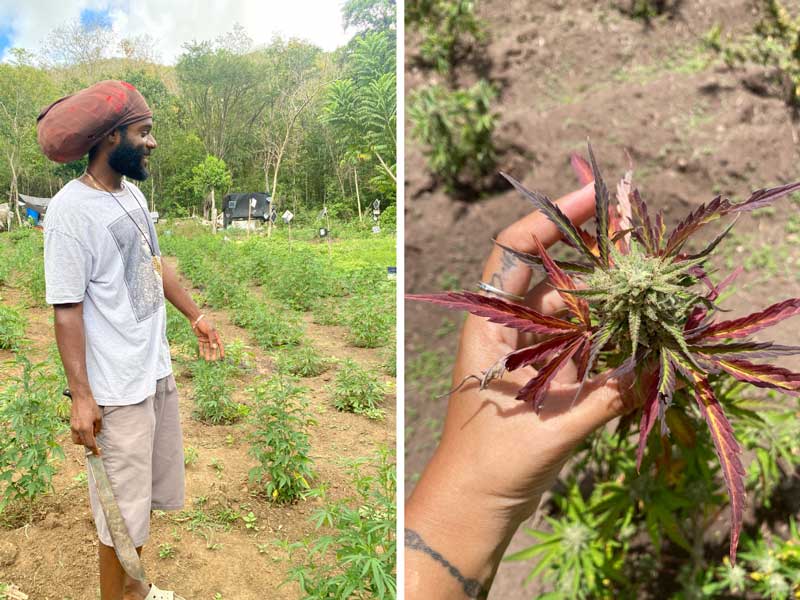
Spanni from Span Lion Genetics. Blueberry Bacio strain
In the field, young growers like Spanni of Span Lion Genetics are already addressing this reality. His approach is based on a simple principle: identifying genetics that can truly thrive in the region’s climate conditions.
Observe outdoor crops, select the most resilient and productive phenotypes—those best suited to the tropical climate, which naturally withstand humidity, rain, pests, and seasonal variations. “If a plant grows almost effortlessly here, that’s the one we need to propagate.” The goal is not just to produce cannabis, but to develop genetics capable of raising Caribbean quality standards to an international level, without relying entirely on imported strains.
Even when he works with genetics inspired by California, the challenge remains the same: acclimating them, observing them, and allowing them to evolve until they develop their own tropical identity. In other words, not copying, but adapting.
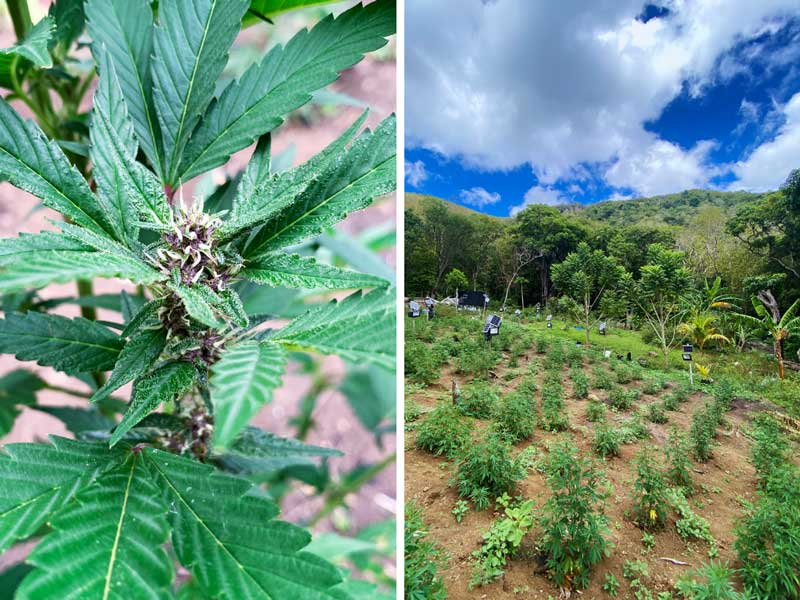
Purple Sorrel cultivar
This line of thinking also applies to market access. For Spanni, a sustainable industry cannot rely solely on large-scale operations or well-capitalized investors. “Not everyone needs a ten-hectare farm.”
In his view, the development of micro-licenses would open up the industry to small-scale growers and prevent legalization from merely replacing criminal exclusion with economic exclusion.
This same vision is shared by John Emanuel, director of HiNix Organics, a company founded by Antiguans that recently obtained its license to grow medical cannabis. Their model is based on outdoor sun-grown cultivation, relying primarily on sunlight and using no pesticides or heavy synthetic inputs.
Beyond the quality of the final product, this approach advocates for a different vision of medical cannabis: production rooted in the region’s climatic realities, creating local jobs, and centered on a form of productive sovereignty rather than a systematic dependence on imported industrial models.
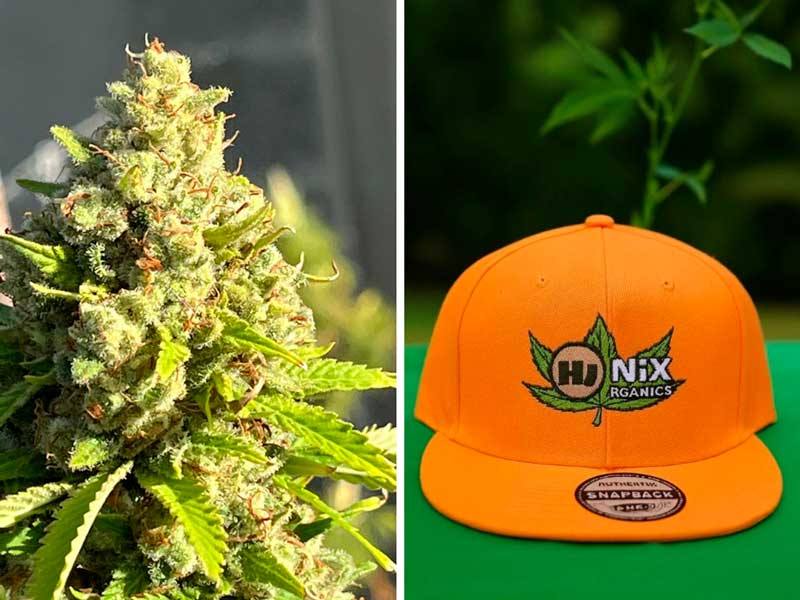
HiNix Organics
In fact, this ambition extends far beyond the borders of Antigua. Even before setting their sights on the United States or Canada, several stakeholders in the region hope first to establish a genuine Caribbean cannabis market capable of facilitating trade among islands that already have a legal framework in place, thereby enabling the flow of products, expertise, and economic value on a regional scale.
In this vision, the Caribbean must not simply become a production hub.
It must become an ecosystem.
Understanding the regions behind the plant
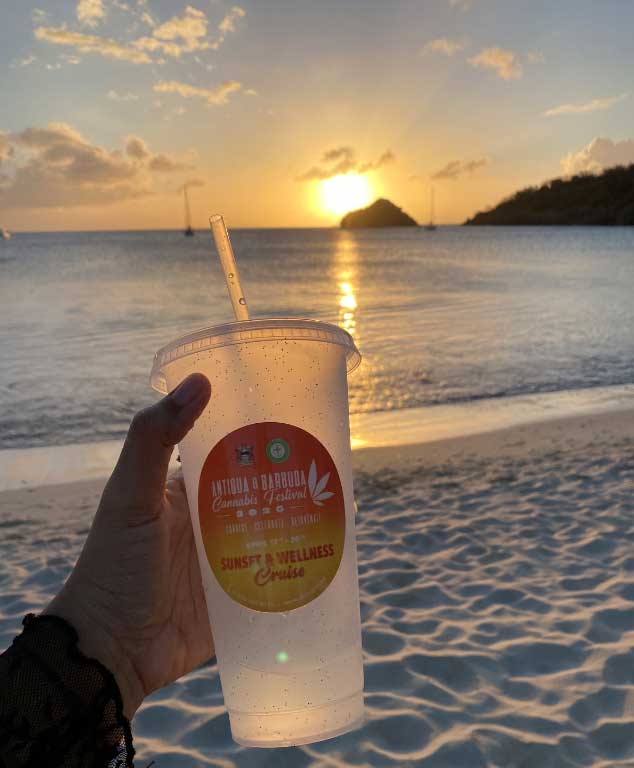
ABC Festival: Wellness Cruise
As I’ve traveled and explored the legal markets in Antigua, Saint Vincent, and Barbados, one thing has become clear: there is no single way of thinking about cannabis in the Caribbean.
Each region develops its own relationship with the plant, shaped by its history, political structure, economic realities, cultural heritage, and the role that Rastafarian communities still play in society today.
For many Western visitors and consumers, cannabis is often seen simply as a product. But in the Caribbean, its significance goes far beyond mere consumption. It remains deeply rooted in cultural, spiritual, and territorial identity.
Because what is currently emerging in the Caribbean may not just be a new industry. It is a different way of thinking about legal cannabis.
















«Vincy Gold»: Humboldt Seed Company on the Hunt for Saint Vincent Sativas

Cronos Completes the Acquisition of CanAdelaar for 57.5 million euros

Cannabis with a "bloody" twist: Discover Sensi True Blood and Sensi Sangria, the two new strains from Sensi Seeds

Hemp: The Council of the EU Takes a Stand on New Production and Marketing Rules

Missouri's legal cannabis market accounts for 93 % of consumer spending

THC Gummies: How to Read a Certificate of Analysis Before Buying

British patients now have access to THCV-rich cannabis flowers

Spain: Medical Cannabis Is Coming to About 50 Hospitals

JIHE 2026: Japan’s Largest Trade Show Dedicated to Hemp and CBD Returns to Tokyo with More Than 100 Industry Players

New Caledonia: The Courts Clear the Way for the Return of CBD
-
 Business3 weeks ago
The legal cannabis market in New York exceeds 4 billion $ in revenue
-

 Cannabis in France4 weeks ago
Which countries legalized medical cannabis before France?
-
Cannabis in France1 week ago
France already has 3,000 cannabis retail outlets. None of them are legal.
-
Business4 weeks ago
South Korea is preparing to begin local production of medical cannabis to meet rising demand
-
Cannabis in the U.S.1 week ago
A DEA report confirms that there are no fatal cannabis overdoses
-
Cannabis in Thailand4 weeks ago
From the boom in dispensaries to a purely medical approach: Thailand is revising its cannabis policy
-
Cannabis and driving4 weeks ago
Medical Cannabis and Driving: New South Wales Ends Automatic Penalties for THC
-
Cannabis in France3 weeks ago
France’s Drug Policy Chief Defends Cannabis Prohibition... and Runs Into the Facts















You must be logged in to post a comment Login