
THC and CBD may have been created by a virus

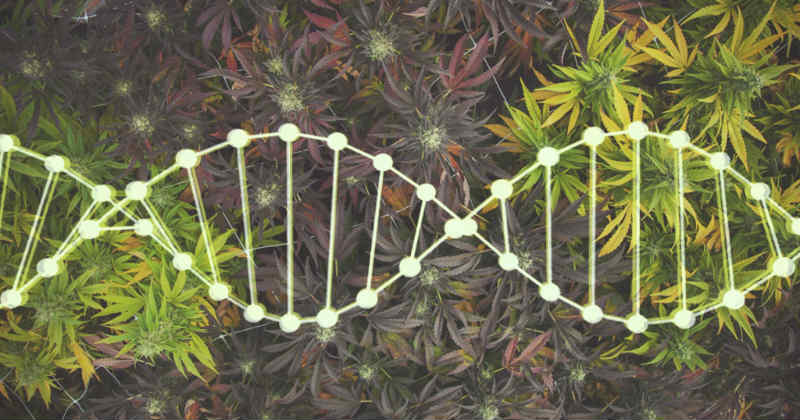
The study, published in the journal Genome Research, is the result of a three-way collaboration between researchers at Aurora Cannabis, the University of British Columbia, and the Mount Sinai School of Medicine in New York. The map details the arrangement of genes on the plant’s chromosomes. This has made it possible to learn more about the past genetic evolution of cannabis, with the goal of guiding its future evolution to adapt it to the needs of the industry and patients.
The Past Genetic Evolution of Cannabis
THC and CBD originated from an ancient virus
The two best-known active ingredients in cannabis—and the ones around which the industry has been built—are THC and CBD. Genetic research on the plant shows that these molecules are the result of a viral infection that occurred millions of years ago. This infection is believed to have permanently altered the plant’s DNA and created the enzymes CBDA and THCA, which, through decarboxylation, provide the THC and the CBD.
THCA and CBDA are located on chromosome 6 of the 10 chromosomes that make up the Cannabis sativa genome. They are surrounded by bands of denatured DNA that indicate viral activity. When a virus enters the organism, its DNA replicates itself repeatedly within healthy DNA cells, spreading throughout the genome. These copies are called retroelements; their presence around the genes that produce THCA and CBDA suggests that these enzymes are the result of a mutation caused by the virus.
THC and CBD are independent of each other
Although the THCA and CBDA enzymes are located on the same chromosome, they are not encoded by the same gene. The genetic sequences of the two enzymes are, however, nearly identical. This DNA similarity suggests that they originally came from the same gene but evolved separately to create two varieties with distinct chemical properties from the same species: CBD-rich hemp and THC-rich «marijuana.» This separation was subsequently exacerbated by human-induced genetic manipulation.
Nevertheless, both hemp and marijuana contain both THC and CBD. Thus, it was unclear whether the two enzymes originated from two different genes or from two versions of the same gene. The map clearly shows that they are encoded in two different genes. It would therefore be technically possible to grow THC-free hemp varieties and, conversely, «marijuana» varieties without CBD. In fact, another study revealed that genetic manipulation aimed at achieving high THC concentrations resulted in underdevelopment of CBD, suggesting that the pursuit of THC was coming at the expense of CBD content.
The Future Genetic Evolution of Cannabis
What can we do with this discovery? This new genetic knowledge could, in fact, make it possible to create varieties that are more resistant to certain diseases or insects. It will also guide the breeders in their development by allowing them to control the levels of certain cannabinoids and achieve the desired medicinal effects. For example, the map also led to the discovery of the gene responsible for a lesser-known but equally interesting cannabinoid: the cannabichromene (CBC). Some of the psychoactive effects of cannabis are thought to be attributable to this cannabinoid, which is believed to activate THC. In addition, it possesses anti-inflammatory properties that are of interest to pharmacology. The discovery of this gene may make it possible to control the concentration of CBC in future cannabis strains.
This is the first time such a detailed map of the plant’s genome has been developed. A preliminary version was published in 2011 by the same researchers, but the difficulty of incorporating cannabis into research hindered the development of this type of study. Public funding was also ruled out due to the raw materials required. «Science hasn’t advanced much so far because of restrictions on research,» explains Aurora’s chief scientific officer, Jonathan Page. «Legalization and the easing of research regulations are creating opportunities for more studies. And Canada is leading the way.».










CBD is said to promote athletic recovery, without improving performance

294 cannabis clubs in Chile: a booming movement with uneven distribution

Chronic Sciatica: New York Approves First Clinical Trial of a THC-Based Medication

United States: The DEA is accelerating the integration of medical cannabis at the federal level

Florida is nearing one million patients using medical cannabis

Uruguay Revives Its Plan to Allow Tourists to Legally Access Cannabis

In Brazil, researchers are developing an innovative CBD eye drop

Autism: Medical Cannabis Is Linked to Reduced Anxiety

The $28 billion U.S. hemp market remains under threat

Jamaica Eases Small Farmers' Access to the Cannabis Market
-
 Business5 days ago
The legal cannabis market in New York exceeds 4 billion $ in revenue
-

 Cannabis in France2 weeks ago
Which countries legalized medical cannabis before France?
-
Business2 weeks ago
South Korea is preparing to begin local production of medical cannabis to meet rising demand
-
Cannabis in the Netherlands4 weeks ago
One year after the launch of the Dutch cannabis experiment, the first trends are emerging
-
Cannabis in Thailand2 weeks ago
From the boom in dispensaries to a purely medical approach: Thailand is revising its cannabis policy
-
Cannabis in France4 weeks ago
French medical cannabis remains stalled at the Ministry of Health
-
Cannabis in Argentina3 weeks ago
Argentina Opens Its Market to Hemp Flowers Containing 1% of THC
-
Cannabis and driving2 weeks ago
Medical Cannabis and Driving: New South Wales Ends Automatic Penalties for THC

















You must be logged in to post a comment Login