
Study: CBD cannabis consumption a problem for THC testing?

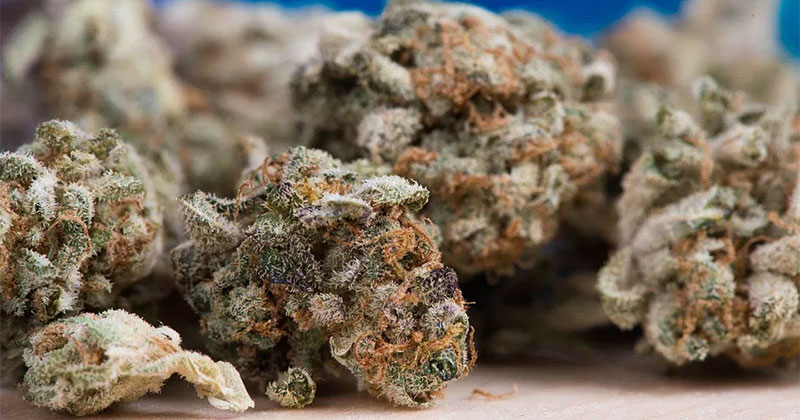
The medical use of cannabis is becoming increasingly widespread. Among the issues raised by this liberalization of its use are the cannabis testing in the workplace, particularly among truck drivers. Medical cannabis typically contains detectable levels of THC, even in CBD extracts. Regular or heavy use of these products is therefore likely to affect THC levels in the blood and hair.
The study in question
A study A study published by the U.S. National Center for Biotechnology Information sought to determine whether consuming CBD-rich cannabis extracts could result in positive THC levels above the legal threshold. To do so, the study assessed the concentration of THC in hair samples from regular users of THC-rich cannabis.
Study participants consumed medical cannabis rich in CBD, sourced from the same producer, but at different daily doses ranging from 4 to 128 mg of CBD per day, and between 0.1 and 4.3 mg of THC. For comparison, if you smoke 1 g containing 20% of CBD and 0.2% of THC, that amounts to 200 mg of CBD and 2 mg of THC, not accounting for pre-inhalation degradation caused by combustion.
After analyzing the samples, the study concluded that despite repeated and heavy use of CBD-rich cannabis extracts, users generally tested negative for THC. However, there is no direct link between the daily dose of CBD and its concentration in hair, which means that other factors come into play during screening.
Only one sample tested positive for THC, but the level was still below the legal limit. Therefore, the use of CBD-rich medical cannabis is not a legal concern for users. That said, certain professions require a zero THC level; this is the case, for example, with federal jobs in the United States. Due to federal prohibition, federal employees do not have access to medical cannabis for fear of losing their jobs.
Compared to France, the permissible THC levels are much lower here. A CBD screening test It can therefore test positive if the person has consumed a CBD product containing legal amounts of THC.
Cannabis Screening
This study is limited to THC concentration in hair, which is, after all, the most accurate method for determining the frequency and level of use. It is undoubtedly the most suitable method for the workplace; however, for determining driving under the influence (which is assessed through saliva testing and, if necessary, blood testing), this method is not valid because it detects use that may date back several months.
At a time when legalization in Canada, determining whether a person is driving under the influence poses a challenge. The most reliable screening method is undoubtedly blood testing, which can detect drug use within 2 to 10 hours after ingestion, but it requires laboratory analysis. Saliva tests are commonly used; they cover the same time frame but are not very reliable. In Canada, there had been discussion of detect the presence of THC in breath, much like a breathalyzer, but this method has not yet been proven effective.






Which countries legalized medical cannabis before France?

From the boom in dispensaries to a purely medical approach: Thailand is revising its cannabis policy

South Korea is preparing to begin local production of medical cannabis to meet rising demand

In the United States, cannabis use among high school students has reached an all-time low

Medical cannabis use surges by 64 % in Denmark

Canopy Growth Enters the U.K. Market with Four Canadian Strains

CBD: Full-Spectrum Extracts Under Threat in Greece

Medical Cannabis and Back Pain: Opioid Use Has Dropped by 90 % in 10 Years

Cannabis: Wisconsin Could Finally Legalize It in 2027

Argentina Opens Its Market to Hemp Flowers Containing 1% of THC
-
 Cannabis and driving2 weeks ago
Cannabis and CBD: French Drivers Can Now Lose Their License Even Without a Positive Test Result
-
Cannabis in France3 weeks ago
Cannabis Legalization: The LFI Bill Has a Major Problem—THC
-

 Cannabis in France17 hours ago
Which countries legalized medical cannabis before France?
-
Cannabis in the Netherlands2 weeks ago
One year after the launch of the Dutch cannabis experiment, the first trends are emerging
-
Cannabis in France2 weeks ago
French medical cannabis remains stalled at the Ministry of Health
-
Cannabis in Argentina1 week ago
Argentina Opens Its Market to Hemp Flowers Containing 1% of THC
-
Business2 weeks ago
The United Kingdom Is Moving Closer to a Regulated CBD Market
-
Cannabis in France1 week ago
Rima Hassan: When «Drugs» Become a Political Weapon













You must be logged in to post a comment Login