
Thai Stick: history, manufacture and rebirth of a legend

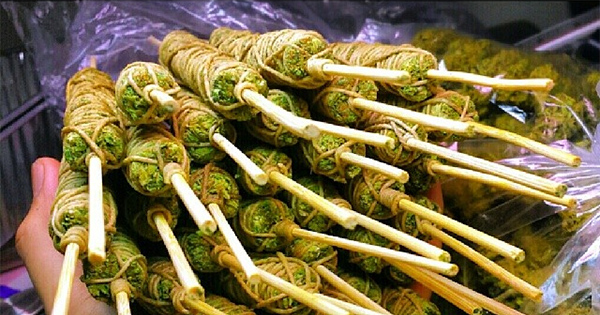
The Thai stick, also spelled thaistick, thai stix or simply stick is one of the most legendary cannabis preparations in history. Originally from Thailand, popularized in the United States in the 1960s and 70s by soldiers returning from Vietnam, it consists of cannabis buds. Thai The females are skewered on a bamboo stalk and held in place by a hemp rope. A slow-drying technique that concentrates aromas and potency. Having disappeared from the market for decades, Thai stick has enjoyed a spectacular renaissance on the American and international cannabis scene since the 2010s.
What is a Thai stick? Definition
A Thai stick is a traditional form of cannabis preparation originating in Thailand. The principle is simple:
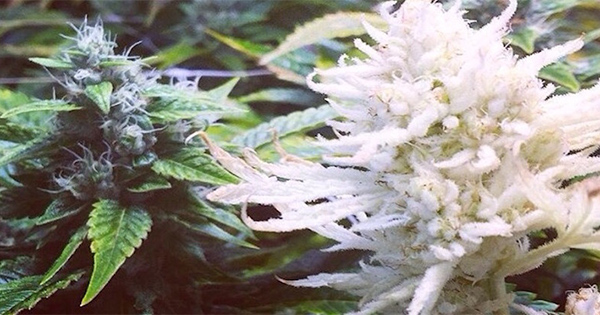
- Female cannabis buds, ideally of the Thai variety or the Chocolate Thai, are skewered on a fine bamboo stem
- The heads are compressed and held in place with a hemp rope (rasta hair)
- The set is left to dry slowly a process that concentrates terpenes and resin
The result is a dense, aromatic and particularly potent «stick» of cannabis. Thai stick can be consumed directly (without the bamboo), in a joint or as a cannacigare with a hemp-leaf cape.
Why stick? The term comes simply from the stick shape (stick of this preparation. In French slang, «un stick» or «un stick de weed» often refers to any elongated joint or preparation of cannabis, a semantic extension of the original term.
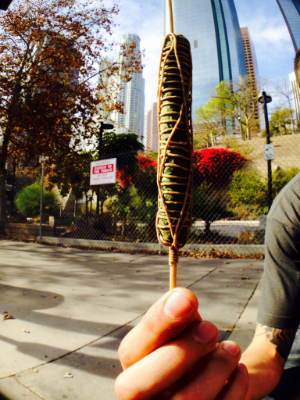
A Thai stick
History of Thai sticks: from Vietnam to the 70s
Thai origins
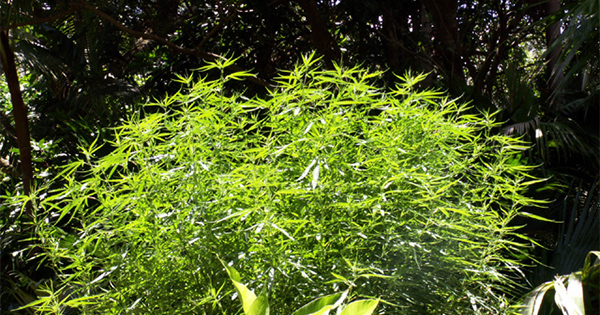
The Thai stick technique is an ancient Thai agricultural tradition. Local farmers used to skewer the tops of their potato plants. cannabis Thai on bamboo stalks to dry and transport them, a practical method in a tropical country where ambient humidity complicates conventional drying.
This slow drying on the stem allowed gradual evaporation of moisture while preserving the trichomes and terpenes, hence Thai sticks' reputation for superior potency compared to the bulk cannabis of the time.
Clandestine importation via Vietnam
This is the Vietnam War (1955-1975), which introduces Thai sticks to the U.S.. American soldiers stationed in South-East Asia discovered these preparations on the spot and brought them back in their luggage during their rotations. The distribution network was then organized via the smuggling channels that already existed for other goods between Southeast Asia and the United States.
At their peak in the 1970s, Thai sticks were considered to be the most potent cannabis available on the American market, a reputation based on the quality of Thai landraces, but also fuelled by persistent rumours.
The legend of opium and cannabis oil
A persistent rumour had it that Thai sticks were dipped in opium before being sold, which would explain their exceptional power. This legend is probably false in the vast majority of cases. thai landraces and the slow drying process.
On the other hand, the soaking in cannabis oil (concentrates, BHO, RSO) is now deliberately used in modern versions, notably in the USA where concentrates are legal in many states. In this case, it's a deliberate technique that really amplifies potency.
The disappearance
Thai sticks gradually disappeared from the market in the 1980s-1990s for several converging reasons:
- Tougher anti-drug laws in the United States and Southeast Asia, making importation extremely risky
- Disappearance of Thai landraces to hybrid varieties with shorter flowering and higher yields
- The rise of indoor cultivation in consumer countries, making imports less necessary
- Reducing military contingents in Asia, which had facilitated the distribution channels
The renaissance of Thai sticks
Since the 2010s, Thai sticks have been enjoying back in force in the American cannabis scene, driven by three factors:
1. Legalization in the American states Recreational legalization in states such as California, Colorado and Washington has enabled cannabis artisans to market legal Thai sticks, often enriched with concentrates and kief, a premium version of the original preparation.
2. Instagram and visual cannabis culture Specialized accounts such as @afgoo_head have popularized the making of Thai sticks and cannacigars on Instagram, creating a worldwide community around these artisanal preparations. The visual dimension of Thai sticks, their elaborate format and artisanal aspect, lends itself perfectly to social networking.
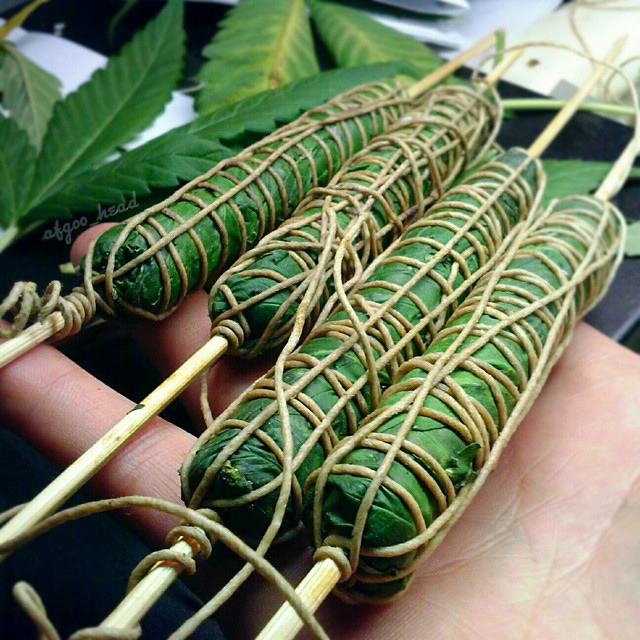
Thai sticks from Afgoo_head
3. Back to basics The «craft cannabis» movement and the growing interest in landraces and traditional methods have helped rehabilitate Thai stick as a form of’art cannabis rather than simply as a utilitarian preparation.
Zamal stick In this vein of returning to local traditions, the Zamal stick is a Reunionese variant using Zamal, Réunion's endemic landrace, prepared according to the same principle. A niche product, but a sign of the growing interest in traditional preparations based on local landraces.
How to make a modern Thai stick
Making a handcrafted Thai stick follows a multi-step process popularized by American cannabis artisans:
Materials required :
- Quality cannabis buds (ideally a Thai sativa), Chocolope or similar)
- A thin stalk (bamboo, hemp or dried cannabis stalk)
- Untreated hemp yarn
- Optional: concentrate (BHO, rosin, RSO) for soaking
- Optional: kief for coating
- Optional: hemp leaves for the final cape
The process :
- Rack the heads on the stem, pressing them down so that they stick together
- Wrap hemp thread around the heads to keep them compressed
- First drying 24 to 48 hours at room temperature
- Soaking (optional): dip stick briefly in cannabis concentrate or oil
- Coating (optional): rolling in kief
- Secondary drying additional 24 to 48 hours
- Cape (optional): wrap a sheet of hemp around it for a cannacigare finish
- Remove bamboo stalk before consumption
The result is a dense, aromatic stick that can be eaten directly or cut into sections.
Thai stick, blunt or joint: what are the differences?
| Thai stick | Blunt | Seal | |
|---|---|---|---|
| Envelope | Heads compressed on rods | Tobacco leaf or hemp | Rolling paper |
| Contents | Pure cannabis | Cannabis (+ tobacco sometimes) | Cannabis (+ tobacco sometimes) |
| Format | Dense stick | Cigar | Thin cylinder |
| Duration | Long combustion | Average | Short |
| Tradition | Thai | Jamaican/American | Universal |





CBD is said to promote athletic recovery, without improving performance

294 cannabis clubs in Chile: a booming movement with uneven distribution

Chronic Sciatica: New York Approves First Clinical Trial of a THC-Based Medication

United States: The DEA is accelerating the integration of medical cannabis at the federal level

Florida is nearing one million patients using medical cannabis

Uruguay Revives Its Plan to Allow Tourists to Legally Access Cannabis

In Brazil, researchers are developing an innovative CBD eye drop

Autism: Medical Cannabis Is Linked to Reduced Anxiety

The $28 billion U.S. hemp market remains under threat

Jamaica Eases Small Farmers' Access to the Cannabis Market
-
 Business5 days ago
The legal cannabis market in New York exceeds 4 billion $ in revenue
-

 Cannabis in France2 weeks ago
Which countries legalized medical cannabis before France?
-
Business2 weeks ago
South Korea is preparing to begin local production of medical cannabis to meet rising demand
-
Cannabis in the Netherlands4 weeks ago
One year after the launch of the Dutch cannabis experiment, the first trends are emerging
-
Cannabis in Thailand2 weeks ago
From the boom in dispensaries to a purely medical approach: Thailand is revising its cannabis policy
-
Cannabis in France4 weeks ago
French medical cannabis remains stalled at the Ministry of Health
-
Cannabis in Argentina3 weeks ago
Argentina Opens Its Market to Hemp Flowers Containing 1% of THC
-
Cannabis and driving2 weeks ago
Medical Cannabis and Driving: New South Wales Ends Automatic Penalties for THC















You must be logged in to post a comment Login