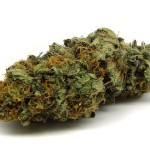
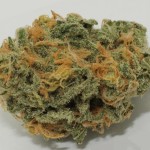
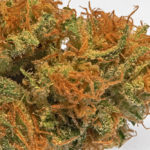
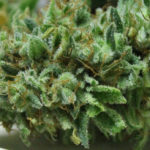
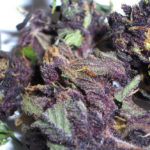
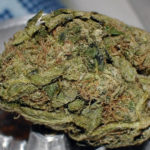
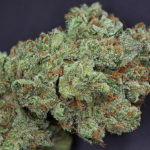
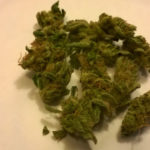
Thai, or Thai weed, is one of the oldest and purest cannabis strains in existence.
It's a sativa landrace to 100%, which has been growing naturally in Thailand for centuries without human intervention in its genetics. Brought to the U.S. in the 1970s, it became one of the pillars of the Californian cannabis revolution and one of the most influential genetic parents in modern cannabis history: it is the direct ancestor of Haze, the Chocolope via Chocolate Thai, and Purple Thai.
With THC levels of up to 22 % and intense psychedelic effects, this is a strain like no other.
What is Thai weed?
The Thai weed refers to the varieties of cannabis sativa that grow naturally in Thailand, mainly in the country's mountainous northern regions and tropical rural areas. These plants are landraces,This term designates varieties that have developed naturally in a specific geographical environment over hundreds or thousands of years, without artificial selection by man.
The Thai is radically different from modern hybrids in several respects:
- Unmodified genetics No crosses with indicas or other sativas, genetics are 100% Thai sativa.
- Exceptionally long flowering up to 120 days (4 months), whereas modern hybrids flower in 60-70 days
- Extreme morphology plant can exceed 3 metres, elongated, wiry buds very different from the dense buds of indicas or hybrids
- Unique effects intense, long-lasting, almost psychedelic psychoactive profile, unrivalled among modern commercial varieties
History of Thai: from Thai sticks to California
Thai sticks from the 1970s
Before it became a variety cultivated in the West, Thai was known in the United States as the Thai sticks, a traditional Thai preparation method. Cannabis buds were dried and tied along thin bamboo stalks, creating very dense and potent cannabis «sticks». These Thai sticks were smuggled into the USA during the Vietnam War and in the years that followed, mainly via American soldiers and smuggling networks. They had the reputation of being among the most potent available at the time, a well-founded reputation, as wild Thai could reach THC levels in excess of 20% without any artificial selection.
Arrival in California
In the 1970s, Thai cannabis seeds arrived in California, in particular in Santa Cruz, the same city where the Haze brothers developed their own breeding program. Thai quickly became one of the key components of their crosses, contributing directly to the creation of the’Original Haze, the parent variety of almost all current commercial sativas.
Thai shit«
The term «thai shit» is an American and international slang term for hashish or resin traditionally produced from Thai cannabis. Less common than Afghan or Moroccan resins on the European market, it circulates mainly in Southeast Asia.
Is Thai a sativa or an indica?
Thai is a pure sativa at 100%,a landrace with no indica component in its genetics. It's one of the purest sativas available, along with Hawaiian, Colombian and Durban Poison.
This sativa purity is evident in all its aspects:
- Extreme morphology very tall plant (200-300 cm), elongated, airy buds, very fine, long leaves with narrow fingers, sativa morphology taken to the extreme
- Very long flowering 12 to 16 weeks indoors, up to 5-6 months outdoors in the tropics
- Exclusively cerebral effects no body relaxation, no couch-lock, no sedation
For consumers used to modern hybrids, the effects of Thai can be unsettling: they are of an intensity and quality very different from anything produced by Cookies, Kush hybrids or even commercial sativas like Amnesia.
Aromas, flavors and terpenes
Thai has an aromatic profile fruity, spicy and slightly earthy, very different from the sweet or diesel aromas of modern hybrids. Some phenotypes develop distinct notes of lemon, mango and tropical flowers,a direct reflection of its original environment.
Nose: fruity and spicy, with a herbal touch characteristic of non-hybrid landraces. Softer and more natural than the concentrated aromas of modern selections.
In the mouth: light, aromatic smoke, persistent fruity and spicy taste. La Chocolate Thai, one of its most famous phenotypes, develops distinctive cocoa aromas that have inspired the Chocolope.
Its dominant terpenes :
- Ocimene dominant terpene of tropical sativas, responsible for sweet, fruity and slightly woody notes
- Terpinolene floral and herbaceous notes, shared with the family Haze
- Myrcene light earthy depth, provides a very light relaxing background component
What are the effects of Thai?
The effects of Thai are among the most intense and distinctive in the cannabis world. They are regularly described as quasi-psychedelic,a qualification that even the most powerful sativas on the modern market don't achieve as fully.
Onset: effects arrive gradually but steadily. Unlike modern hybrids whose effects peak quickly, Thai rises slowly and for a long time.
Main phase :
- Intense mental stimulation accelerated flow of thoughts, unusual associations of ideas
- Perceptual alteration slight distortions of the senses (visual, auditory), feeling of enhanced connection with the environment
- Lasting euphoria the high lasts 2 to 3 hours, far longer than modern hybrids
- Physical energy Unlike indicas, Thai does not relax, it activates.
Possible side effects:
- Anxiety and paranoia, common in people unaccustomed to pure sativas
- Recurring thoughts that are hard to stop
- Insomnia if taken in the evening
⚠️ Thai is not recommended for beginners and people sensitive to psychedelic effects or prone to anxiety. Its effect profile is radically different from that of modern hybrids.
The genetic heritage of Thai: ancestor of Haze
The importance of Thai in the history of modern cannabis is considerable. It is present in the genealogy of dozens of iconic strains:
Direct descendants :
- Haze Thai is one of the four parents of Original Haze (along with Mexican, Colombian and Indian).
- Chocolate Thai phenotype of Thai with cocoa aroma, a direct relative of the Chocolope
- Purple Thai purple phenotype of Thaï, parent of Purple Haze
2nd generation descendants (via Haze) :
- Amnesia Thai × Afghan × Hawaiian
- Lemon Haze : via Silver Haze
- Super Silver Haze : via Haze
- Chocolope Chocolate Thai × Cantaloupe Haze
Thai is therefore the great-grandmother of much of today's sativa market, a genetic line of comparable importance to Afghani for indicas.
Thai today: an endangered landrace
Today, pure Thai is almost impossible to find in the wild in its original form. There are several reasons for this decline:
Partial legalization in Thailand In 2022, Thailand became the first country in Southeast Asia to legalize medical cannabis and remove the plant from its list of narcotics. Paradoxically, this legalization has accelerated the introduction of Western hybrid genetics into the country, to the detriment of local landraces.
The pressure of hybridization Thai growers are increasingly adopting modern hybrids with short flowering times and high yields, abandoning local landraces with flowering times of 5-6 months.
Preservation projects Some seedbanks specializing in landrace preservation (notably ACE Seeds and Paradise Seeds) are marketing stabilized versions of Thai genetics in an attempt to preserve this irreplaceable genetic heritage.
Thai culture
Thai is one of the most popular more difficult to grow available on the market, reserved for experienced and patient growers.
Indoors :
- Flowering: 84-120 days (12 to 16 weeks)
- Height: can exceed 3 metres without strict control, LST and SCROG essential
- Modest yields despite expectations: quality and uniqueness of effect are what motivate its cultivation.
- Very demanding in terms of light and heat
Outdoor :
- In its natural environment (Thailand, tropical regions): harvesting after 5 to 6 months
- In Europe: almost impossible to complete in temperate latitudes, flowering lasts until November-December, after the first frosts.
- Possible in heated greenhouses or under shelter
Recommendation: For a more accessible Thai experience, varieties derived from this line such as Chocolope (flowering 63-70 days) or ACE Seeds hybrids reproduce part of the effect profile with much more practical cultivation.