South Africa upgrades its hemp to 2% THC


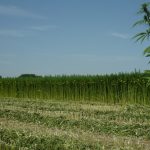
In force since December 1, 2025, the new south african plant breeding law (Plant Improvement Act) marks a decisive change in the way the country supervises plant production, the seed quality and, above all, the cultivation of Cannabis sativa L. for industrial use.
Signed by President Cyril Ramaphosa after being approved by Agriculture Minister John Steenhuisen, the new law replaces legislation dating back to 1976. It repositions hemp as a viable agricultural crop and removes some of the long-standing barriers that have hindered the sector's development.
A significant boost: the 2% THC limit now official
One of the most eagerly-awaited changes, and one that should generate immediate commercial interest, is the revision of the legal definition of hemp, which increases the permitted THC from 0.2% to 2%.
According to the Ministry of Agriculture, the new definition applies to «plants or parts of plants with a low tetrahydrocannabinol (THC) content of Cannabis sativa L. cultivated for agricultural or industrial purposes, whose leaves and flowering heads contain no more than 2% of (-)-transdelta-9-tetrahydrocannabinol».
This tenfold increase should pave the way for more resistant and more profitable varieties. Industry players have long argued that’former threshold of 0.2% was too restrictive, limiting genetic diversity and hindering the local development of the value chain for the industrial hemp.
For growers, this change means greater flexibility in sourcing and selecting varieties suited to the South African climate. For the market, it could accelerate growth in sectors ranging from textiles and building materials wellness products and’green industrial innovation.
New systems for enhanced quality and transparency
Beyond hemp, the new Plant Breeding Act creates a stronger regulatory environment for plant-related businesses. It introduces systems for :
- Registration of companies marketing plants and propagating material for cultivation and sale
- Registration of the premises where these activities take place
- Compliance with quality standards for seeds and propagation material
- Certification systems to ensure that equipment conforms to type«
- Monitoring import and export activities
- evaluation processes for new plant varieties
At the heart of these reforms is the introduction of a new national registration of plant varieties, supported by a new journal national des variétés. This structure enables varieties to be officially assessed to determine their suitability for cultivation and use.
The Act also introduces, for the first time, a formal mechanism for filing objections with the Registrar regarding variety registrations, a measure designed to improve transparency and governance. An advisory committee will assist the Registrar on technical issues relating to the administration of the law.




















«Vincy Gold»: Humboldt Seed Company on the Hunt for Saint Vincent Sativas

Cronos Completes the Acquisition of CanAdelaar for 57.5 million euros

Cannabis with a "bloody" twist: Discover Sensi True Blood and Sensi Sangria, the two new strains from Sensi Seeds

Hemp: The Council of the EU Takes a Stand on New Production and Marketing Rules

Missouri's legal cannabis market accounts for 93 % of consumer spending

THC Gummies: How to Read a Certificate of Analysis Before Buying

British patients now have access to THCV-rich cannabis flowers

Spain: Medical Cannabis Is Coming to About 50 Hospitals

JIHE 2026: Japan’s Largest Trade Show Dedicated to Hemp and CBD Returns to Tokyo with More Than 100 Industry Players

New Caledonia: The Courts Clear the Way for the Return of CBD
-
 Business3 weeks ago
The legal cannabis market in New York exceeds 4 billion $ in revenue
-

 Cannabis in France4 weeks ago
Which countries legalized medical cannabis before France?
-
Cannabis in France1 week ago
France already has 3,000 cannabis retail outlets. None of them are legal.
-
Business4 weeks ago
South Korea is preparing to begin local production of medical cannabis to meet rising demand
-
Cannabis in the U.S.1 week ago
A DEA report confirms that there are no fatal cannabis overdoses
-
Cannabis in Thailand4 weeks ago
From the boom in dispensaries to a purely medical approach: Thailand is revising its cannabis policy
-
Cannabis and driving4 weeks ago
Medical Cannabis and Driving: New South Wales Ends Automatic Penalties for THC
-
Cannabis in France3 weeks ago
France’s Drug Policy Chief Defends Cannabis Prohibition... and Runs Into the Facts

















You must be logged in to post a comment Login