
The Medical cannabis is legal in South Africa, and recreational use was definitively legalized in 2024 when the South African president signed the law into effect after the ban had been lifted unconstitutional in 2017.
South Africans are therefore free to consume and grow in the sphere deprived of dagga—the South African name for cannabis—with no sales system currently in place.
Legal
Personal use of cannabis is legal in South Africa
Cannabis is legal for personal use in South Africa, allowing for possession and home cultivation, but its sale and public consumption remain prohibited.
Medical cannabis is legal in South Africa. Dispensaries are authorized to sell medical cannabis to patients who hold a card issued by the South African Health Products Regulatory Authority (SAHPRSA).
CBD is considered a dietary supplement and a medication in South Africa.
Possession of cannabis for personal use is legal in South Africa, subject to specific limits on the permitted quantities. An individual may possess up to 600 grams of dried cannabis at home, or 1.2 kilograms for a household of two or more adults. In public, possession is limited to 60 grams. Public consumption remains prohibited.
Growing cannabis for personal use is legal in South Africa.
Last checked: October 2, 2026
Where in the world is cannabis legal?✨ Newsweed AI is based on our articles and verified data.
Cannabis, also known as dagga in South Africa, has been present on the continent for over a thousand years. It is believed to have been introduced to the east coast by Arab and Indian merchants, as suggested by derivatives of the Hindi word bhang still used in Tanzania, Kenya, and Mozambique. The word «dagga» comes from a Khoisan term that originally referred to several plants, including cannabis.
When the Dutch East India Company founded Cape Town in 1652, the Khoikhoi and San peoples were already cultivating and consuming the plant. Jan van Riebeeck made the first written mention of it in 1658. The Company attempted to monopolize its sale by prohibiting settlers from cultivating it as early as 1680, but the plant’s abundance made the venture unprofitable, and the ban was lifted in 1700. Over the centuries, dagga also became part of the folk medicine of the Afrikaner settlers, who used it to make herbal teas and fumigations.
The first restrictions targeted specific populations. In 1870, the colony of Natal prohibited Indian workers from consuming or receiving it. The Witwatersrand mines, followed by the Orange Free State (1903) and Natal (1908), in turn regulated sales. In 1922, a customs law classified dagga as a prohibited drug, before the Medical, Dental, and Pharmacy Act of 1928 completed its criminalization.
Under apartheid, the 1971 Law on Addictive Substances classified cannabis as a prohibited drug, with very severe minimum penalties. A government commission distinguished between uses based on the racial categories of the time, which confirms the discriminatory nature of the law. As the courts and prisons quickly became overwhelmed, suspended sentences were authorized three years later. Following the adoption of the 1992 Interim Constitution, several provisions were struck down, notably those that reversed the burden of proof.
The turning point came from the courts. In March 2017, the Cape High Court ruled that the ban on the use and cultivation of cannabis by adults in private homes was unconstitutional. In September 2018, the Constitutional Court upheld this decision in the case Minister of Justice v. Prince.
Since the Prince decision, an adult may use, possess, and cultivate cannabis for personal use in a private setting. The concept of «private» is not limited to one’s home, but it excludes all public spaces. The Court did not establish any specific quantity for personal use. The provisions of the 1992 Act on Drugs and Drug Trafficking, which criminalized these acts, were declared unconstitutional.
Any use, possession, or cultivation outside the private sphere remains a criminal offense, punishable by 12 months to 25 years in prison depending on the severity of the offense. The sale of recreational cannabis is not permitted, though this does not prevent unlicensed shops from operating openly, given the inconsistent enforcement of the law across provinces.
The framework was strengthened by the Cannabis for Private Purposes Act, signed in May 2024, which enshrines in law the private use, possession, and cultivation by adults. On February 2, 2026, the Ministry of Justice published draft implementing regulations—open for public comment through March 5, 2026—that propose capping possession at 750 grams and cultivation at 5 plants per adult, though these thresholds are not yet final.
Medical cannabis falls under the jurisdiction of Medicines and Related Substances Act of 1965, which classifies substances into Schedules 1 through 8. The whole plant and THC are listed in Schedule 7, which is accessible only with a permit issued by the Department of Health. THC for therapeutic use (for example, in the synthetic form of dronabinol) falls under Schedule 6 and is dispensed by prescription. Medical cultivation is also permitted for licensed operators: as of 2022, 76 licenses had been issued by the South African Health Products Regulatory Authority (SAHPRA). Any violation of the Medicines Act is punishable by up to 10 years in prison.
CBD is generally classified under Schedule 4 and requires a prescription. However, certain products are «declassified» (Schedule 0) and sold over the counter at pharmacies, supermarkets, or health stores. These are complementary medicines containing no more than 0.001 % of THC and 0.0075 % of CBD, derived from cannabinoids naturally present in the raw material. Synthetic cannabinoids remain listed in Schedule 7. Industry professionals regularly criticize these thresholds as being too low to be effective, as well as the ban on incorporating CBD and hemp into food products.
Processed hemp products are excluded from Annex 7 under certain conditions: fibers (textiles, construction materials) with a THC content of 0.01 % or less, in a non-edible form, and seed-based products (oil, cosmetics) with a THC content of 0.001 % or less, without whole seeds. Import, export, wholesale distribution, and industrial cultivation require a permit from the Department of Health, and medical products must be manufactured in a licensed facility that complies with good manufacturing practices.
The South African cannabis industry is considered one of the most promising on the continent. Grassroots organizations estimate that there are approximately 900,000 growers, mainly in the Eastern Cape and KwaZulu-Natal. In 2022, President Cyril Ramaphosa announced plans to revise the regulatory framework for hemp and cannabis, with the potential to create 130,000 jobs. However, one recurring criticism remains: the cost and complexity of licensing may exclude small, traditional producers in favor of large players.
The government is drafting a policy on the commercialization of hemp and cannabis, as well as a comprehensive cannabis bill, expected to be introduced in Parliament by mid-2027, which is expected to cover personal use, commercial cultivation, processing, and research. Follow our News about cannabis in South Africa See below for updates to the law.


Nearly eight years after the Constitutional Court’s ruling authorizing the cultivation and possession of cannabis for personal use, South Africa is struggling...


In force since December 1, 2025, South Africa's new Plant Improvement Act marks a decisive change in the way...


More than a year after the partial legalization of cannabis, with the passage of the Cannabis for Private Purposes Act in May 2024, South Africa is moving forward at...


The first Moroccan cannabis-based medicine, Beldiya Plus°, developed by CannaFlex, has been prescribed by doctors and dispensed to patients in Africa...


South Africa's Department of Health is finally backtracking on its attempt to ban food products containing hemp-derived ingredients, including hemp oil and...


South Africa is embarking on the professionalization of the cannabis industry with the launch of its first accredited higher education program dedicated to the cultivation and...


Private cannabis clubs and medical cannabis dispensaries have sprung up in South Africa's major cities. However, the legal status of these...


South Africa has definitively put its cannabis reform on the statute book, with President Cyril Ramaphosa signing the Cannabis Act into...


South Africa's National Assembly approved the Private Use Cannabis Bill on Tuesday November 14, marking a significant step towards legalization...


With 12 floors, a breathtaking view of Cape Town's imposing Table Mountain and a minimal ecological footprint, the world's tallest building constructed from...

A South African plant with the mild Latin name Helichrysum Umbraculigerum is known to produce cannabinoids usually found in Cannabis, some of which may have...

South Africa's Supreme Court has agreed that there is no great difference between a dealer and a Cannabis Club. The High Court declares...

As regular Newsweed consumers will have noticed, we've been on hiatus for the past 2 weeks. But since there's no news to wait for us, here's a...

South Africa’s first dispensary opened its doors after receiving its license in late 2021. THC Pharmacy, registered with the South African Council for...
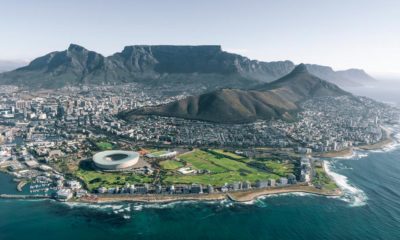

South African President Cyril Ramaphosa wants to speed up the regulation of the cannabis industry in South Africa. In his State of the Union address, the president...


The Cannabis Variety Hunters are back! Led by the «Cannabis King» Arjan Roskam, these Amsterdam-based cannabis enthusiasts...
As regular Newsweed users will have noticed, we've been on hiatus for the past few weeks. But since there's no news to wait for us, here's a recap...

It will take South Africa at most 5 years to roll out its cannabis legalization. While the country's Supreme Court ruled in...

Despite a stop-and-go year due to the coronavirus pandemic, cannabis has seen significant developments around the world, opening...
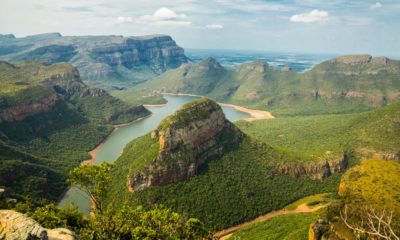

The bill to legalize cannabis in South Africa has been published ahead of its submission to Parliament. In particular, it sets out the...




