President Biden pardons several thousand people convicted of cannabis possession


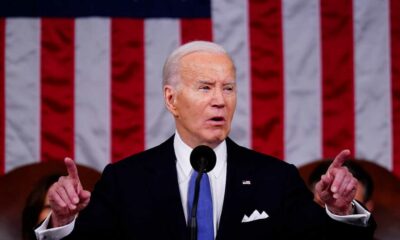
In late December, President Joe Biden issued a proclamation expanding his cannabis amnesty initiative. This initiative builds on the clemency efforts launched last year, which aimed to address racial disparities and mitigate the impact of criminal records on people’s lives. Although commendable, the expanded initiative is under close scrutiny due to its limitations and exclusionary provisions.
Background of These Amnesties
President Biden’s cannabis pardon initiative, originally launched in October 2022, aims to address the negative effects of cannabis convictions on individuals« access to employment, housing, and education. The president emphasized the need to address the societal repercussions of the »failed approach” to the war on drugs.
Mr. Biden said, «Criminal records for cannabis use and possession have created unnecessary barriers […]. Too many lives have been upended because of our failed approach to cannabis. It’s time to correct these mistakes.».
Just as no one should be in a federal prison solely because of the use or possession of marijuana, no one should be in a local jail or state prison for that reason, either.
I continue to urge governors to do the same with regard to state offenses, and I commend those who have since taken action.
ADVERTISING- President Biden (@POTUS) December 22, 2023
The recent proclamation expands the scope of the pardon to include individuals convicted of cannabis possession on federal property, which represents a significant expansion compared to the previous initiative. The pardon now covers federal offenses and those committed in Washington, D.C., for «simple possession of marijuana, attempted simple possession of marijuana, or use of marijuana,» even for offenses committed after the initial pardon in October 2022.
Joe Biden also commuted the sentences of 11 people who were serving long prison terms for drug-related offenses.
However, it is crucial to note that certain groups remain excluded from the initiative. According to Marijuana Moment, the pardon does not apply to non-citizens who were in the United States illegally at the time of the offense, to individuals involved in the distribution of cannabis, or to individuals charged with driving under the influence of cannabis.
In addition, the initiative did not result in the release of any prisoners, which has drawn criticism regarding its effectiveness in resolving systemic problems. While a presidential pardon represents a formal pardon, it does not amount to expungement, leaving individuals with a sealed criminal record rather than an expunged one.
Call to Action at the State Level
In his recent statement, Joe Biden called on governors and local leaders to take similar steps to address cannabis-related convictions. The president reiterated: «Just as no one should be in federal prison solely for using or possessing marijuana, no one should be in a local or state prison for that reason either.».
Although President Biden’s expanded cannabis pardon initiative is a step toward resolving the injustices associated with cannabis possession convictions, there is still work to be done. The limitations and exclusions contained in the pardons highlight the complexity of drug policy reform. Human rights advocates continue to call for more significant measures, such as federal legalization of medical cannabis and decriminalization, in order to achieve a more comprehensive and equitable approach to cannabis-related offenses.

















JIHE 2026: Japan’s Largest Trade Show Dedicated to Hemp and CBD Returns to Tokyo with More Than 100 Industry Players

New Caledonia: The Courts Clear the Way for the Return of CBD

The Brazilian medical cannabis market continues to grow

Morocco: Three Cannabis-Based Medications Approved for the Treatment of Epilepsy

Canopy Growth Receives New EU-GMP Certification to Strengthen Its Presence in Europe

Three years after legalizing medical cannabis, Albania continues to establish regulations for it

The first plant-based medical THC spray arrives in the United Kingdom

Medical Cannabis in Germany: THC Prices Vary by a Factor of 12

France already has 3,000 cannabis retail outlets. None of them are legal.

Morocco's exports of legal cannabis have expanded to 15 countries
-
 Business2 weeks ago
The legal cannabis market in New York exceeds 4 billion $ in revenue
-

 Cannabis in France4 weeks ago
Which countries legalized medical cannabis before France?
-
Business4 weeks ago
South Korea is preparing to begin local production of medical cannabis to meet rising demand
-
Cannabis in France4 days ago
France already has 3,000 cannabis retail outlets. None of them are legal.
-
Cannabis in Thailand4 weeks ago
From the boom in dispensaries to a purely medical approach: Thailand is revising its cannabis policy
-
Cannabis in the U.S.5 days ago
A DEA report confirms that there are no fatal cannabis overdoses
-
Cannabis and driving3 weeks ago
Medical Cannabis and Driving: New South Wales Ends Automatic Penalties for THC
-
Cannabis in France3 weeks ago
France’s Drug Policy Chief Defends Cannabis Prohibition... and Runs Into the Facts














You must be logged in to post a comment Login