American tennis player Casey Kania suspended 2 years for positive cannabis test

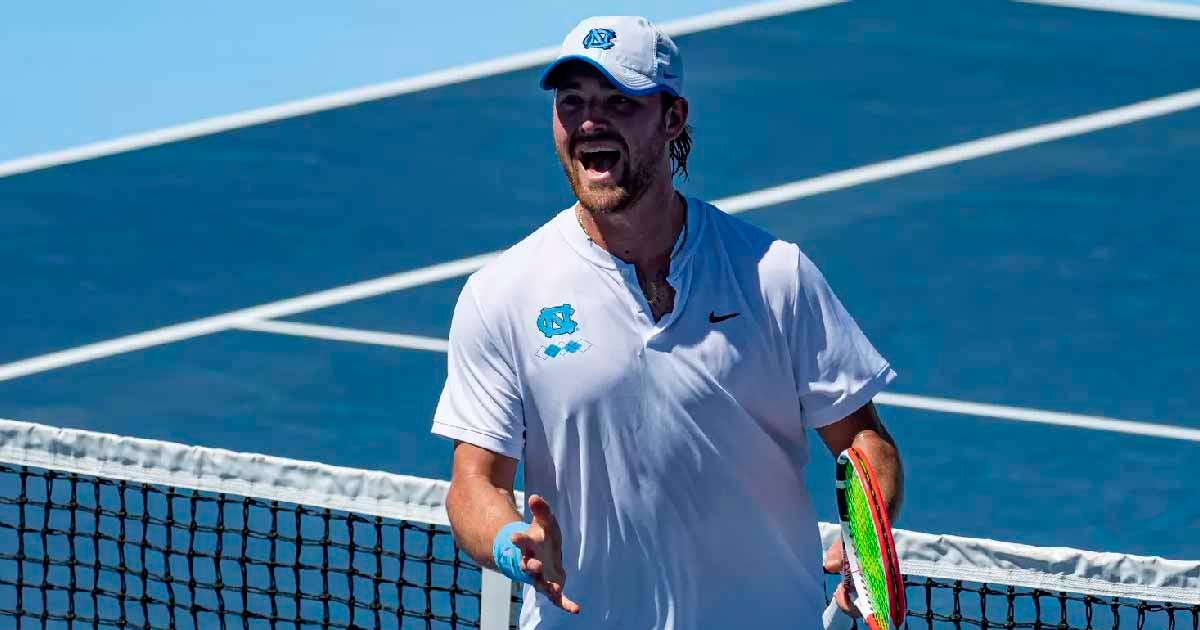
L’International Tennis Integrity Agency (ITIA) recently announced that American tennis player Casey Kania had been suspended for violating the Tennis Anti-Doping Program (TADP). The two-year suspension follows Kania's positive test for cannabis at an ATP Challenger Tour tournament in Cary, North Carolina.
This incident has sparked discussion about the use of recreational substances in professional sport, particularly in States where cannabis is legal, and the consequences for athletes who test positive.
THC banned by WADA
According to various sources, Kania's in-competition urine test at the Cary tournament revealed the presence of THC, a prohibited substance by the’World Anti-Doping Agency (WADA)). Analysis confirming the presence of cannabis led to Kania being charged with an anti-doping rule violation under TADP.
The ITIA acknowledged that Kania had not intentionally violated the provisions of the TADP, but noted his inability to demonstrate the absence of fault or negligence for the violation. As a result, Kania was suspended for two years, from February 2 to February 1, 2026. This suspension carries serious repercussions, including the loss of all his results, ranking points and prize money accumulated at the Cary Challenger tournament.
Impact on the Kania quarry
Casey Kania's career is effectively cut short by this suspension. Despite being a relatively low-ranked player, with his best doubles ranking of 1,317th, Kania's aspirations to climb the ladder were compromised.
The former University of North Carolina player is now banned from participating, coaching or attending any tennis event associated with the ITIA, including the ATP, ITF, WTA, Tennis Australia, French Tennis Federation, Wimbledon and USTA, of which the four Grand Slam tournaments, including Roland Garros, are a part.
Kania's case reopens the debate on cannabis use in professional sport. At a time when some are calling for its decriminalization and removal from the list of performance-enhancing substances, as in UFC for example, others stress the importance of compliance with anti-doping rules to ensure fair competition. The inclusion of THC on WADA's list of banned substances raises questions about its classification and impact on athletes, particularly in jurisdictions where its recreational use is legalized.
Beyond Kania's individual circumstances, her suspension serves as a reminder of the strict consequences faced by athletes who violate anti-doping regulations. Recently, 100- and 200-meter runner Sha'Carri Richardson was tested positive for cannabis and missed the last Olympics Summer Games. She went on to win the women's 100-meter world title in Budapest in 2023, in a time of 10.65 seconds. Tara Davis-Woodhall, an American long jumper, was also a winner. stripped of her title after testing positive for cannabis.






















JIHE 2026: Japan’s Largest Trade Show Dedicated to Hemp and CBD Returns to Tokyo with More Than 100 Industry Players
New Caledonia: The Courts Clear the Way for the Return of CBD

The Brazilian medical cannabis market continues to grow

Morocco: Three Cannabis-Based Medications Approved for the Treatment of Epilepsy

Canopy Growth Receives New EU-GMP Certification to Strengthen Its Presence in Europe

Three years after legalizing medical cannabis, Albania continues to establish regulations for it

The first plant-based medical THC spray arrives in the United Kingdom

Medical Cannabis in Germany: THC Prices Vary by a Factor of 12

France already has 3,000 cannabis retail outlets. None of them are legal.

Morocco's exports of legal cannabis have expanded to 15 countries
-
 Business2 weeks ago
The legal cannabis market in New York exceeds 4 billion $ in revenue
-

 Cannabis in France4 weeks ago
Which countries legalized medical cannabis before France?
-
Business4 weeks ago
South Korea is preparing to begin local production of medical cannabis to meet rising demand
-
Cannabis in France4 days ago
France already has 3,000 cannabis retail outlets. None of them are legal.
-
Cannabis in Thailand4 weeks ago
From the boom in dispensaries to a purely medical approach: Thailand is revising its cannabis policy
-
Cannabis in the U.S.5 days ago
A DEA report confirms that there are no fatal cannabis overdoses
-
Cannabis and driving3 weeks ago
Medical Cannabis and Driving: New South Wales Ends Automatic Penalties for THC
-
Cannabis in France3 weeks ago
France’s Drug Policy Chief Defends Cannabis Prohibition... and Runs Into the Facts















You must be logged in to post a comment Login