Netherlands: State approves trial of legal cannabis cultivation

Experimenting with culture legal cannabis in certain municipalities in the country has just been approved by the Dutch government: «The cabinet has decided (...) to start the cannabis cultivation experiment so that its effects on crime, security, public disorder and health can be measured».»
This project is not new but it was initially rejected by the previous Minister of Justice, Ivo Opstelten, in 2014. The initiative came from the municipalities themselves, and in particular the mayors of Amsterdam, Rotterdam and Utrecht, who had issued a manifesto, co-signed by a total of 35 municipalities, requesting authorization to establish legal cannabis cultivation in their municipalities, who would themselves supervise production. Against a backdrop of increasing international competition, the project was reconsidered by Mark Rutte's new Liberal government.
The project in question
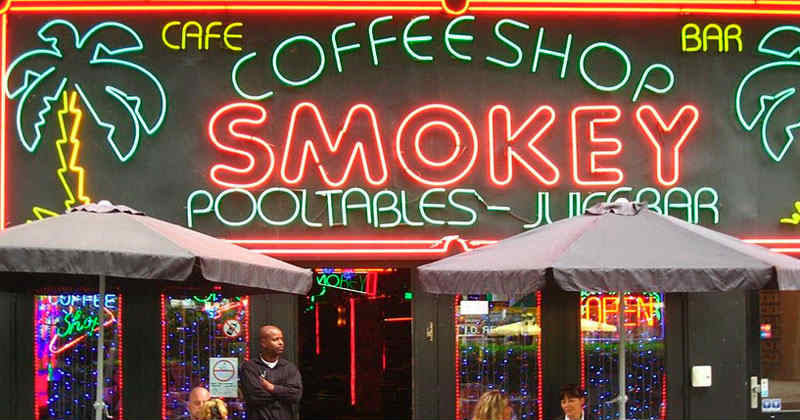
One of the justifications put forward for this project is the current state of Dutch cannabis laws, which are considered ambiguous. Indeed, in accordance with tolerance policy Under the current law, 5 grams and 5 plants may be possessed for personal use, and it is legal to buy from coffee shops, but cultivation and wholesale are prohibited, forcing coffee shop owners to buy on the black market, thus fuelling organized crime.
This experiment would enable a transparent and controllable production and distribution chain to be set up, and prevent recourse to the illegal circuit for supply. The government intends to select licensed growers and «ensure that there is a sufficient number of cannabis varieties» to satisfy the diversity and intensity of demand.
The police, public prosecutors and other institutions, in coordination with Justice Minister Ferdinand Grapperhaus and Health Minister Bruno Bruins, are responsible for finalizing the project before its implementation. Following a recent study casting doubt on the scientific relevance of an experiment based on just 6 to 10 municipalities, the ministers will also be tasked with considering the potential participation of a larger number of municipalities, and plan to present a law on the subject to parliament.
What impact will this have on coffee shops?
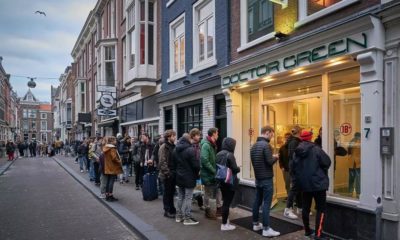
Marijke, manager of a coffee shop in The Hague, explains that a state-run business with controlled cultivation and supply is likely to result in lower THC levels, encouraging consumers to turn back to the black market. She is also concerned about the reputation of coffee shops among Dutch politicians, who consider them to be a source of nuisance. Ahmed Boutaleb, the mayor of Rotterdam, is calling for their disappearance, and wants to replace them with vending machines, specialized websites or pharmacy sales.
In short, state control of supply could well lead to state-controlled distribution.












Medical Cannabis in Germany: THC Prices Vary by a Factor of 12

France already has 3,000 cannabis retail outlets. None of them are legal.

Morocco's exports of legal cannabis have expanded to 15 countries

Aurora Cannabis Doubles Its Production Capacity in Germany

Tilray is accelerating its operations in Europe thanks to a license in Portugal

Boston will host the 10th annual State of the Cannabis Industry Conference on October 26

A DEA report confirms that there are no fatal cannabis overdoses

A British patient is challenging the NHS's refusal to reimburse medical cannabis

October 2026 CBD Highlights: 10 Strains and Hash to Discover from 5 French Producers

CBD in France: Traceability, Retail Stores, THC and Driving… What the New Bill Proposes
-
 Business2 weeks ago
The legal cannabis market in New York exceeds 4 billion $ in revenue
-

 Cannabis in France3 weeks ago
Which countries legalized medical cannabis before France?
-
Business3 weeks ago
South Korea is preparing to begin local production of medical cannabis to meet rising demand
-
Cannabis in Thailand3 weeks ago
From the boom in dispensaries to a purely medical approach: Thailand is revising its cannabis policy
-
Cannabis and driving3 weeks ago
Medical Cannabis and Driving: New South Wales Ends Automatic Penalties for THC
-
Cannabis in Argentina4 weeks ago
Argentina Opens Its Market to Hemp Flowers Containing 1% of THC
-
Autism3 weeks ago
Autism and Cannabis: Results from the First Placebo-Controlled Trial of NTI164
-
Cannabis in France2 weeks ago
France’s Drug Policy Chief Defends Cannabis Prohibition... and Runs Into the Facts

















You must be logged in to post a comment Login