
"We All Pay the Price of Drugs": A New Campaign to Reposition the Fight Against Drug Trafficking


The French government has launched a national awareness campaign titled “We All Pay the Price of Drugs,” aimed at highlighting the scale of drug trafficking and its social, health, and economic consequences. This initiative comes amid a rise in violence linked to criminal networks and the expansion of the drug market throughout the country.
A phenomenon of drug trafficking that is now entrenched in all regions
According to data presented by the government and the OFDT (French Observatory on Drugs and Addictive Behaviors), drug trafficking is no longer limited to major cities. It is now present in medium-sized cities, rural areas, and even small towns.
The figures presented paint a particularly complex picture:
- 6.8 billion euros in revenue generated by the drug market in France
- 200,000 people involved in the networks, including approximately 10,000 minors used as lookouts, dealers, or smugglers
- 42 metric tons of cocaine seized in the first half of 2025, compared with 37.5 metric tons for all of 2024
- 367 murders and attempted murders linked to violence related to drug trafficking in 2024
According to the OFDT, 6 out of 10 French people believe that drug trafficking exists in their neighborhood, and one-third are certain of it. This perception illustrates how deeply rooted the phenomenon is in everyday life.
Health and social costs that exceed those of criminal networks
The campaign also highlights the indirect effects of drug trafficking, which extend far beyond the network members themselves. In terms of drug use, the OFDT estimates that there are 1.4 million regular cannabis users and approximately 1 million French people who used cocaine at least once in 2023.
The health consequences are clear:
- More 10,000 hospitalizations related to cocaine in 2024 (1% of users)
- Approximately 130 deaths associated with this consumption
Beyond public health, drug trafficking contributes to destabilizing certain areas through the underground economy, intimidation of businesses, money laundering, and pressure on residents. The government describes a system that “corrodes” neighborhoods and is gradually spreading to other social spheres.
“General Mobilization”: A Clear Political Stance
In this context, the executive branch is advocating a radical new strategy in response to the evolving nature of criminal networks. During a debate in the National Assembly, Prime Minister Sébastien Lecornu outlined this approach as follows:
“It is my conviction that a break with the past is necessary. And this break can take only two forms: either decriminalization or general mobilization. The government rejects the former and is proposing general mobilization to you.”
This statement now shapes the government’s policy around a rejection of decriminalization and a step-up of government action against drug trafficking.
A strategy based on four pillars
The government’s response is based on a comprehensive approach, presented as an interministerial effort. It is organized around four main pillars:
- Prevent harmful uses and protect the most vulnerable groups
- Crack down on consumers and those involved in trafficking
- Dismantling organized crime networks
- Protect public servants working on the front lines
The “We All Pay the Price of Drugs” campaign thus aims to position drug trafficking as an issue of collective responsibility, going beyond the realm of security alone. It also seeks to raise public awareness about the systemic effects of a market that is now deeply entrenched in the French economy and society.
A campaign that has sparked debate over its approach and effectiveness
While the “We All Pay the Price of Drugs” campaign aims to put drug trafficking back at the center of a collective effort, its approach is already drawing mixed reactions. Various internet users and observers criticize the campaign’s message as being too sweeping, arguing that it tends to lump together drug use, trafficking, and society as a whole without always distinguishing between different responsibilities.
On social media, the slogan was quickly rephrased as “We’re all paying the price of prohibition.”
This type of reappropriation illustrates the ongoing debate over the effectiveness of strictly security-based strategies in the face of a structured and evolving illegal market, and suggests that government communications deliberately sidestep the government’s—and its predecessors’—responsibility for the increase in drug use since 2016.









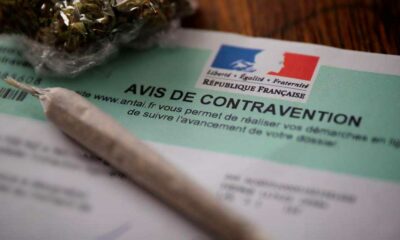














France’s Drug Policy Chief Defends Cannabis Prohibition... and Runs Into the Facts

Cannabis and the Adolescent Brain: French Scientists Make a Key Discovery

EFSA Gives Initial Approval for Synthetic CBD; Natural Extracts Still Pending

Federal Cannabis Reform Once Again on Hold in the United States

Contest: Win a trip to Quebec to experience the hemp harvest firsthand

Bedrocan on Hold Amid Uncertainty Over Medical Cannabis

Newsweed Launches Its Own AI
A new tax of 0.5% could disrupt the hemp industry in Canada

Medical Cannabis and Driving: New South Wales Ends Automatic Penalties for THC

China's Yongji Health Takes Control of Tasmanian Botanics
-
 Cannabis and driving3 weeks ago
Cannabis and CBD: French Drivers Can Now Lose Their License Even Without a Positive Test Result
-

 Cannabis in France1 week ago
Which countries legalized medical cannabis before France?
-
Cannabis in France4 weeks ago
Cannabis Legalization: The LFI Bill Has a Major Problem—THC
-
Cannabis in the Netherlands3 weeks ago
One year after the launch of the Dutch cannabis experiment, the first trends are emerging
-
Business1 week ago
South Korea is preparing to begin local production of medical cannabis to meet rising demand
-
Cannabis in Thailand1 week ago
From the boom in dispensaries to a purely medical approach: Thailand is revising its cannabis policy
-
Cannabis in Argentina2 weeks ago
Argentina Opens Its Market to Hemp Flowers Containing 1% of THC
-
Cannabis in France3 weeks ago
French medical cannabis remains stalled at the Ministry of Health















You must be logged in to post a comment Login