New Caledonia lays the foundations for a regulated hemp sector by 2030

New Caledonia is about to take a strategic turn in its agricultural and industrial policy. A legislative proposal submitted to the Congress of New Caledonia defines a comprehensive roadmap for structuring a tropical hemp sector between 2026 and 2030, with ambitions that go far beyond simple crop diversification.
At a time of profound economic fragility, this plan positions the hemp as a lever for sovereignty, public health and long-term value creation, while drawing a clear distinction between non-psychoactive crops and illicit cannabis.
The proposal does not, of course, create any immediate regulations. Rather, it establishes a strategic framework designed to guide future legal texts, authorizations, controls and standards. Its objective is clear: to build a responsible, safe and locally-based hemp industry, adapted to the climatic, economic and social realities of New Caledonia.
A response to an unprecedented economic slowdown
The background to this initiative is bleak. In 2024, New Caledonia experienced a historic recession, with GDP falling by 13,5%, The situation was exacerbated by civil unrest, the collapse of the nickel sector and falling exports. Agriculture, already marginal, continued to contract. Against this backdrop, hemp is presented as an urgently needed diversification tool.
According to the document, the global hemp market, estimated at 9.47 billion in 2024, could reach nearly 48 billion by 2032. For New Caledonia, the opportunity lies not only in cultivation, but also in local processing, export-oriented production and the replacement of imported petrochemical-based materials. with bio-based alternatives.
Drawing a clear legal line for hemp
The first pillar of the plan focuses on the legal and health security. The proposal insists on an unambiguous definition of hemp as being Cannabis sativa L. containing maximum 0.3% THC, measured by HPLC analysis. Below this threshold, hemp is explicitly excluded from the legal category of narcotics.
The document also includes a public monopoly on imports, authorizations and validation of uses, while also making it possible for authorized private operators cultivation activities, beyond current experiments, and innovation under strict supervision.
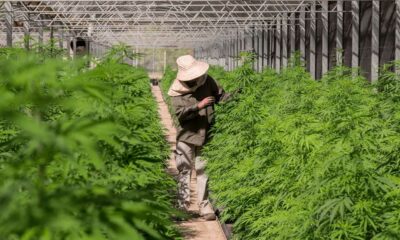
In addition to legal clarity, the plan pays particular attention to the agricultural structuring. Hemp production would be organized on several sites in the north, south and Loyalty Islands to mitigate climatic risks and promote territorial balance.
Key measures include :
- Contractual guarantees for farmers, including minimum prices and guaranteed volumes
- The creation of a local seed bank, with varieties adapted to tropical conditions
- Standardized practices for growing, harvesting, drying and storage
- Continuous agronomic and climatic monitoring
The aim is to ensure consistent quality and volumes, while offering growers the long-term visibility essential for industrial development.
Maintaining local value creation
One of the main aims of the proposal is to prevent the export of unprocessed raw materials. The plan calls for the establishment of a local processing facilities, capable of handling fibers, seeds, flowers and intermediate products.
This infrastructure would support the production of :
- Biobased building materials, such as hemp concrete
- Vegetable oils and proteins from seeds
- Non-psychoactive extracts for controlled medical use
- Semi-finished products for export
By anchoring processing at local level, the region aims to create sustainable jobs, reduce dependence on imports and develop industrial expertise tailored to Pacific markets.
A controlled route for CBD and CBG for medical use
One of the most sensitive sections of the plan concerns the strictly supervised medical valorization of CBD and CBG, currently classified as narcotics. The proposal explicitly rejects all recreational use and places medical uses under reinforced public health supervision.
A scientific committee would define pharmaceutical quality standards, supervise pilot clinical studies and evaluate therapeutic indications adapted to local needs, such as anxiety, sleep disorders or chronic pain. Distribution would be limited to controlled healthcare channels, with no tolerance for unvalidated medical claims.
The plan also integrates hemp into a broader strategy of public health and prevention. The document highlights the high levels of THC consumption among adults and minors in New Caledonia, often linked to violence and delinquency.
Educational programs, early detection tools and community prevention initiatives are planned to reinforce the distinction between hemp and psychoactive substances. The stated aim is to reduce harmful consumption patterns while promoting non-addictive alternatives within a medical and educational framework.
A long-term vision of governance
Finally, the proposal establishes a shared governance model, The project will be carried out by a network of public institutions, provinces, municipalities and economic players. Annual progress reports to Congress are planned to ensure transparency, accountability and adaptability.
This is not a short-term ambition. Between now and 2030, New Caledonia aims to position itself as a leading reference territory for tropical hemp, by balancing economic recovery, public health protection and institutional coherence.
As the document concludes, the challenge is threefold: economic sovereignty, health & safety, and policy coherence.






















Medical Cannabis in Germany: THC Prices Vary by a Factor of 12

France already has 3,000 cannabis retail outlets. None of them are legal.

Morocco's exports of legal cannabis have expanded to 15 countries

Aurora Cannabis Doubles Its Production Capacity in Germany

Tilray is accelerating its operations in Europe thanks to a license in Portugal

Boston will host the 10th annual State of the Cannabis Industry Conference on October 26

A DEA report confirms that there are no fatal cannabis overdoses

A British patient is challenging the NHS's refusal to reimburse medical cannabis

October 2026 CBD Highlights: 10 Strains and Hash to Discover from 5 French Producers

CBD in France: Traceability, Retail Stores, THC and Driving… What the New Bill Proposes
-
 Business2 weeks ago
The legal cannabis market in New York exceeds 4 billion $ in revenue
-

 Cannabis in France3 weeks ago
Which countries legalized medical cannabis before France?
-
Business3 weeks ago
South Korea is preparing to begin local production of medical cannabis to meet rising demand
-
Cannabis in Thailand3 weeks ago
From the boom in dispensaries to a purely medical approach: Thailand is revising its cannabis policy
-
Cannabis and driving3 weeks ago
Medical Cannabis and Driving: New South Wales Ends Automatic Penalties for THC
-
Cannabis in Argentina4 weeks ago
Argentina Opens Its Market to Hemp Flowers Containing 1% of THC
-
Autism3 weeks ago
Autism and Cannabis: Results from the First Placebo-Controlled Trial of NTI164
-
Cannabis in France2 weeks ago
France’s Drug Policy Chief Defends Cannabis Prohibition... and Runs Into the Facts
















You must be logged in to post a comment Login