THC blood levels don't reflect impairment, says new study

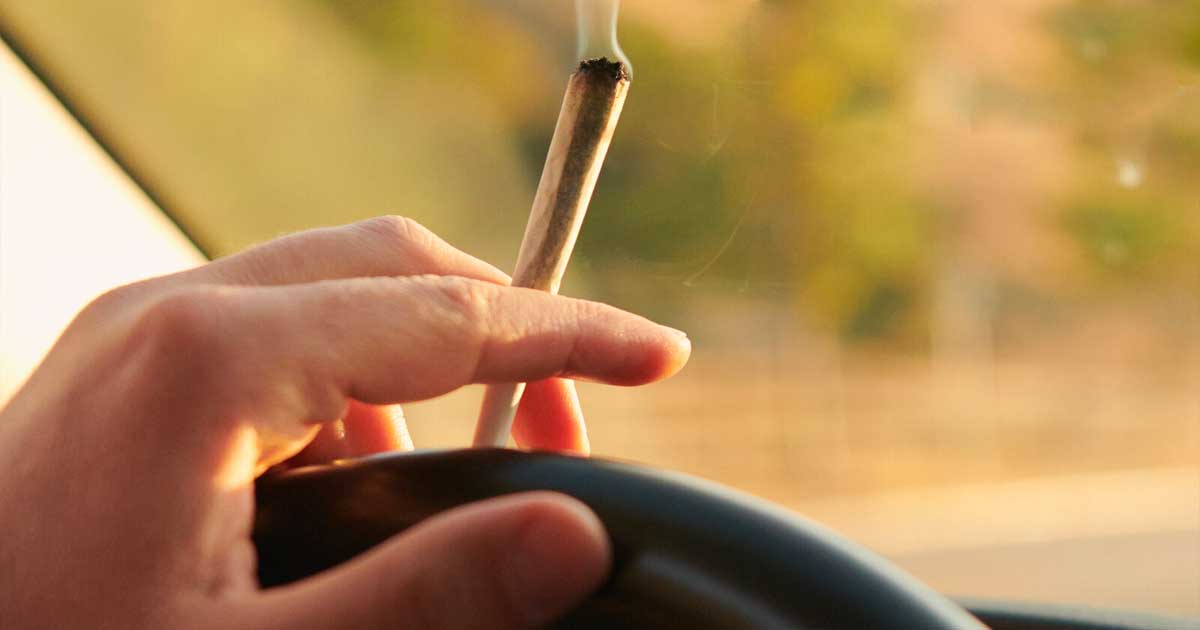
A new study published in Clinical Chemistry by the’Association for Diagnostics & Laboratory Medicine (ADLM) calls into question one of the most widely accepted assumptions in road safety legislation: that blood THC levels can be used as a reliable indicator of’driver impairment.
THC levels persist, but do not indicate impaired faculties
Headed by Dr. Thomas D. Marcotte the’University of California at San Diego, the research team examined 190 regular cannabis users who were asked to abstain from alcohol for at least 48 hours. Despite this period of abstinence, many participants were still experiencing THC concentrations detectable in their blood, some even exceeding the legal thresholds, without showing any reduction in their driving performance.
Depending on results, 43% of participants exceeded the zero tolerance threshold (≥ 0.5 ng/mL), 24% had a rate equal to or greater than 2 ng/mL and 5,3% exceeded 5 ng/mL, These are the limits most commonly used in American states to define impairment. When placed in a driving simulator, those who exceeded these legal limits were no less successful than those below them.
These results suggest that the THC concentration in the blood is not not reliably correlated with driving ability, which echoes earlier studies that found no evidence of no statistically significant increase in accident risk solely due to the detectable presence of THC.
Obsolete legal standards
In the United States, six states currently apply laws per se which set blood THC limits at 2 or 5 ng/mL, while twelve others have adopted zero tolerance laws. These thresholds automatically presume impairment, which means that drivers may be liable to legal sanctions even days after their last drink, regardless of their behavior or cognitive functions.
The authors of the study claim that these legal frameworks are without scientific basis and do not take into account the unique THC pharmacokinetics. Unlike alcohol, which disappears from the bloodstream in 24 to 48 hours, THC can remain detectable for up to a month after consumption, especially among regular users.
«The concentrations we measured initially probably reflect steady-state THC levels,» the researchers wrote, pointing out that these levels do not indicate recent consumption or active alteration.
The persistence of THC in the body is linked to its lipophilic nature It binds to fatty tissue and is released slowly over time. As a result, residual traces remain in the blood long after the psychotropic effects have worn off.
To confirm this, Marcotte's team compared reference THC levels with those measured five hours after smoking of cannabis. The median increase was only 0.5 ng/mL, which shows that THC concentrations fluctuate very little in habitual users who have abstained for several days.
Even among the small subgroup of participants who exceeded 16 ng/mL Initially, as a heavy consumer taking part in the study, the simulator results did not reveal any significant differences between the two groups. no degradation in driving performance.
Towards a more scientific approach
The authors conclude that current laws on THC limits in blood lack scientific credibility as evidence of impairment, and risk punishing people who are not under the influence. Instead, they recommend a more nuanced approach combining toxicological tests and sobriety assessments in the field by trained agents.
«Much remains to be done to determine the best way to identify drivers under the influence of cannabis who are unfit to drive,» the study states. «At present, the best protocol is a combination of field observations and toxicological testing.»
This view is shared by experts in the field, who stress the importance of the collaboration between law enforcement and scientists to create fair and effective standards that improve road safety without criminalizing cannabis users.






















Medical Cannabis in Germany: THC Prices Vary by a Factor of 12

France already has 3,000 cannabis retail outlets. None of them are legal.

Morocco's exports of legal cannabis have expanded to 15 countries

Aurora Cannabis Doubles Its Production Capacity in Germany

Tilray is accelerating its operations in Europe thanks to a license in Portugal

Boston will host the 10th annual State of the Cannabis Industry Conference on October 26

A DEA report confirms that there are no fatal cannabis overdoses

A British patient is challenging the NHS's refusal to reimburse medical cannabis

October 2026 CBD Highlights: 10 Strains and Hash to Discover from 5 French Producers

CBD in France: Traceability, Retail Stores, THC and Driving… What the New Bill Proposes
-
 Business2 weeks ago
The legal cannabis market in New York exceeds 4 billion $ in revenue
-

 Cannabis in France3 weeks ago
Which countries legalized medical cannabis before France?
-
Business3 weeks ago
South Korea is preparing to begin local production of medical cannabis to meet rising demand
-
Cannabis in Thailand3 weeks ago
From the boom in dispensaries to a purely medical approach: Thailand is revising its cannabis policy
-
Cannabis and driving3 weeks ago
Medical Cannabis and Driving: New South Wales Ends Automatic Penalties for THC
-
Cannabis in Argentina4 weeks ago
Argentina Opens Its Market to Hemp Flowers Containing 1% of THC
-
Autism3 weeks ago
Autism and Cannabis: Results from the First Placebo-Controlled Trial of NTI164
-
Cannabis in France2 weeks ago
France’s Drug Policy Chief Defends Cannabis Prohibition... and Runs Into the Facts















You must be logged in to post a comment Login