Study: THC blood levels do not characterize driving ability

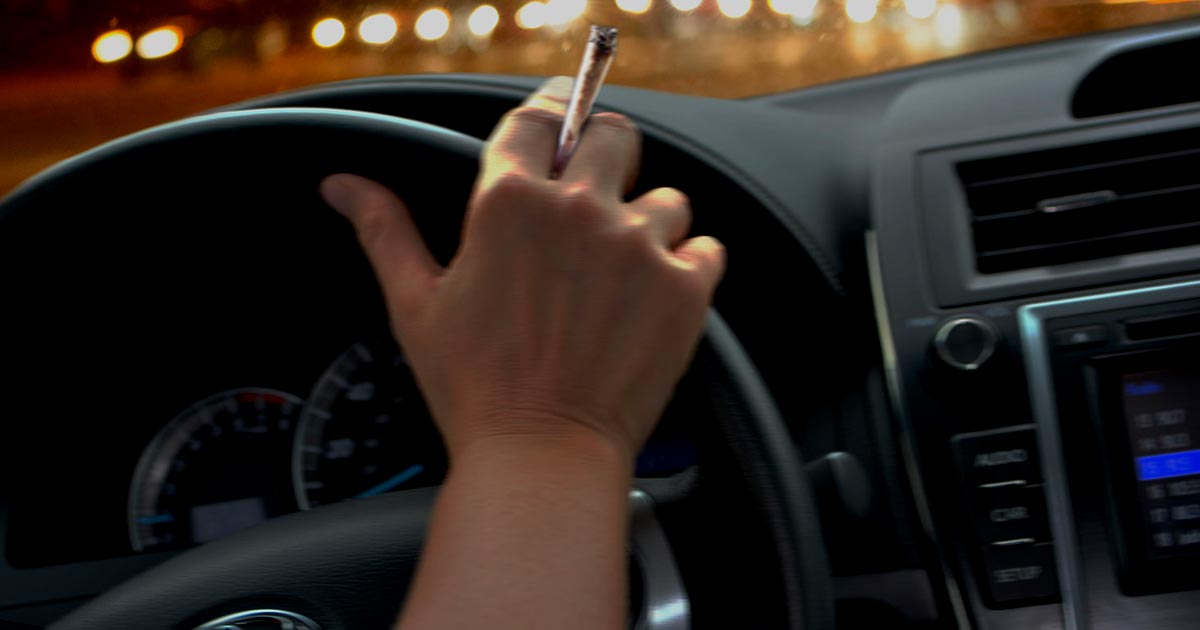
According to a recent study published in Traffic Injury Prevention, the presence of THC in blood or saliva is not a reliable indicator of driving ability.
Australian researchers have evaluated the relationship between levels THC and driving performance in 14 volunteers. Participants vaporized cannabis samples of different potencies (high THC/low CBD, equal THC and CBD ratios, and placebo) and then played on a driving simulator. Blood and saliva samples were taken 30 minutes after inhalation and again 3.5 hours later.
Impossible to distinguish between drunk and sober drivers
The researchers reported that neither the presence of THC in blood or saliva is not a reliable measure of driving performance. Nearly half the participants in the study showed no impairment at the wheel 30 minutes after cannabis inhalation, despite THC levels above the commonly imposed limits. Conversely, several participants showed impairment 3.5 hours after vaporization, at a time when their THC levels were below the limits.
«Blood or saliva limits often fail to distinguish between impaired and sober drivers,» the study authors report. «Furthermore, THC concentrations in blood and saliva correlated poorly with impaired driving. ... It is almost impossible to infer how much cannabis was consumed, or when it was consumed, based solely on a given THC concentration in a biological matrix.»
L’study concludes: «Due to erratic and dependent differences in THC pharmacokinetics, as well as significant inter- and intra-individual variability, blood and oral THC concentrations, unlike blood alcohol concentrations, provide little information about the amount of cannabis consumed or the extent to which a person may be intoxicated. Collectively, these results suggest that the limits per se do not reliably represent impaired driving thresholds.»
Several studies point to shortcomings in drug testing
The results of the present study are consistent with several other studies (here or here) reporting that the presence of THC is an unreliable predictor of recent cannabis exposure or impaired performance.
A 2019 report published by Congressional Research Service, a public policy research institute of the U.S. Congress, concluded similarly: «Research studies have been unable to consistently correlate levels of cannabis consumption, or THC in a person's body, with levels of impairment. Thus, some researchers, and the National Highway Traffic Safety Administration, In their report, the authors noted that the use of THC measurement as evidence of a driver's impairment is not supported by scientific evidence to date.»

















Medical Cannabis in Germany: THC Prices Vary by a Factor of 12

France already has 3,000 cannabis retail outlets. None of them are legal.

Morocco's exports of legal cannabis have expanded to 15 countries

Aurora Cannabis Doubles Its Production Capacity in Germany

Tilray is accelerating its operations in Europe thanks to a license in Portugal

Boston will host the 10th annual State of the Cannabis Industry Conference on October 26

A DEA report confirms that there are no fatal cannabis overdoses

A British patient is challenging the NHS's refusal to reimburse medical cannabis

October 2026 CBD Highlights: 10 Strains and Hash to Discover from 5 French Producers

CBD in France: Traceability, Retail Stores, THC and Driving… What the New Bill Proposes
-
 Business2 weeks ago
The legal cannabis market in New York exceeds 4 billion $ in revenue
-

 Cannabis in France3 weeks ago
Which countries legalized medical cannabis before France?
-
Business3 weeks ago
South Korea is preparing to begin local production of medical cannabis to meet rising demand
-
Cannabis in Thailand3 weeks ago
From the boom in dispensaries to a purely medical approach: Thailand is revising its cannabis policy
-
Cannabis and driving3 weeks ago
Medical Cannabis and Driving: New South Wales Ends Automatic Penalties for THC
-
Cannabis in Argentina4 weeks ago
Argentina Opens Its Market to Hemp Flowers Containing 1% of THC
-
Autism3 weeks ago
Autism and Cannabis: Results from the First Placebo-Controlled Trial of NTI164
-
Cannabis in France2 weeks ago
France’s Drug Policy Chief Defends Cannabis Prohibition... and Runs Into the Facts

















You must be logged in to post a comment Login