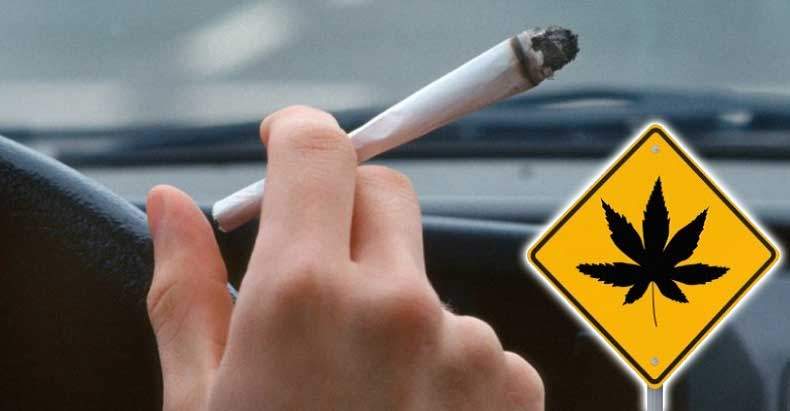
Cannabis and driving: what does French law say?
Driving after consuming cannabis is subject to criminal and administrative penalties in France. Since the entry into force of the RIPOST Act On August 18, 2026, the law was expanded to include a new offense that no longer necessarily requires a positive test result. Here’s what you need to know, including about the legal status of cannabis in France.
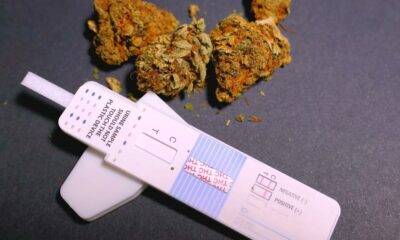
Saliva Testing During Traffic Stops
A driver may be required to take a saliva test during any traffic stop, without the need for a prior traffic violation. The driver must provide the sample himself. If the test is positive for THC, a second saliva sample is sent to a toxicology laboratory or a specialized expert.
The detection threshold for cannabis in saliva is set so low that even the slightest trace is enough to result in a positive test. If both saliva tests are positive, or in the event of a challenge (which is strongly recommended), law enforcement officers must normally take a blood sample and send it to a laboratory. A negative blood test result then takes precedence over the saliva tests.
Another principle that has not changed: even if the driver is no longer under the influence of cannabis at the time of the check, the mere presence of THC is sufficient to establish the offense.
Penalties under Article L. 235-1 of the Highway Code
Driving after using narcotics, as provided for by the’Article L. 235-1, can result in a fine of up to 4,500 € and the loss of 6 points on the driver’s license. Penalties may be more severe: temporary suspension of the driver’s license, permanent revocation, or even up to two years in prison in the most serious cases. If the driver also exceeds the legal blood alcohol limit, the penalties for cannabis and alcohol are cumulative.
For this classic offense, the use must necessarily result from a positive saliva or blood test. It does not matter whether or not the driver shows signs of impaired driving ability: the mere presence of the narcotic in the body is sufficient to constitute the offense.
The RIPOST Act creates a new offense without requiring a positive test result
Since August 20, 2026, the RIPOST Act introduced a separate offense into the Highway Code: driving after a « obvious use »narcotics,’ as codified in the’Article L. 237-1. This provision criminalizes driving «while having clearly used substances or plants classified as narcotics.».
Unlike Article L. 235-1, this new offense does not necessarily require a positive toxicological test. The law’s impact assessment follows, in terms of evidence, the same logic as that applied to driving while visibly intoxicated: law enforcement officers may rely on the driver’s behavior, demeanor, or appearance to establish the offense, without a positive test being required. Some red eyes or dilated pupils may be among them, but none of these signs alone proves drug use. The Council of State itself noted that the factual characterization of this offense does not require establishing the presence of the narcotic in the body.
The offense is punishable by three years’ imprisonment and a fine of 9,000 €, with automatic loss of half the maximum number of points on the driver’s license in the event of a conviction.
Another notable change: The RIPOST Act now allows for the administrative suspension of a license as soon as the driver is detained for obvious use, even before any judgment is rendered. A driver under suspicion may therefore have their driver’s license revoked before a court has ruled on the matter, even if they deny having consumed any drugs. It remains to be seen how the courts will interpret this as-yet-unprecedented concept of ’obvious use.«.
CBD is not subject to these sanctions
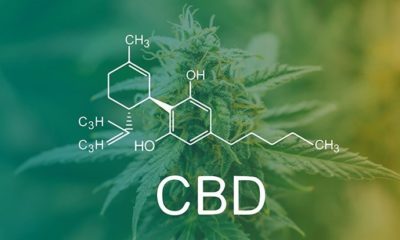
Contrary to a common misconception, driving after consuming CBD (cannabidiol) is not prohibited per se. The Court of Cassation has confirmed that the offense of driving after using narcotics is based on the presence of THC—the only molecule classified as a narcotic—regardless of the dose ingested.
The risk, therefore, comes solely from CBD products that also contain THC, even in trace amounts: a «full-spectrum» flower or extract can cause a positive saliva test result, whereas products made from isolate or broad-spectrum CBD oils significantly reduce this risk.
Key Takeaways
France now has two distinct legal frameworks for penalizing driving after using cannabis: the traditional offense under Article L. 235-1, based on a positive test result, and the new offense of “obvious use” under Article L. 237-1, which can be established based solely on police observations. CBD, however, remains outside the scope of these penalties as long as it does not contain THC.
A decree published on December 13 in the Journal Officiel de la République Française (Official Journal of the French Republic) makes it easier to test for drug use while driving. A saliva test may now accompany any roadside check. Prior to this change, a saliva test was only required in the event of an offence.











France already has 3,000 cannabis retail outlets. None of them are legal.

Morocco's exports of legal cannabis have expanded to 15 countries

Aurora Cannabis Doubles Its Production Capacity in Germany

Tilray is accelerating its operations in Europe thanks to a license in Portugal

Boston will host the 10th annual State of the Cannabis Industry Conference on October 26

A DEA report confirms that there are no fatal cannabis overdoses

A British patient is challenging the NHS's refusal to reimburse medical cannabis

October 2026 CBD Highlights: 10 Strains and Hash to Discover from 5 French Producers

CBD in France: Traceability, Retail Stores, THC and Driving… What the New Bill Proposes

