
Costa Rican president unlikely to sign medical cannabis law

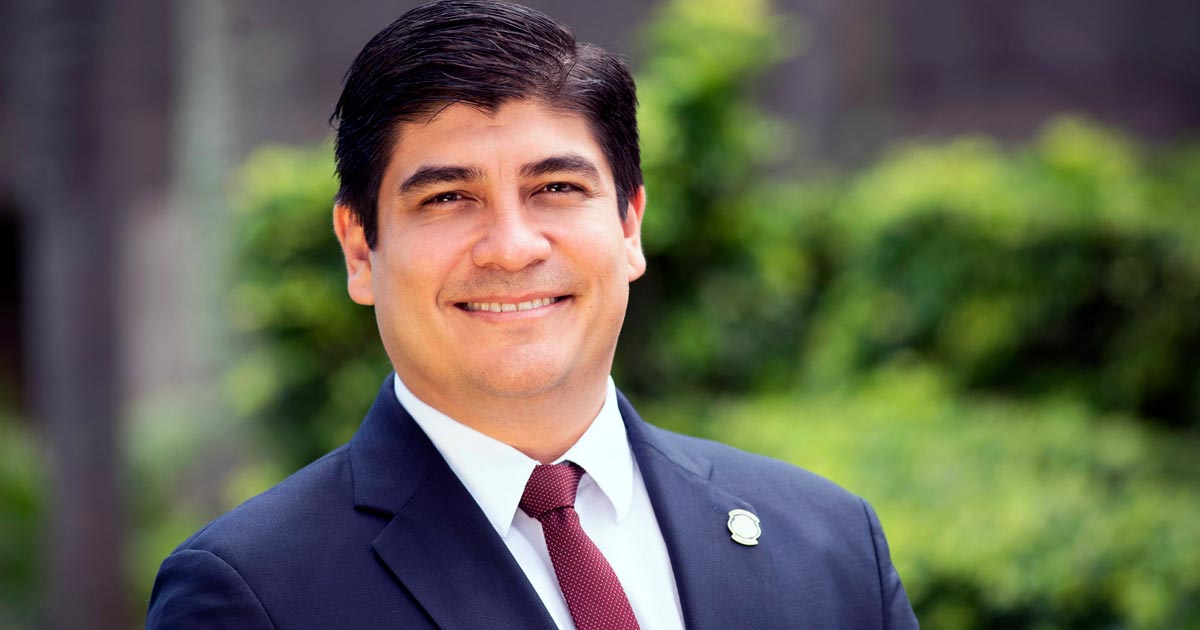
It now seems unlikely that Costa Rican President Carlos Alvarado will sign the bill to legalize medical cannabis and industrial hemp. He has, however, stated that he will soon issue a counterproposal.
Almost simultaneously, the Catholic Church in Costa Rica urged the government and lawmakers to «reconsider» the bill, warning that an «uncontrolled culture of psychoactive cannabis» would cause «serious harm to public health.».
The law, which was passed by a narrow margin in the Legislative Assembly by a vote of 29 to 28 at the beginning of the month, covers the cultivation, harvesting, processing, storage, and transportation of medical cannabis and hemp products.
Fundamental Issues
Carlos Alvarado said that 'there are several substantive issues» regarding the bill passed by the legislature, without further details.
Following the president’s announcement, lawmakers from Alvarado’s Citizen Action Party urged the president to forego further review and sign the bill as is. Meanwhile, the president of the National Liberation Party, Silvia Hernández Sánchez, accused the government of creating «smoke screens» around the bill and the issue of cannabis regulation.
«The information recently released by the executive branch regarding the cannabis and hemp bill sounds like nothing more than an excuse to veto it or to introduce a new bill with exceptions,» Hernández said.
Protocol Verification
The Costa Rican Union of Chambers and Associations of the Private Sector, the Costa Rican Chamber of Industries, and the National Chamber of Agriculture and Agribusiness have also urged the president to sign the bill, highlighting its potential for economic development.
The president stated that he would take into account the main United Nations protocols as part of his review, including the Single Convention on Narcotic Drugs, the Vienna Convention on Psychotropic Substances, and the Convention Against Illicit Traffic in Narcotic Drugs and Psychotropic Substances, so many international texts that authorize the medical use of cannabis and the’industrial use of hemp.
Church Interference
José Manuel Garita, president of the Catholic Bishops« Conference, also spoke out against the bill. He stated that it would endanger public health and safety and that it contained »inconsistencies” that needed to be resolved. The Church also suggested that the law, as currently drafted, would make it difficult to control illicit cultivation. The Costa Rican Church is not alone in opposing medical cannabis: the situation is similar in Belize or in Utah.
Supporters of the bill argue that cannabis can provide economic and social development in rural areas Costa Rica by authorizing the production, processing, and sale of hemp for industrial and food applications, not to mention the potential relief that medical cannabis could provide to patients.




















One year after the launch of the Dutch cannabis experiment, the first trends are emerging

High Ground: The Crash of a Plane Full of Marijuana That Made History in Yosemite

The United Kingdom Is Moving Closer to a Regulated CBD Market

Mexico's Supreme Court Authorizes Cannabis-Infused Edibles for Personal Use

French medical cannabis remains stalled at the Ministry of Health

Things are heating up between Sherbinski and Doja

Cookies Ordered to Pay $61.5 Million in a Dispute with Its Investors

Frenchfarm is launching its B1G1 clearance sale + free gift

Czech Republic: CBD shops selling synthetic cannabinoids are in the police's crosshairs

Cannabis and CBD: French Drivers Can Now Lose Their License Even Without a Positive Test Result
-
 Cannabis and driving5 days ago
Cannabis and CBD: French Drivers Can Now Lose Their License Even Without a Positive Test Result
-
Cannabis in France1 week ago
Cannabis Legalization: The LFI Bill Has a Major Problem—THC
-
Cannabis in Europe2 weeks ago
Andorra Paves the Way for Medical Cannabis Cultivation
-
Cannabis in France2 weeks ago
Drought: Could Hemp Become the New Hope for French Farmers?
-
Cannabis in France1 day ago
French medical cannabis remains stalled at the Ministry of Health
-
Cannabinoids2 weeks ago
What if CBD enhanced the effects of THC? A comprehensive analysis challenges a common misconception
-
Cannabis in the U.S.2 weeks ago
United States: Congress Rejects Ban on THC Derived from Hemp
-
Cannabis in Quebec2 weeks ago
Cannabis in Quebec: The 21-Year-Old Age Requirement in the Spotlight














You must be logged in to post a comment Login