
Daily inhalation of cannabis increases risk of lung disease

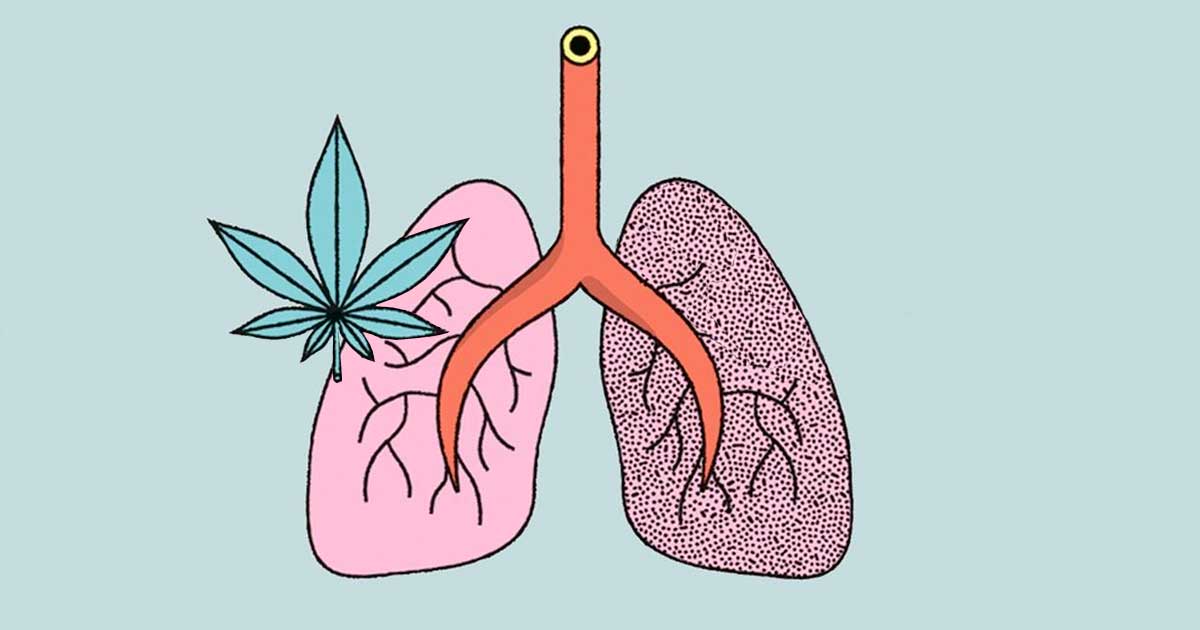
A study conducted by researchers at the University of California, San Francisco (UCSF) and published in the Journal of General Internal Medicine highlights the respiratory risks associated with the cannabis use.
The results of this study suggest that daily consumption increases the risk of developing’asthma and may also increase the risk of chronic obstructive pulmonary disease (COPD), a group of lung disorders that includes emphysema and chronic bronchitis.
According to the study, people who inhale cannabis every day—whether by smoking, vaporizing, or dabbing—are at risk 44%: Higher Prevalence of Asthma and a risk Higher 27% in COPD. These associations were observed even among people who have never tobacco smoke.
«If people want to reduce their risk of developing chronic lung disease, they shouldn't start using cannabis. And if they already smoke cannabis, they should do so less often,» said Dr. Alison Rustagi, MD, PhD, assistant professor at UCSF and lead author of the study.
Scope of the Research
The research is based on data from the Behavioral Risk Factor Surveillance System (BRFSS), a national survey conducted by the U.S. Centers for Disease Control and Prevention (CDC). Between 2016 and 2020, more than 379,000 adults People aged 18 to 74 were surveyed, and nearly 23,000 reported having smoked cannabis over the past 30 days.
The researchers defined inhalation broadly, including the consumption through combustion, the vaporization and the dabbing. Unlike previous studies, which were limited by small sample sizes or the confusion regarding tobacco use, this analysis drew on a large sample of participants who did not never smoked cigarettes, or more than 220,000 people.
For these nonsmokers, daily cannabis use was associated with a a 51% increase in the risk of asthma, highlighting cannabis as a independent risk factor respiratory diseases.
A dose-response relationship
Published on September 4, 2025, this peer-reviewed article provides detailed statistical evidence of a dose-response effect : the more the cannabis was smoked The more frequently people consumed it, the higher their risk of respiratory disease. Daily consumers showed the strongest associations, but elevated risks were also observed among less frequent consumers.
More specifically, the adjusted odds ratios (aOR) indicated a 1.44-fold increased risk of asthma and a 1.27-fold increased risk of COPD for daily smokers compared with non-smokers. Among people who had never smoked tobacco, the association with COPD was high (aOR 1.54), but did not reach statistical significance, likely due to the long time required for the disease to develop.
The study also found that the young adults under 35 years of age who used Daily cannabis users had a similar risk of asthma as older users.
For COPD, the associations were more pronounced in people under 50 years old, while no significant association was found among older adults. The researchers suggest that this may be due to insufficient cumulative exposure, as today’s older generations have only recently begun to use cannabis in greater numbers.
Implications for Public Health
As cannabis becomes more mainstream in the United States, with access to healthier products and less harmful methods of consumption, the risks to lung health remain underestimated.
«The message that smoking tobacco is bad for your health is widely known, but when it comes to cannabis, it’s much less clear,» said Dr. Rustagi. She emphasized the importance of screening for cannabis use in patients with asthma or COPD, as recommended by current clinical guidelines for chronic respiratory care.
Research also indicates that cannabis is a potentially modifiable risk factor for lung diseases. Unlike genetic predispositions or early-life exposures, inhalation habits can be changed, offering a tangible path to prevention.
Limitations and Future Directions
As a’cross-sectional study, the research cannot establish a causal relationship, and all the data have been reported by the participants themselves, which could introduce a bias. Furthermore, the researchers did not have information on cumulative lifetime exposure to cannabis, a key variable in diseases that take decades to develop. Nevertheless, the consistency of the associations across the different subgroups strengthens the case for a genuine connection.
The authors conclude that, although additional longitudinal studies are needed, the evidence is sufficient to warrant caution: cannabis inhalation is not without risk and may contribute to an increased burden of chronic respiratory diseases.


















294 cannabis clubs in Chile: a booming movement with uneven distribution

Chronic Sciatica: New York Approves First Clinical Trial of a THC-Based Medication

United States: The DEA is accelerating the integration of medical cannabis at the federal level

Florida is nearing one million patients using medical cannabis

Uruguay Revives Its Plan to Allow Tourists to Legally Access Cannabis

In Brazil, researchers are developing an innovative CBD eye drop

Autism: Medical Cannabis Is Linked to Reduced Anxiety

The $28 billion U.S. hemp market remains under threat

Jamaica Eases Small Farmers' Access to the Cannabis Market

Faced with resistance from Aurora, Curaleaf raises its offer by 25%
-
 Business5 days ago
The legal cannabis market in New York exceeds 4 billion $ in revenue
-
Cannabis and driving4 weeks ago
Cannabis and CBD: French Drivers Can Now Lose Their License Even Without a Positive Test Result
-

 Cannabis in France2 weeks ago
Which countries legalized medical cannabis before France?
-
Business2 weeks ago
South Korea is preparing to begin local production of medical cannabis to meet rising demand
-
Cannabis in the Netherlands4 weeks ago
One year after the launch of the Dutch cannabis experiment, the first trends are emerging
-
Cannabis in Thailand2 weeks ago
From the boom in dispensaries to a purely medical approach: Thailand is revising its cannabis policy
-
Cannabis in France4 weeks ago
French medical cannabis remains stalled at the Ministry of Health
-
Cannabis in Argentina3 weeks ago
Argentina Opens Its Market to Hemp Flowers Containing 1% of THC
















You must be logged in to post a comment Login