Europe's illicit cannabis market is worth 11.4 billion euros, according to a new report


Last week, the European Monitoring Center for Drugs and Drug Addiction (EMCDDA) released its detailed report on the illicit cannabis market in the European Union.
The report, based on the latest data from the EMCDDA and its co-author Europol, reveals the extent of the illicit cannabis market, valued at 11.4 billion euros, which is estimated to have supplied 22.6 million Europeans over the past year.
Although the market size «remains stable,» the report raises a number of major concerns, including the sharp increase in THC potency and the rapid emergence of semi-synthetic cannabinoids such as HHC and environmental implications of illicit cultivation cannabis in Europe.
«All of these developments are taking place amid an ongoing political debate in Europe and around the world that is impacting both legal and illicit markets, posing challenges for law enforcement and the criminal justice system,» said Andrew Cunningham, head of markets, crime, and supply at the EMCDDA, during the webinar report launch.
Spain, Morocco, and the Western Balkans
With an estimated 22.6 million users last year, cannabis is by far the most widely used illicit substance in Europe, as its use is six times higher than that of cocaine, the second most widely used illicit substance.
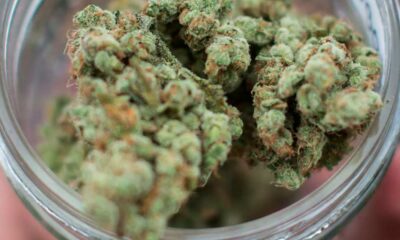
Cannabis herb, or cannabis flower, accounts for more than three-quarters (77%) of the total market value (at least 8.8 billion euros), while the cannabis resin represents the remaining 23%, estimated at approximately 362 metric tons.
The amount of cannabis seized in the EU, Norway, and Turkey reached an all-time high in 2021, totaling more than 288 metric tons. According to available data, the vast majority of cannabis seized in the EU comes from a small number of countries.
One of these countries is Spain, which in 2021 accounted for approximately 51% of the total cannabis herb seized in the EU—about 130 metric tons— while Italy (47 metric tons) and France (nearly 40 metric tons) together accounted for another third of the total.
These figures were overshadowed by the record 850 metric tons of cannabis resin seized in 2021 in the EU, Norway, and Turkey, with Spain once again accounting for the majority of the seizures—approximately 82%.

Credit: EMCDDA
«Most of the cannabis resin available on the European market comes from Morocco, and because of its geographic location, Spain is the main point of entry into the EU,» said Robert Patrancus, a scientific analyst at the EMCDDA.
Although the Morocco remains the main source of resin in Europe, many EU countries have identified it as a source of cannabis in recent years, marking a diversification of the product.
With regard to cannabis herb, the report suggests that the vast majority is grown within the EU, but the Western Balkans region remains an important source of cannabis herb for the EU.
However, this situation is beginning to change, as the Albania's efforts to address the problem which has apparently led to a decline in seizures since 2018.
«As part of these changes, in order to get closer to the main consumer market, some criminal networks in the Western Balkans have adopted a new business model, leading them to become involved in the cultivation and trafficking of cannabis within the EU.»
In particular, since the North Macedonia has legalized cannabis production For medical purposes in 2016, «large quantities» of legally grown products were diverted to the illicit market, a trend also observed in Albania.
While the Americas, West Africa, and Southeast Asia are no longer considered major sources of illicit cannabis imports, there has recently been an «increase in the frequency of cannabis trafficking from Canada and the United States.».
Semi-synthetic cannabinoids
Another key issue raised in the report is the growing range of different cannabis consumer products, which extends far beyond the «old hash-and-weed model,» with vapes, and edibles, oils, and extracts that are now readily available to consumers throughout Europe.
The data suggest that the THC content of cannabis has increased by 57% in dried herb over the past decade, and by nearly 200% in resin, likely due to improvements in genetics and extraction techniques.
Cannabis has also become more affordable; data that takes into account costs «adjusted for purity or potency relative to a given country’s standard of living» suggests that «your money buys 25% more THC than before .».

Source: EMCDDA
The rise of semi-synthetic cannabinoids—which, according to the EMCDDA, are «primarily made from CBD»—is a cause for concern amid this rapidly evolving market diversification.
Substances such as HHC, Delta-8 and Delta-10-THC "They occur naturally in the cannabis plant in small quantities," explains the EMCDDA, "but producers now commonly convert non-psychoactive CBD into these psychoactive substances in laboratories.".
«CBD has become a precursor,» said Laurent Laniel, senior scientific analyst at the EMCDDA, during the webinar.
«Why did people suddenly decide to make these new semi-synthetic extracts from CBD? Because there was an oversupply of CBD in the United States and Canada. People invested money in producing CBD cannabis and couldn’t sell it on the market, so they turned it into these new products to avoid losing their entire investment—or even to make a profit.»
The danger, he adds, is that these substances are new and we do not yet have the data needed to determine whether they are safe to consume.
The Environmental Impact of Illegal Cannabis Production
Although the EMCDDA noted that its data on cannabis production sites in the EU were «incomplete,» it suggested that some 7,000 illicit cultivation sites had been dismantled in 2019 across 14 Member States. In 2020 and 2021, these figures rose to 10,000 and 9,000, respectively.
The number of cannabis plants seized—a «key indicator» used to determine the size of the illicit market—reached 4.3 million in 2021, including approximately 3.2 million in Spain, representing an increase of nearly twofold compared to 2020.
In Turkey, the number of cannabis plants seized in 2021 was 18 times higher than in the entire EU, reaching 76 million.
It is estimated that the size of this market has a significant environmental impact, given the high water and energy requirements involved in growing large quantities of cannabis, while the available data is also improving due to the growing number of regulated markets in the EU.
Growing one kilogram of cannabis indoors requires approximately 6,000 kilowatt-hours of electricity, which is equivalent to about 1,400 kg of carbon footprint.
To put this into perspective, a Dutch electricity provider estimated that the amount of electricity stolen for cannabis production in 2021 was approximately 1 billion kilowatt-hours. This is equivalent to the annual household electricity consumption of a city the size of Rotterdam.
Water use is a second major environmental impact. If grown outdoors, a cannabis plant requires about 19 to 21 liters of water per day, and the average growth cycle is about 150 days.
The EMCDDA cited the specific example of a cannabis crop dismantled in Spain that contained 400,000 plants. Based on these figures, a single harvest cycle would require approximately 1.8 billion liters of water—the equivalent of the daily water consumption of a country the size of Latvia.
Despite this, it is estimated that the carbon footprint of indoor cannabis cultivation is 60 to 100 times greater than that of outdoor cultivation. For example, to produce the carbon footprint of a single cannabis joint (0.3 g) grown outdoors, one would need to drive 70 meters in a hybrid electric vehicle. For cannabis grown indoors, that figure rises to 4.6 km.
















JIHE 2026: Japan’s Largest Trade Show Dedicated to Hemp and CBD Returns to Tokyo with More Than 100 Industry Players

New Caledonia: The Courts Clear the Way for the Return of CBD

The Brazilian medical cannabis market continues to grow

Morocco: Three Cannabis-Based Medications Approved for the Treatment of Epilepsy

Canopy Growth Receives New EU-GMP Certification to Strengthen Its Presence in Europe

Three years after legalizing medical cannabis, Albania continues to establish regulations for it

The first plant-based medical THC spray arrives in the United Kingdom

Medical Cannabis in Germany: THC Prices Vary by a Factor of 12

France already has 3,000 cannabis retail outlets. None of them are legal.

Morocco's exports of legal cannabis have expanded to 15 countries
-
 Business2 weeks ago
The legal cannabis market in New York exceeds 4 billion $ in revenue
-

 Cannabis in France4 weeks ago
Which countries legalized medical cannabis before France?
-
Business4 weeks ago
South Korea is preparing to begin local production of medical cannabis to meet rising demand
-
Cannabis in France4 days ago
France already has 3,000 cannabis retail outlets. None of them are legal.
-
Cannabis in Thailand4 weeks ago
From the boom in dispensaries to a purely medical approach: Thailand is revising its cannabis policy
-
Cannabis in the U.S.5 days ago
A DEA report confirms that there are no fatal cannabis overdoses
-
Cannabis and driving3 weeks ago
Medical Cannabis and Driving: New South Wales Ends Automatic Penalties for THC
-
Cannabis in France3 weeks ago
France’s Drug Policy Chief Defends Cannabis Prohibition... and Runs Into the Facts












You must be logged in to post a comment Login