
Intensive cannabis cultivation: a danger for the environment?

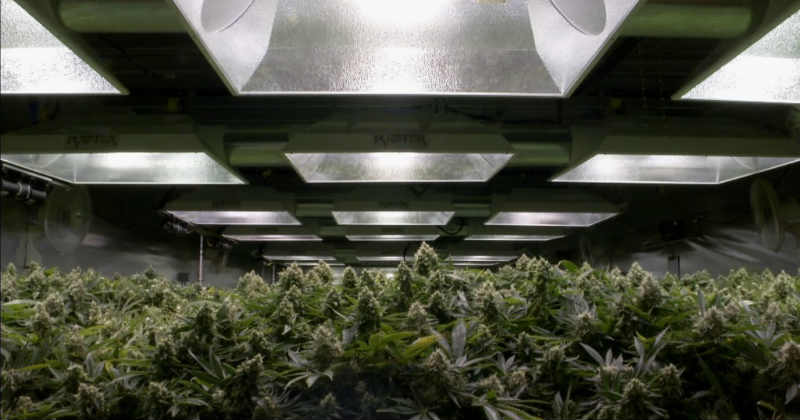
Growing hemp in open fields requires little water and no pesticides. For cannabis, on the other hand, modern cultivation methods seek to maximize every aspect of its growth, with numerous external inputs. Whereas the cannabis market is booming and with a massive industry on the horizon, can cannabis still be considered environmentally friendly?
High water and energy consumption
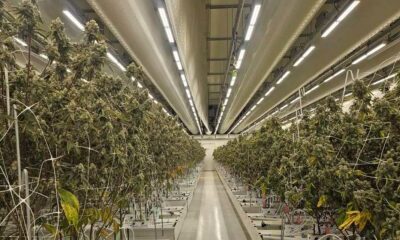
For the most important cannabis producers on the market, indoor cultivation is obviously the most profitable method, as it is not subject to the vagaries of the climate and allows optimum control of product quality. However, this method, used for example by the Canadian market leaders Aurora and Canopy, is energy- and water-hungry. With constant artificial light, air conditioners and dehumidifiers, the production infrastructures, which can cover millions of square meters, consume thousands of dollars in electricity every month.
According to Werner Antweiler, Professor of Business and Environmental Economics at the University of British Columbia, this is a worrying fact: “The carbon footprint could be quite significant given the intensive production methods”. In the United States, research conducted by the University of California, Berkeley, estimates that American production facilities account for a total of 1% of the country's annual electricity consumption, and emit approximately 50 million tonnes of greenhouse gases.
Cannabis production is also water-intensive, and could therefore prove problematic in certain regions. Selina Lee-Andersen, an environmental lawyer based in Vancouver, points out that a cannabis plant needs around 22 liters of water a day: “you can imagine that this could be a major problem in places like California, which are prone to drought”.
In view of these facts, the cannabis production industry could stand in the way of the environmental objectives set by governments. Canada, for example, has pledged to reduce its greenhouse gas emissions by 30% by 2030, which, according to environmentalists, should involve restructuring agriculture in order to reduce the sector's carbon footprint.
Opting for greener methods
There are alternative methods to indoor production, although less profitable in terms of production. The Cannabis plant adapts very well to natural constraints and can be easily grown outdoors. It also requires virtually no addition of pesticides and herbicides. Outdoor cultivation moderates production energy requirements thanks to natural light, air quality and rainwater. The drawbacks of this method are that production quality is less controllable and cultivation is impossible in winter, which can be problematic in terms of yield.
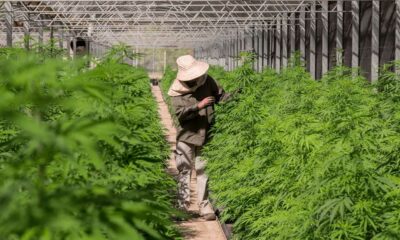
Another alternative is greenhouse cultivation, which maintains year-round production while reducing the need for air conditioning and light. This is the method adopted by Hydropothecary Corp. a Quebec-based producer committed to sustainable cultivation, which only grows under glass.
“In summer, we hardly need any electricity because the days are so long and the sun is so strong,” explains Terry Lake, the company's vice-president. The company also uses software that calculates precisely how much water each plant requires, enabling it to store any excess and distribute water accordingly to avoid wastage. The advantages of this type of production do not, however, stand up to the constraints of winter.
The cannabis law in Canada does not report any production standards at federal level, but companies like Aurora are still trying to reduce their environmental impact by experimenting with (more) responsible techniques such as LED lighting systems or intelligent irrigation systems.











Medical Cannabis and Back Pain: Opioid Use Has Dropped by 90 % in 10 Years

Cannabis: Wisconsin Could Finally Legalize It in 2027

Argentina Opens Its Market to Hemp Flowers Containing 1% of THC

The French Socialist Party still doesn't know how to approach the legalization of cannabis

Science in the City International: Paris at the Heart of Transatlantic Scientific and Medical Dialogue

Christine Fréchette is alienating Quebec’s cannabis industry

Rima Hassan: When «Drugs» Become a Political Weapon

From Marathons to Ultratrails: How Extreme Running Affects the Endocannabinoid System

Four days of THC may make breast cancer less aggressive, according to a new study

Medical Cannabis: 14 Organizations Finally Call for Enforcement of the Law
-
 Cannabis and driving2 weeks ago
Cannabis and CBD: French Drivers Can Now Lose Their License Even Without a Positive Test Result
-
Cannabis in France2 weeks ago
Cannabis Legalization: The LFI Bill Has a Major Problem—THC
-

 Cannabis in the Netherlands6 days ago
One year after the launch of the Dutch cannabis experiment, the first trends are emerging
-
Cannabis in France1 week ago
French medical cannabis remains stalled at the Ministry of Health
-
Business6 days ago
The United Kingdom Is Moving Closer to a Regulated CBD Market
-
Cannabis in Europe2 weeks ago
Andorra Paves the Way for Medical Cannabis Cultivation
-
Cannabis in Argentina3 days ago
Argentina Opens Its Market to Hemp Flowers Containing 1% of THC
-
Cannabis in France3 weeks ago
Drought: Could Hemp Become the New Hope for French Farmers?










You must be logged in to post a comment Login