Czech government suspends plans to ban CBD and will study specific regulation

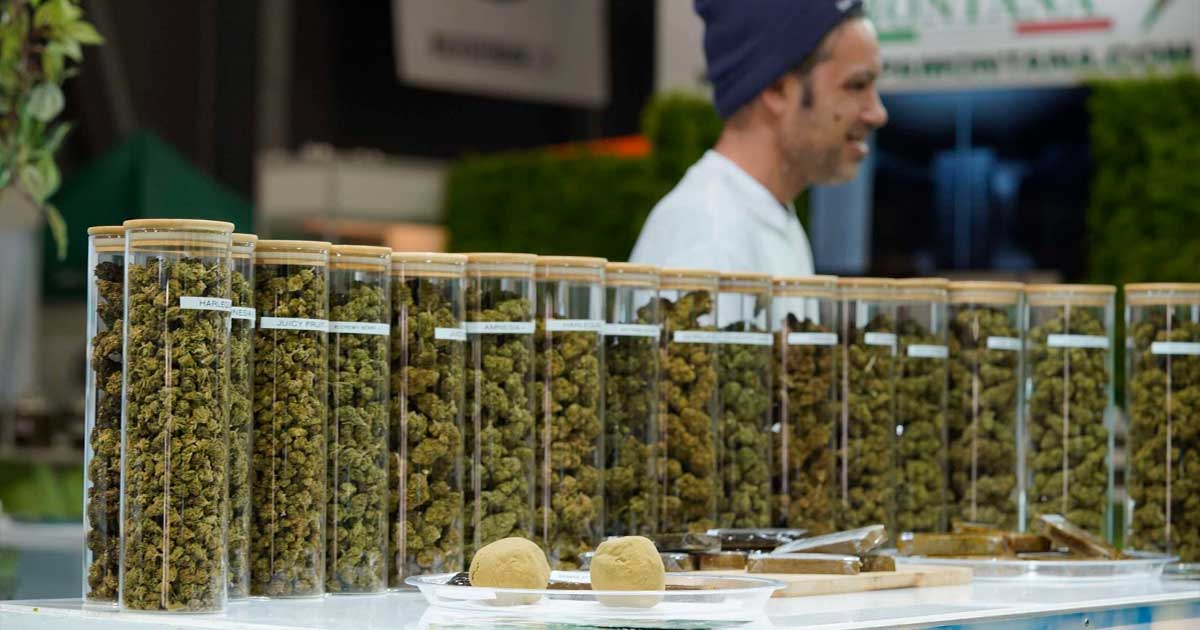
The Czech government has announced that it is reversing the statements banning CBD in the country and will continue to study the regulations governing CBD and other hemp-derived cannabinoids.
«We have agreed that the upcoming regulation governing the sale of CBD will not take effect at this time,» said Prime Minister Petr Fiala, who noted that a working group had begun a review aimed at developing «clear and predictable rules» for hemp-derived products.
Together with Deputy Prime Minister Ivan Bartoš, Minister of Agriculture Zdeněk Nekula, Minister for Legislation Michal Šalomoun, and National Drug Policy Coordinator Jindřich Vobořil, we met to discuss the proposed ban on foods containing CBD. We agreed that… pic.twitter.com/hw6MgF5nuG
— Petr Fiala (@P_Fiala) May 17, 2023
Under the now-overturned ban, all foods and dietary supplements containing cannabinoids, as well as cosmetics containing hemp-derived cannabinoids, would have been removed from the market. The ministry had stated that it was following a strict interpretation of European Union rules. that classify CBD isolate as a novel food which must undergo safety assessments by the European Food Safety Authority (EFSA).
A definite relief for the industry
In his tweet, the prime minister stated that the ban would have caused «a major complication for users of this substance and for a number of Czech entrepreneurs.».
As in all European countries, CBD is sold in the Czech Republic in the form of oils, tinctures, capsules, candies, and other edible products, and it is found in many health and beauty products on the market.
The European Commission has ruled In December 2020, it was determined that CBD is not a narcotic and that it can be classified as a food if it complies with the relevant provisions of EU food law. The decision also stated that CBD-based products should enjoy the same free movement of goods between and among Member States than other legal products.
EFSA has begun reviewing various forms of CBD with a view to approving them for the EU markets under the rules governing novel foods. During this review, however, EFSA found it difficult to evaluate this type of product and has put its application process on hold on several occasions.
Was the HHC a trigger?
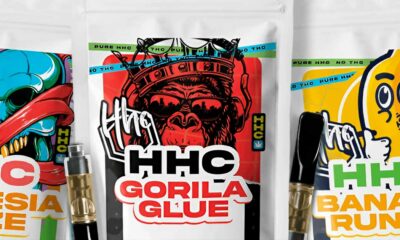
The proposal to ban CBD products may have been motivated by due to the emergence of HHC, a synthetic psychoactive compound that is said to mimic the «high» of cannabis and is produced by subjecting CBD to a «semi-synthetic» process. The Czech Republic has been identified as one of 20 or more EU countries where HHC-based products have appeared, which prompted the European Monitoring Center for Drugs and Drug Addiction to issue health warnings.
The Czech government issued warnings about HHC in March, urging consumers not to use these products due to potential health risks.
In addition to the reactions of local stakeholders, the European Industrial Hemp Association (EIHA) criticized the Czech government for failing to recognize hemp extracts containing natural levels of cannabinoids as traditional foods.
Three levels available
The EIHA has called for a European policy that would establish a three-tier safety system classifying CBD as traditional foods, novel foods, or medicines, depending on its concentration.
While isolated and enriched extracts should be considered novel foods, full-spectrum extracts containing natural levels of cannabinoids (unenriched extracts) should be considered traditional foods that do not require prior authorization for marketing, according to the association.
The EIHA has called on the Czech government to make «a balanced, historically accurate, and transparent decision on the issue of the commercialization of hemp extracts.».
«Together, we will find a solution that benefits everyone,» said Czech Deputy Prime Minister Ivan Bartoš, who, along with Agriculture Minister Zdeněk Nekula, participated in the discussions that led to the lifting of the CBD ban.
At the same time, the country has, in any case, announced the legalization of cannabis.

















Medical Cannabis in Germany: THC Prices Vary by a Factor of 12

France already has 3,000 cannabis retail outlets. None of them are legal.

Morocco's exports of legal cannabis have expanded to 15 countries

Aurora Cannabis Doubles Its Production Capacity in Germany

Tilray is accelerating its operations in Europe thanks to a license in Portugal

Boston will host the 10th annual State of the Cannabis Industry Conference on October 26

A DEA report confirms that there are no fatal cannabis overdoses

A British patient is challenging the NHS's refusal to reimburse medical cannabis

October 2026 CBD Highlights: 10 Strains and Hash to Discover from 5 French Producers

CBD in France: Traceability, Retail Stores, THC and Driving… What the New Bill Proposes
-
 Business2 weeks ago
The legal cannabis market in New York exceeds 4 billion $ in revenue
-

 Cannabis in France3 weeks ago
Which countries legalized medical cannabis before France?
-
Business3 weeks ago
South Korea is preparing to begin local production of medical cannabis to meet rising demand
-
Cannabis in Thailand3 weeks ago
From the boom in dispensaries to a purely medical approach: Thailand is revising its cannabis policy
-
Cannabis and driving3 weeks ago
Medical Cannabis and Driving: New South Wales Ends Automatic Penalties for THC
-
Autism3 weeks ago
Autism and Cannabis: Results from the First Placebo-Controlled Trial of NTI164
-
Cannabis in France2 weeks ago
France’s Drug Policy Chief Defends Cannabis Prohibition... and Runs Into the Facts
-
CBD1 week ago
In Brazil, researchers are developing an innovative CBD eye drop
















You must be logged in to post a comment Login