
No more CBD? Czech Republic considers banning products containing hemp

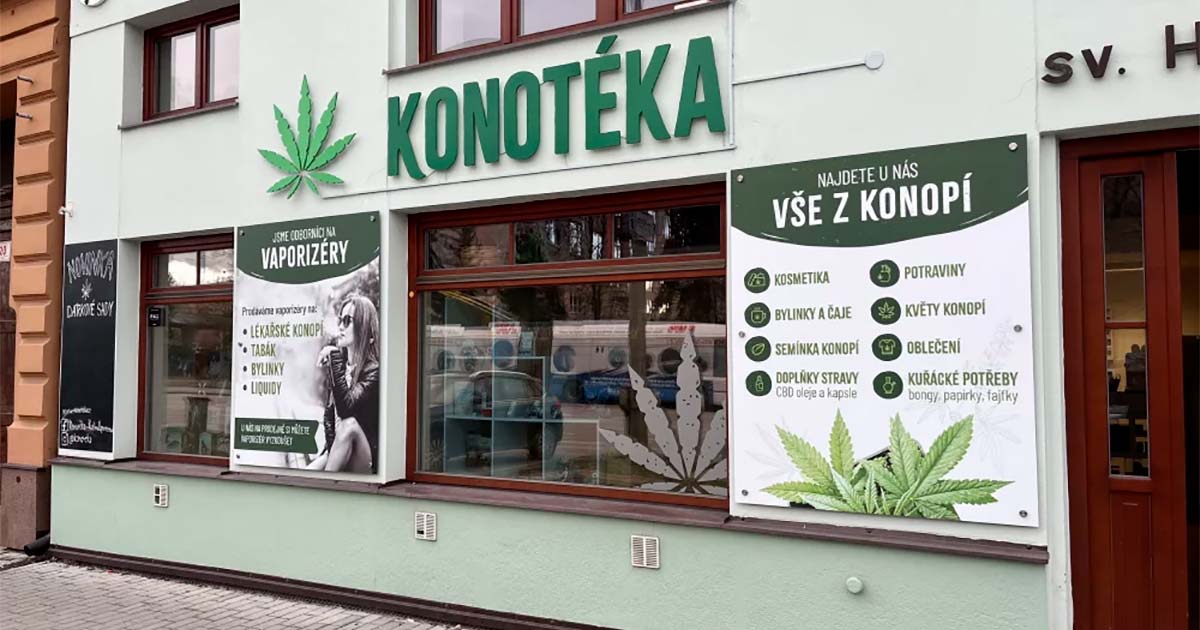
Can a country begin legalizing cannabis while at the same time considering a ban on CBD? It would seem so.
The Czech food safety authorities announced in a press release their intention to ban the sale of products containing CBD and other cannabinoids derived from hemp, citing European regulations and the lack of research on the health effects of these compounds.
The Czech Ministry of Agriculture stated that the National Agricultural and Food Inspection Authority (SZPI) is preparing a measure to remove from the market all foods and dietary supplements containing cannabinoids, which are sold in the form of oils, tinctures, capsules, gummies, and other edible products. The ban will also apply to cosmetic products containing cannabinoids derived from hemp.
The ministry did not specify the date the ban would take effect.
Security Issues
The ministry stated that it was following a strict interpretation of EU rules that make these products illegal. In certain cases, European regulations designate the CBD as a novel food (Novel Food), which must undergo safety assessments by the European Food Safety Authority (EFSA).
«I cannot accept that food products be placed on the market if the European Food Safety Authority cannot guarantee their safety,» said Agriculture Minister Zdeněk Nekula, who acknowledged that the ban «will have an impact on certain food industry operators.» ”
The European Commission ruled in December 2020 that CBD is not a narcotic and may be classified as a food if it complies with the relevant provisions of EU food law. European courts have also ruled that CBD-based products should enjoy the same free movement of goods between and among Member States than other legal products.
At the same time, EFSA has begun reviewing various forms of CBD in order to approve them for the EU markets under the rules governing novel foods. However, as this review progressed, EFSA also found that it was difficult to determine whether the products were safe and having to limit oneself to isolated CBD.
«The EFSA has identified several potential risks and stated that there are many gaps in the data regarding potential health effects that must be addressed before progress can be made in assessing the safety of CBD and hemp extracts,» said the Czech Ministry of Agriculture. «It stated that, due to the lack of data, it is not possible to confirm the safety of CBD,», even though it has been declared safe by the WHO as early as 2017.
A Misinterpretation
The announcement prompted a reaction from Lukas Hurt, editor of the Czech specialty magazine *Konopi*, who pointed out several inaccuracies in the Ministry of Agriculture’s statement.
«There are several reasons why this is an unnecessary measure—and, moreover, one that is not being enforced by the Czech authorities. Although the Ministry of Agriculture refers in its press release to the EU regulation on «novel foods,» this is not a legally binding EU regulation, but merely a recommendation. Each member state can therefore decide for itself what is or is not a novel food,» he noted—a position that also applies to France, which does not enforce the Novel Food regulation.
«With regard to novel foods, we have evidence—in collaboration with the European Industrial Hemp Association (EIHA)—confirming that CBD and other cannabinoids should not be labeled as novel foods. If anything is to be labeled as a novel food, it can only be highly concentrated isolates, most often in the form of powder or crystals. But not plant extracts produced using traditional methods,» said Hana Gabrielová, president of CzecHemp, a Czech association of hemp producers.
«The use of industrial hemp plants and extracts for industrial, food, and cosmetic purposes is permitted under Czech law. Further studies are needed to determine the safety of concentrated cannabinoid isolates, but the World Health Organization (WHO) considers CBD extracts derived from industrial hemp, for example, to be safe,» Lukas Hurt continued.
«The EIHA has a long-standing partnership with CzecHemp and will promptly share with the Czech authorities all relevant documentation, analyses, and primary sources that clearly confirm that plant-based cannabinoids have been part of our ancestral diet for many centuries,» said Lorenza Romanese, executive director of the European Industrial Hemp Association (EIHA).
The SZPI's unexpected decision also surprised Jindrich Voboril, the national coordinator for drug control, who is also involved in the Legalization of cannabis in the Czech Republic and certainly does not wish to embark on a path of new bans.
«We are currently preparing a proposal to create an entirely new category of psychomodulatory substances, which would also cover CBD hemp and products containing up to 1 % of THC. I was not informed in advance of this initiative by the Ministry of Agriculture. I was a little surprised, and that’s not good,» said Jindřich Vobořil.






















CBD is said to promote athletic recovery, without improving performance

294 cannabis clubs in Chile: a booming movement with uneven distribution

Chronic Sciatica: New York Approves First Clinical Trial of a THC-Based Medication

United States: The DEA is accelerating the integration of medical cannabis at the federal level

Florida is nearing one million patients using medical cannabis

Uruguay Revives Its Plan to Allow Tourists to Legally Access Cannabis

In Brazil, researchers are developing an innovative CBD eye drop

Autism: Medical Cannabis Is Linked to Reduced Anxiety

The $28 billion U.S. hemp market remains under threat

Jamaica Eases Small Farmers' Access to the Cannabis Market
-
 Business6 days ago
The legal cannabis market in New York exceeds 4 billion $ in revenue
-

 Cannabis in France2 weeks ago
Which countries legalized medical cannabis before France?
-
Business2 weeks ago
South Korea is preparing to begin local production of medical cannabis to meet rising demand
-
Cannabis in the Netherlands4 weeks ago
One year after the launch of the Dutch cannabis experiment, the first trends are emerging
-
Cannabis in Thailand2 weeks ago
From the boom in dispensaries to a purely medical approach: Thailand is revising its cannabis policy
-
Cannabis in France4 weeks ago
French medical cannabis remains stalled at the Ministry of Health
-
Cannabis in Argentina3 weeks ago
Argentina Opens Its Market to Hemp Flowers Containing 1% of THC
-
Cannabis and driving2 weeks ago
Medical Cannabis and Driving: New South Wales Ends Automatic Penalties for THC
















You must be logged in to post a comment Login