MEPs call for 0.5% THC limit to protect hemp industry

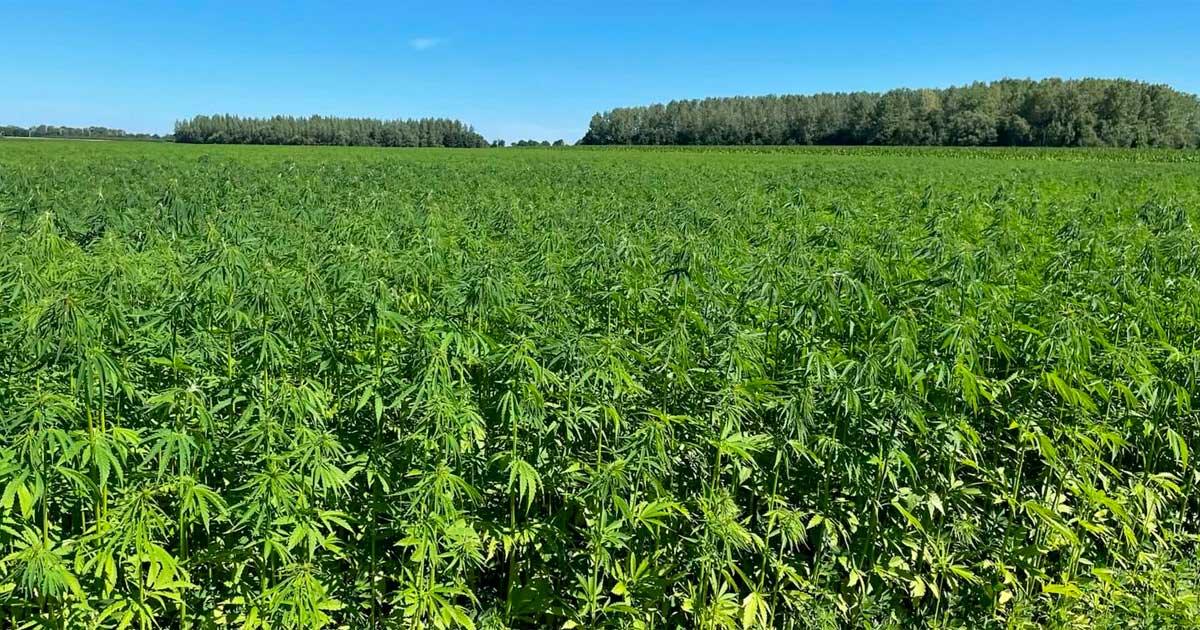
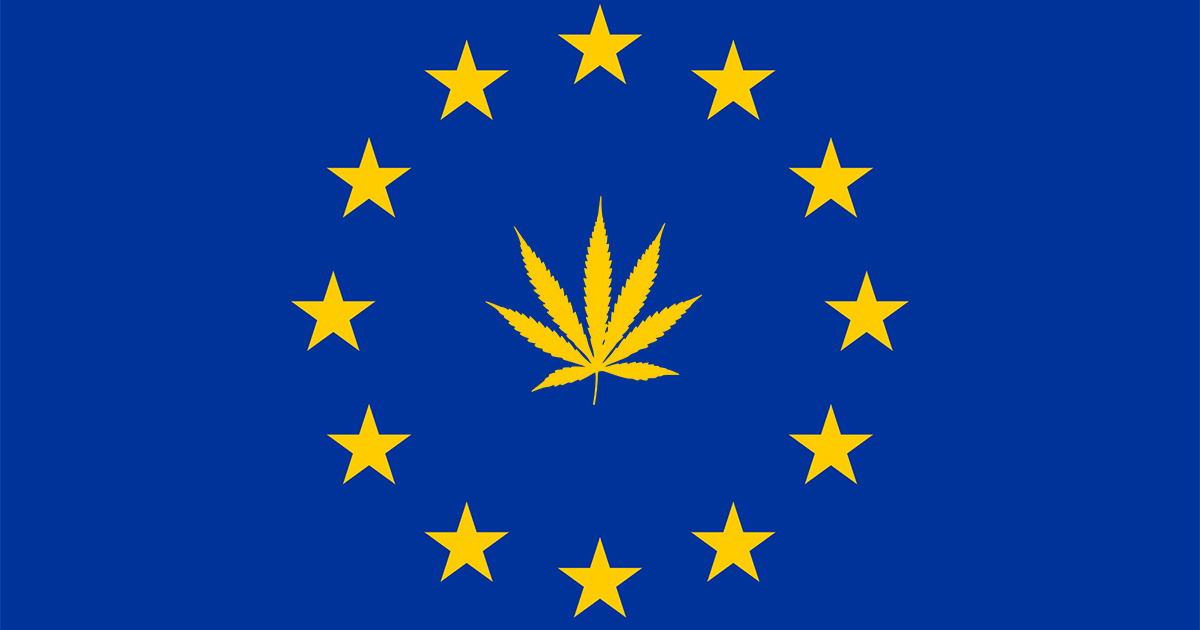
European legislators are lobbying the European Commission to raise the maximum «permitted» THC content (see below) of industrial hemp à 0,5%, to harmonize European legislation and protect the sector from increasingly restrictive national measures.
Although it is not yet binding, this initiative demonstrates the strong momentum within European institutions to clarify a market regularly disrupted by legal uncertainty.
A unified standard for hemp in preparation
Earlier this month, the European Parliament's Agriculture Committee (AGRI) called on the European Commission to «explicitly confirm» the legality of hemp and establish a common EU-wide classification for this crop. In particular, it recommends raising the «authorized» maximum THC content from 0.3% to 0.5%, which many stakeholders believe would better reflect current scientific and agricultural realities.
To be perfectly fair, the European Commission does not draw up a THC legal limit for hemp, However, it does set a maximum THC level above which a crop is no longer eligible for Common Agricultural Policy (CAP) subsidies. Each member state is free to set its own legal limit, which is often aligned with that used to determine eligibility for European subsidies.
«It's about providing legal certainty for farmers, processors and investors,» said Cristina Guarda, Italian Green MEP and one of the promoters of the amendment.
With Luke Ming Flanagan (La Gauche, Ireland) and Barry Cowen (Renew, Ireland), Ms. Guarda inserted specific wording into the AGRI Committee's position for the next CAP, the EU's multi-billion euro funding mechanism for agriculture.
The commission's support provides institutional backing for a long-standing demand by the european hemp producers. The proposal aims to eliminating discrepancies between member states and to establish legal protections for growers, particularly in the context of recent repressive measures, particularly in Italy.
A response to Italian repression
This legislative initiative follows a controversial decision by the Italian government. In April, the government of Prime Minister Giorgia Meloni published a decree classifying hemp flowers as narcotics, thus criminalizing their production and sale.
The decree was a major blow to the Italian hemp industry, estimated by the trade group Coldiretti à 500 million euros representing over 3,000 farms. This decision has since been challenged in the courts and widely condemned throughout Europe.
In a recent legal opinion, Italy's highest administrative court ruled that questioned the legitimacy of the ban. It considered that «the sudden ban on harvesting the inflorescences of an agricultural crop that has been authorized for years, which affects a market even encouraged by the EU, would violate the principle of freedom of economic initiative».
Legal gray areas in the EU
The fragmented regulation of hemp in the EU has long been a headache for businesses. While the European Court of Justice’European Union ruled in 2020 that CBD derived from hemp is not a narcotic and can be freely marketed throughout the Union, its application remains inconsistent.
La France is a case in point. After having initially banned hemp flowers, she was rejected by the Conseil d'Etat to finally abandon any idea of market regulation and leave the DGCCRF and the courts to shape a semblance of rules according to court decisions.
At the same time, Germany, the Czech Republic or Austria have adopted different approaches to THC limits and flower sales, contributing to a legal patchwork that undermines market cohesion.
According to MEP Guarda, an EU-wide change in THC thresholds «would immediately cancel the national ban without waiting for the new CAP to come into force in 2028».
To speed up reform, Ms. Guarda and other legislators are also pushing for changes to the’Common Market Organization (CMO), which would legally define hemp as including flowers and by-products, not just seeds and stalks.
Arguments in favor of a THC threshold of 0.5 %
The ceiling of 0.5% THC is not unprecedented. Until 1984, European hemp could contain up to this level. But as part of a tightening of the drug policy, this threshold has been progressively reduced to 0.2% in 1999 under the impetus of Interchanvre and Hemp It, who were working on varieties with 0% THC. In 2021, legislators agreed to raise it to 0,3 %, citing a lack of scientific justification for the lower limit.
Supporters of a limit of 0.5% argue that it would offer much-needed flexibility to growers, especially as THC content can vary according to natural factors such as soil composition and weather conditions. In addition, CBD levels tend to increase in proportion to THC, meaning that a higher threshold would allow for greater more efficient extraction of cannabidiol, reducing waste and improving economic efficiency.
The AGRI commission also stressed that easing the THC restriction could open up «new economic opportunities» along the entire hemp value chain, from fiber and food applications to wellness and cosmetics.
The industry's call for harmonization
European industry associations have long warned that if the THC limits are not covered in the European level, national measures such as those taken by Italy could become widespread, discouraging investors and threatening supply chains.
«Without a harmonized hemp policy, Europe risks putting the brakes on a crop that offers clear environmental and economic benefits, and already enjoys widespread consumer acceptance», reads an industry statement in response to the AGRI Committee's recommendation.
Countries such as Switzerland, Czech Republic and Mexico already allows hemp crops containing up to 1% of THC, while the United States maintains a limit of 0.3% despite proposals at 1%. Supporters of this measure argue that the EU must adapt or fall behind in a rapidly changing global market.

















JIHE 2026: Japan’s Largest Trade Show Dedicated to Hemp and CBD Returns to Tokyo with More Than 100 Industry Players

New Caledonia: The Courts Clear the Way for the Return of CBD

The Brazilian medical cannabis market continues to grow

Morocco: Three Cannabis-Based Medications Approved for the Treatment of Epilepsy

Canopy Growth Receives New EU-GMP Certification to Strengthen Its Presence in Europe

Three years after legalizing medical cannabis, Albania continues to establish regulations for it

The first plant-based medical THC spray arrives in the United Kingdom

Medical Cannabis in Germany: THC Prices Vary by a Factor of 12

France already has 3,000 cannabis retail outlets. None of them are legal.

Morocco's exports of legal cannabis have expanded to 15 countries
-
 Business2 weeks ago
The legal cannabis market in New York exceeds 4 billion $ in revenue
-

 Cannabis in France4 weeks ago
Which countries legalized medical cannabis before France?
-
Business4 weeks ago
South Korea is preparing to begin local production of medical cannabis to meet rising demand
-
Cannabis in France4 days ago
France already has 3,000 cannabis retail outlets. None of them are legal.
-
Cannabis in Thailand4 weeks ago
From the boom in dispensaries to a purely medical approach: Thailand is revising its cannabis policy
-
Cannabis in the U.S.5 days ago
A DEA report confirms that there are no fatal cannabis overdoses
-
Cannabis and driving3 weeks ago
Medical Cannabis and Driving: New South Wales Ends Automatic Penalties for THC
-
Cannabis in France3 weeks ago
France’s Drug Policy Chief Defends Cannabis Prohibition... and Runs Into the Facts















You must be logged in to post a comment Login