
United front against Italy's hemp flower ban


L‘Italy’s recent ban on hemp flowers sparked a rare display of unity among regional agricultural leaders, legal experts, and industry stakeholders.
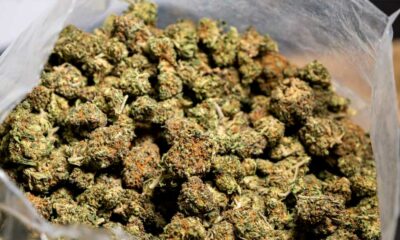
This measure, adopted as part of the government's new «security decree,» reclassifies the hemp flowers and non-psychoactive cannabinoids such as the CBD, the CBG and the CBN in the category of controlled substances, regardless of the THC content of products that may contain it.
The unanimous view is that this is an ideological decision that undermines regional autonomy, violates European Union law, and threatens a rapidly growing economic sector.
Agricultural leaders condemn the ban
Regional agricultural advisors from all over Italy, who are members of the Italian Confederation of Agriculture (CIA)), have publicly condemned the government’s approach. In a joint statement, they described the ban as «an entire, rapidly growing supply chain» that is being «wiped out» by «ideological» regulations, according to Massimo Pica, a spokesperson for the CIA.
This is the strongest political response to date against the Prime Minister's government Giorgia Meloni, who enacted the decree without in-depth parliamentary debate. Mr. Pica emphasized the broader implications of this measure: «The ban affects not only farmers, but also downstream industries such as construction, bioplastics, and textiles that depend on the hemp »as a raw material."
A major blow to Italy's sustainable economy
At the heart of the controversy lies the’Article 18 something new safety decree, which makes no distinction between the industrial hemp and cannabis with a high THC content. This approach is in direct contradiction to the European Union regulations, which allows for the free movement of hemp-based products containing less than 0.3 % of THC.
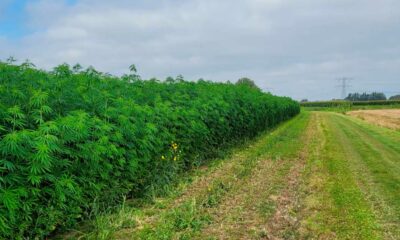
The decree criminalizes the cultivation, processing, and sale of hemp flowers, even though this crop has been legally cultivated in Italy since 2016.
«The government’s actions do not take scientific evidence into account and fail to recognize the proven safety and economic potential of industrial hemp,» Mr. Pica added.
Industry experts warn that this legal conflation of hemp and psychotropic substances will harm Italy’s competitiveness in the fields of bio-based materials, the’climate-smart agriculture and the’green innovation – sectors in which other European countries are making significant progress.
Legal Setbacks and Constitutional Doubts
Regulatory pressure on the Italian hemp industry intensified in April when the Regional Administrative Court of Lazio rejected an appeal seeking to lift the’national ban on orally administered CBD products. The court invoked the «precautionary principle,» citing potential liver toxicity and psychiatric effects, despite scientific studies and EU classifications that recognize that CBD is not addictive and is not a psychotropic substance.
This decision is a setback for the hemp advocates and legal experts who had hoped the courts would enhance regulatory clarity and scientific rigor. The decision heightened concerns about the government’s growing reliance on executive powers.
«Both the security decree and the ban on CBD were enacted without a full parliamentary debate,» the report notes, raising constitutional questions. Under the’Article 77 of the Italian Constitution, such emergency decrees must be justified by the urgency of the situation and ratified by Parliament within 60 days, a procedure that is currently under close scrutiny.
The combined effects of bans on hemp flowers and CBD could impact more than 3,000 companies and jeopardize 30,000 jobs in a sector with an estimated value of nearly 2 billion euros. In response, a coalition of advocacy groups—including Canapa Sativa Italia, Resilienza Italia Onlus, and Imprenditori Canapa Italia– has launched coordinated legal and political campaigns to overturn the bans in Italy and at the European level.
«Hemp industry professionals, who follow the rules every day and ensure a transparent and safe market, should not fear the government, but should receive its support,» said Mattia Cusani from Canapa Sativa Italia during a hearing before the Committee on Petitions of the European Parliament in March.
In Brussels, the European Commission has already requested clarification from the Italian government, thereby triggering a 90-day review period. Hemp advocates hope the EU will intervene to protect the internal market and prevent what they consider a dangerous precedent.

















France’s Drug Policy Chief Defends Cannabis Prohibition... and Runs Into the Facts

Cannabis and the Adolescent Brain: French Scientists Make a Key Discovery

EFSA Gives Initial Approval for Synthetic CBD; Natural Extracts Still Pending

Federal Cannabis Reform Once Again on Hold in the United States

Contest: Win a trip to Quebec to experience the hemp harvest firsthand

Bedrocan on Hold Amid Uncertainty Over Medical Cannabis

Newsweed Launches Its Own AI
A new tax of 0.5% could disrupt the hemp industry in Canada

Medical Cannabis and Driving: New South Wales Ends Automatic Penalties for THC

China's Yongji Health Takes Control of Tasmanian Botanics
-
 Cannabis and driving3 weeks ago
Cannabis and CBD: French Drivers Can Now Lose Their License Even Without a Positive Test Result
-

 Cannabis in France1 week ago
Which countries legalized medical cannabis before France?
-
Cannabis in France4 weeks ago
Cannabis Legalization: The LFI Bill Has a Major Problem—THC
-
Cannabis in the Netherlands3 weeks ago
One year after the launch of the Dutch cannabis experiment, the first trends are emerging
-
Business1 week ago
South Korea is preparing to begin local production of medical cannabis to meet rising demand
-
Cannabis in Thailand1 week ago
From the boom in dispensaries to a purely medical approach: Thailand is revising its cannabis policy
-
Cannabis in Argentina2 weeks ago
Argentina Opens Its Market to Hemp Flowers Containing 1% of THC
-
Cannabis in France3 weeks ago
French medical cannabis remains stalled at the Ministry of Health















You must be logged in to post a comment Login