
U.S. Congressman pushes bill to increase THC in hemp to 1%


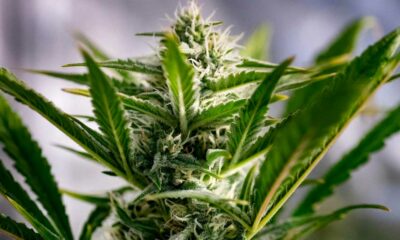
The U.S. Senator Rand Paul has reintroduced its Hemp Economic Mobilization Plan (HEMP) Act, which aims to raise the THC threshold in hemp from 0.3% to 1%, hoping for a significant impact on the’hemp industry and farmers across the country.
The issue of the 0.3 % THC limit
Currently, under the’Agriculture Improvement Act of 2018, also known as Farm Bill 2018, hemp is defined as Cannabis sativa L. whose THC concentration does not exceed 0.3% on a dry weight basis.
But This 0.3% limit is arbitrary and is based on a 1976 scientific article titled «A Practical and Natural Taxonomy for Cannabis» by Ernest Small and Arthur Cronquist. According to many industry stakeholders, this threshold was never intended to be a legal standard. It was simply a proposal for Distinction Between Hemp and Cannabis.
Over time, this has become the standard definition of hemp in U.S. law, which has had significant consequences for farmers.
The 0.3% limit is causing problems for hemp producers. The THC levels may fluctuate due to environmental factors such as weather conditions, making it difficult for farmers to meet the established threshold. Crops that exceed this limit, known in English as « hot crops », must be destroyed, resulting in a loss of yield for farmers and, in some cases, fines or other legal action.
Rand Paul's Solution: Raise the THC Limit
The HEMP Act from Rand Paul is therefore proposing to pass the THC limit of 0.3 % to 1 %, which would give farmers greater flexibility and reduce the likelihood of producing «hot crops,», as in Switzerland.
In addition to raising the limit, the HEMP Act introduces other key provisions:
- The tests will focus on the hemp-derived products rather than on the hemp plant or flower, which will simplify the regulatory process
- During the transport and upon delivery, hemp shipments must be accompanied by specific documents to avoid seizures and legal issues
According to Rand Paul, these changes would reduce the bureaucratic burden currently placed on hemp farmers, allowing the industry to grow without unnecessary government interference.
In a statement, Senator Paul emphasized the importance of this legislation: «For years, I have led the fight in Washington to restore one of Kentucky’s historically most vital crops by legalizing industrial hemp. We secured a hard-fought victory, but there is still work to be done to prevent the federal government from increasing the burden on our farmers through unnecessary bureaucratic micromanagement. My proposal will help this growing industry reach its full economic potential and bring transparency to government regulations.»
Competition and Other Legislative Proposals
If Rand Paul's HEMP Act While it aims to create a more favorable environment for hemp cultivation, it is not the only legislative proposal under consideration.
A competing bill introduced by the Senator Ron Wyden, a Democrat from Oregon, is taking a different approach. This proposal calls for the creation of a federal agency responsible for regulating the hemp-based products that comply with the Farm Bill and to ban all «artificially or synthetically derived cannabinoids.» This approach, which focuses more on consumer safety and on establishing strict regulations for hemp-based products, specifically targets the market for synthetic cannabinoids.
Other U.S. states like Minnesota have already switched to 1%.
The Conference has already fallen behind in updating the Farm Bill, which is typically renewed every five years.





















Autism and Cannabis: Results from the First Placebo-Controlled Trial of NTI164

Which countries legalized medical cannabis before France?

From the boom in dispensaries to a purely medical approach: Thailand is revising its cannabis policy

South Korea is preparing to begin local production of medical cannabis to meet rising demand

In the United States, cannabis use among high school students has reached an all-time low

Medical cannabis use surges by 64 % in Denmark

Canopy Growth Enters the U.K. Market with Four Canadian Strains

CBD: Full-Spectrum Extracts Under Threat in Greece

Medical Cannabis and Back Pain: Opioid Use Has Dropped by 90 % in 10 Years

Cannabis: Wisconsin Could Finally Legalize It in 2027
-
 Cannabis and driving2 weeks ago
Cannabis and CBD: French Drivers Can Now Lose Their License Even Without a Positive Test Result
-
Cannabis in France3 weeks ago
Cannabis Legalization: The LFI Bill Has a Major Problem—THC
-

 Cannabis in France19 hours ago
Which countries legalized medical cannabis before France?
-
Cannabis in the Netherlands2 weeks ago
One year after the launch of the Dutch cannabis experiment, the first trends are emerging
-
Cannabis in France2 weeks ago
French medical cannabis remains stalled at the Ministry of Health
-
Cannabis in Argentina1 week ago
Argentina Opens Its Market to Hemp Flowers Containing 1% of THC
-
Business2 weeks ago
The United Kingdom Is Moving Closer to a Regulated CBD Market
-
Cannabis in France1 week ago
Rima Hassan: When «Drugs» Become a Political Weapon













You must be logged in to post a comment Login