Cannabis light in Europe: Switzerland takes the lead

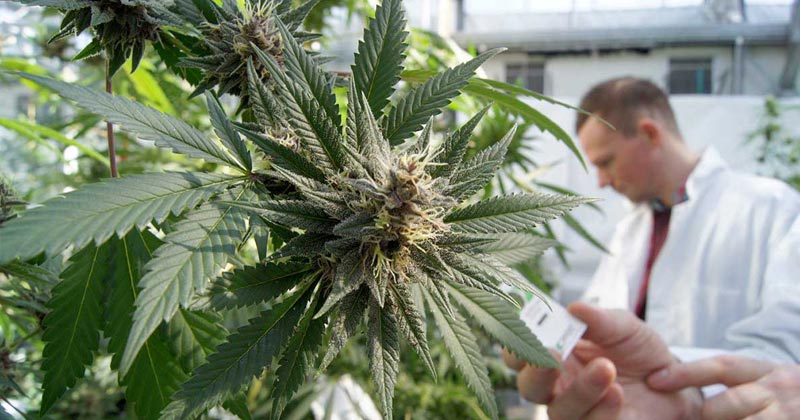
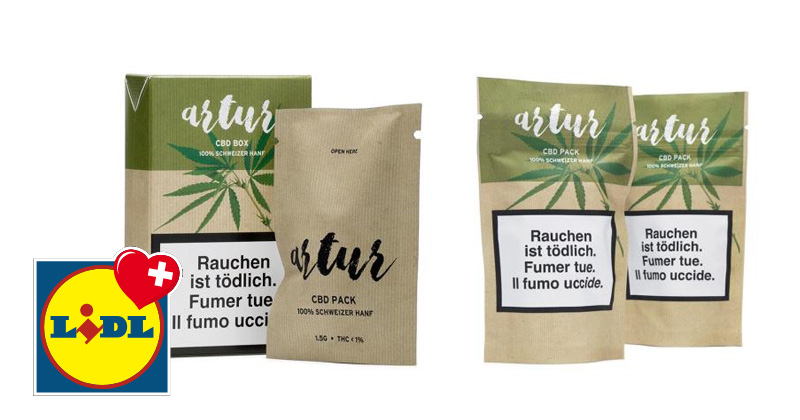
Thanks to a change in the law, Switzerland has seen the emergence of a new type of hemp grower: the «light» cannabiculturist. These new entrepreneurs grow and sell cannabis quite legally in Switzerland, as long as it contains less than 1% THC. Not content with supplying the Swiss market, they now export varieties with less than 0.2% THC throughout Europe, including France.
French customs are puzzled by the issue, and continue to stop flower shipments at the border. But once in the hands of consumers, these hemp flowers cannot be considered narcotics if their THC content remains within the authorized 0.2% limit. This grey area has enabled many Swiss growers to expand their business exponentially.
We contacted CBD420, one of these Swiss producers, to ask how they see the light cannabis and CBD market evolving in Switzerland. Switzerland, France and Europe.
How did Switzerland fare in 2017?
Concerning 2017 in Switzerland, there was a period of “buzz” that started in January 2017, supported by numerous articles in the press.
As the year drew to a close, we saw a certain stabilization in flower consumption. Despite extremely high prices at the start of the year due to soaring demand, insufficient stocks and high taxes, the explosion in production during 2017 reversed the trend in supply and demand, causing prices to fall considerably. Many producers are already throwing in the towel, and we'll have to keep a close eye on developments over the coming years. For now, this situation allows us to offer CBD cannabis flowers at prices competitive with black market prices.
What are your forecasts for 2018?
For 2018, the Swiss market should remain stable in terms of flower consumption. However, we are expecting a new “buzz” period, as we are already seeing strong demand from several European countries such as France, Italy, Spain, England and Germany. Nevertheless, stocks of quality flowers respecting the 0.2% rate for European markets remain very low to date.
In early January, we launched our first range of exceptional CBD products thanks to our partner in Colorado. These products, such as balms, oils and candies, will introduce a variety of cannabis-based products and move away from the negative image that “smoking” can have. Containing nanoactivated CBD molecules and an absolute THC level of 0%, these products are suitable for everyone.
As confirmed by the World Health Organization in December 2017, No study has been able to prove that CBD is psychotropic or addictive. We are now able to offer a whole range of products already widely consumed in the United States and Canada.
What are the possible outlets? We're seeing a lot of diet cannabis in Italy, for example, and a few brands being set up in Poland.
Today, the list of possible outlets in Europe is endless... Development of the CBD flower market, development of a dietary supplements market, development of a cosmetics market, development of a veterinary market, a recreational market, or even a therapeutic market. And we're only at the beginning of the first market mentioned.
For the time being, we are dependent on governments, operating within the framework of current legislation and with the right products. It should be noted that to date, the potential therapeutic effects of cannabis remain censored by the health and/or medical authorities in each country. While there is already a cruel lack of information on the subject, we are not authorized to communicate on the beneficial effects that our products may have.
The Italian market is currently at the same stage as France's, with perhaps a little more openness on the Italian side. The difficulty today is to obtain quality flowers, such as the Blue Dream, 0.2% THC imposed by the European Union.
Numerous brands are appearing in Europe, mainly in the East, but for the moment it's difficult to assess the quality of the products on the market.
What about legalizing THC cannabis in Switzerland?
At present, there is no legalization in Switzerland. What made the CBD cannabis market possible was the increase in the THC tolerance level to 1% for industrial hemp in 2011, and the first serious observations on the effects of CBD in the USA around the same time.
In February 2017, SwissMedic and the Federal Office of Public Health published a “guide” to regulate the marketing and consumption of CBD products in Switzerland. We believe that it is currently too early to envisage the legalization of «THC cannabis», i.e. recreational cannabis.
The advantage of CBD cannabis and CBD products is that it allows the debate to focus solely on the wellness aspect that these products can potentially bring. We fear that bringing forward proposals to legalize recreational cannabis today will have a negative effect in the short term.
We believe that the only way to move towards legalization at European level is to introduce cannabis in a way that will bring about a positive change in attitudes. Once the use of cannabis has been democratized, it will be more affordable to (re)introduce the recreational aspect.





Medical Cannabis in Germany: THC Prices Vary by a Factor of 12

France already has 3,000 cannabis retail outlets. None of them are legal.

Morocco's exports of legal cannabis have expanded to 15 countries

Aurora Cannabis Doubles Its Production Capacity in Germany

Tilray is accelerating its operations in Europe thanks to a license in Portugal

Boston will host the 10th annual State of the Cannabis Industry Conference on October 26

A DEA report confirms that there are no fatal cannabis overdoses

A British patient is challenging the NHS's refusal to reimburse medical cannabis

October 2026 CBD Highlights: 10 Strains and Hash to Discover from 5 French Producers

CBD in France: Traceability, Retail Stores, THC and Driving… What the New Bill Proposes
-
 Business2 weeks ago
The legal cannabis market in New York exceeds 4 billion $ in revenue
-

 Cannabis in France3 weeks ago
Which countries legalized medical cannabis before France?
-
Business3 weeks ago
South Korea is preparing to begin local production of medical cannabis to meet rising demand
-
Cannabis in Thailand3 weeks ago
From the boom in dispensaries to a purely medical approach: Thailand is revising its cannabis policy
-
Cannabis and driving3 weeks ago
Medical Cannabis and Driving: New South Wales Ends Automatic Penalties for THC
-
Autism3 weeks ago
Autism and Cannabis: Results from the First Placebo-Controlled Trial of NTI164
-
Cannabis in France2 weeks ago
France’s Drug Policy Chief Defends Cannabis Prohibition... and Runs Into the Facts
-
CBD1 week ago
In Brazil, researchers are developing an innovative CBD eye drop
















You must be logged in to post a comment Login