
Italian court challenges Meloni's hemp crackdown and upholds European legislation


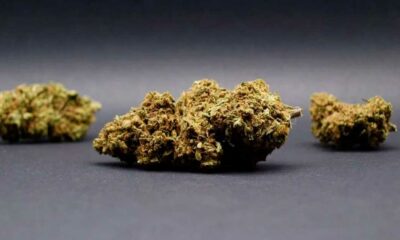
In a major setback for the Italian government's attempt to crack down on the’hemp industry, a court in Parma ruled in favor of entrepreneur Luca Marola, founder of’EasyJoint, claiming that the hemp flowers and their derivatives are legal under the European Union law.
This decision comes after six years of legal battles, which resulted in Marola’s acquittal on charges of drug trafficking and illegal possession following a police raid in 2019.
Mr. Marola, whose company was once the market leader in Italy from hemp-based products with low THC content, was charged with violations of narcotics laws after authorities seized more than 650 kg of industrial hemp flowers and 19 liters of hemp oil. The court ultimately ruled that the facts of the case were unfounded, rejecting the prosecution’s arguments and acquitting Mr. Marola of all charges against him.
«This investigation was ridiculous,» Marola said after the verdict. «They destroyed a warehouse worth 2 million euros and the leading company in cannabis light »in Italy."
The controversial decree
This decision directly challenges the security decree introduced by Prime Minister Giorgia Meloni in April. Adopted without parliamentary debate under emergency powers, this decree criminalizes the cultivation of industrial hemp, its sale, and the possession of its compounds non-psychoactive such as the CBD, the CBG and the CBN, by classifying them as controlled substances.
Critics have called it a «repressive decree,» warning that it ignores scientific evidence and violates both the EU internal market rules and the Italian Constitution. Article 18 of the decree also establishes new criminal classifications and penalties unrelated to hemp, raising concerns about the decree’s broader ideological motivations.
«This verdict debunks the ideological theory that hemp flowers and oils are drugs, regardless of their content,» said Chiara Appendino of the Five Star Movement. «This sends a clear message: banning everything for ideological reasons only destroys businesses and disrupts people’s lives.»
Constitutional Conflicts and Conflicts with the EU
Defense attorney Giacomo Bulleri argued during the trial that Italy’s position on industrial hemp is contrary to European law.
https://www.linkedin.com/feed/update/urn:li:activity:7333905144532590592/
The European Court of Justice has already ruled that the CBD is not a narcotic and cannot be subject to restrictions without scientific proof of its harmfulness. Italian legal scholars, including Professor Alfonso Celotto, argue that national laws that conflict with European provisions must be disregarded.
While a regional court in Lazio has recently confirmed the ban on CBD-based products Although oral administration has been restricted for public health reasons, many experts believe that these concerns are exaggerated and not supported by a scientific consensus.
Stefano Vaccari, a member of the Democratic Party, described Parma’s decision as «the first response to the Meloni government’s ideological fury,» emphasizing that hemp flowers are not considered narcotics under Italian law.
Implications for the Industry
The government decree has caused considerable damage to the hemp sector in Italy, which supports more than 3,000 companies and employs approximately 23,000 people. The estimated value of the sector before the crackdown was approximately 2 billion euros. Since the ban, many businesses have closed or have been left in a legal limbo.
«Overnight, honest farmers were turned into criminals,» said Canapa Sativa Italia, one of the many professional associations challenging the decree in court.
Despite growing negative reactions both nationally and internationally, the Meloni government has no intention of reversing its decree. The The European Commission should now assess the law’s compatibility with EU trade rules, and the Italian Parliament must decide by early June whether to ratify or reject the measure. President Sergio Mattarella has not yet signed the decree to make it permanent law.
How did we get to this point?
The standoff between the Italian government and the hemp industry is the the result of a long ideological battle. While the EU provides legal protection for products with low THC content, the Meloni government has chosen to view hemp as a threat to public safety, without basing its policy on scientific research or economic arguments.
The Parma court’s decision puts an end to this line of argument and sets a legal precedent that will make it possible to continue the resistance. For many in the sector, it is also a moral victory—proof that legal and democratic mechanisms still exist to challenge disproportionate laws motivated by political considerations.
As new legal actions are being prepared and the EU closely monitors the situation, the Italian hemp industry is fighting not only for its survival, but also for recognition as a legitimate part of the European agricultural economy. As industry leaders put it: «The industrial hemp sector is not willing to silently accept illogical and unconstitutional decisions.»




















Which countries legalized medical cannabis before France?

From the boom in dispensaries to a purely medical approach: Thailand is revising its cannabis policy

South Korea is preparing to begin local production of medical cannabis to meet rising demand

In the United States, cannabis use among high school students has reached an all-time low

Medical cannabis use surges by 64 % in Denmark

Canopy Growth Enters the U.K. Market with Four Canadian Strains

CBD: Full-Spectrum Extracts Under Threat in Greece

Medical Cannabis and Back Pain: Opioid Use Has Dropped by 90 % in 10 Years

Cannabis: Wisconsin Could Finally Legalize It in 2027

Argentina Opens Its Market to Hemp Flowers Containing 1% of THC
-
 Cannabis and driving2 weeks ago
Cannabis and CBD: French Drivers Can Now Lose Their License Even Without a Positive Test Result
-
Cannabis in France3 weeks ago
Cannabis Legalization: The LFI Bill Has a Major Problem—THC
-

 Cannabis in France15 hours ago
Which countries legalized medical cannabis before France?
-
Cannabis in the Netherlands2 weeks ago
One year after the launch of the Dutch cannabis experiment, the first trends are emerging
-
Cannabis in France2 weeks ago
French medical cannabis remains stalled at the Ministry of Health
-
Cannabis in Argentina1 week ago
Argentina Opens Its Market to Hemp Flowers Containing 1% of THC
-
Business2 weeks ago
The United Kingdom Is Moving Closer to a Regulated CBD Market
-
Cannabis in France1 week ago
Rima Hassan: When «Drugs» Become a Political Weapon













You must be logged in to post a comment Login