Study: hemp cleans toxic soil and produces a clean CBD flower

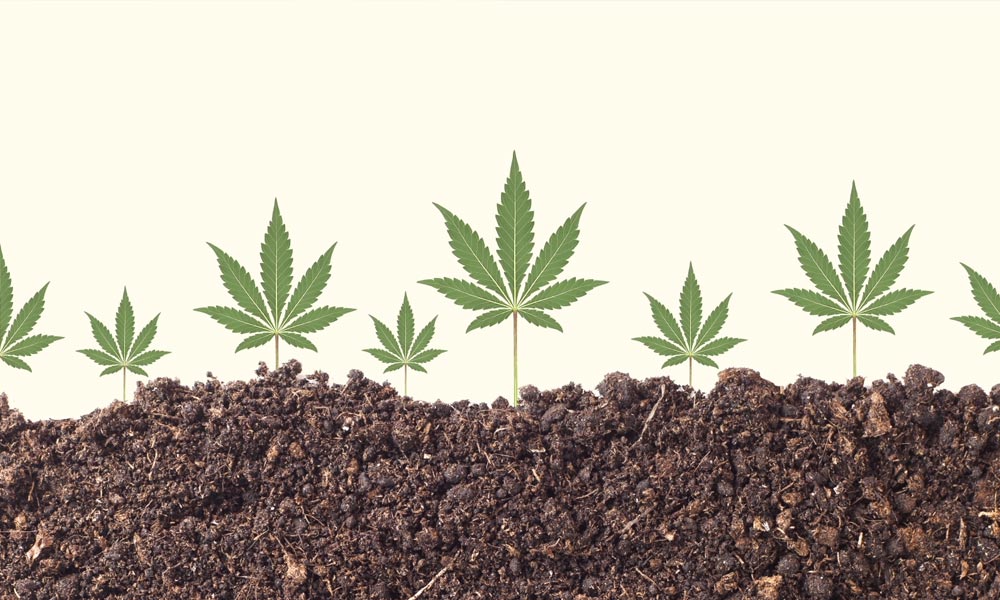
While the phytoremediation properties of hemp are well known, a recent study shows that, in addition to decontaminating soil, hemp grown on toxic soil produces more CBD without increasing its THC levels.
Toxic soil produces clean hemp flowers
The study draws several interesting conclusions for hemp growers.
On the one hand, the production of cannabinoids may be «significantly influenced by soil conditions in mining areas,» representing a potentially lucrative new opportunity for hemp growers looking for available land, for example in northern France. The Hemp removes some heavy metals toxins present in the soil, while producing more CBD than hemp grown in clean soil.
On the other hand, the heavy metals absorbed by the hemp plants were found in the leaves but not in the flowers, as one of the researchers confirmed.
«We observed metal uptake in the leaves and excretion from the soil, but not in the flowers,» he declared Sairam Rudrabhatla, a biology professor at the Pennsylvania State University-Harrisburg and one of the study's lead authors.
The details of the flower analysis were not published in the study. But when the flowers were tested for heavy metals, «none were present,» as confirmed by Hannah George, director of the laboratory at the Penn State Central Pennsylvania Research and Teaching Laboratory for Biofuels, on Leafly.
Study details
In this study, 6 different varieties of industrial hemp (Fedora 17, Felina 32, Ferimon, Futura 75, Santhica 27, and USO 31) were grown in two different types of contaminated soil and two commercial potting mixes (Miracle-Gro Potting Mix and PRO-MIX HP Mycorrhizae High Porosity Grower Mix).
The plants were exposed to two different environmental conditions: outdoors and in a greenhouse. On average, the plants grown in the greenhouse were taller than those grown outdoors.
In addition, an analysis of heavy metals (arsenic, lead, nickel, mercury, and cadmium) was conducted. The nickel concentration was 2.54 times higher in the leaves of hemp grown outdoors in mine soil than in those grown in greenhouses.
An analysis of the hemp flowers Cultivated in soil from mining sites, it showed a significant increase in total cannabidiol content (2,16%, 2.58%) compared to the Miracle-Gro control soil (1.08%, 1.6%) in outdoor and greenhouse settings, respectively. Molecular analysis indicated an 18-fold increase in the expression of the cannabidiolic acid synthase gene in plants grown in the mine soil.
«It’s truly remarkable,» Rudrabhatla said. »Few plants can tolerate such high levels of nickel, arsenic, and so many other toxins. It’s a remarkable plant with many beneficial properties.»



















From «Cannabro» to «AI Bro»: Some U.S. cannabis growers are envisioning a new future in data centers

Israel renews its allegations of dumping against Canadian medical cannabis

Bedrocan Bankruptcy: The Dutch Government Under Pressure
1.2 million adults in Great Britain use cannabis almost every day

CBD, CBN, and CBC Isolates: What Can You Expect from These Products?

The SQDC sold $207.5 million worth of cannabis in Q2 2026, with vape pens driving growth

The United States Bans «Non-Natural» Synthetic Cannabinoids; THC Remains Legal Until December 11

Morocco's first CBD medication for epilepsy hits pharmacy shelves

November 2026's CBD Highlights: 10 Flowers and Rosins to Discover from 5 French Producers

Vanuatu is still trying to get its medical cannabis sector off the ground after years of delays
-
 Business4 weeks ago
Cronos Completes the Acquisition of CanAdelaar for 57.5 million euros
-
Cannabis in Quebec3 weeks ago
Cannabis: What France Could Learn from Quebec, Eight Years After Legalization
-
Cannabis in New Zealand2 weeks ago
Chronic Pain: New Zealand Is Testing Cannabis to Improve Sleep
-
Cannabis in Morocco4 weeks ago
Morocco: Three Cannabis-Based Medications Approved for the Treatment of Epilepsy
-
Cannabis in France3 weeks ago
Dr. Pascal Douek, a tireless advocate for medical cannabis in France, has died
-
Business4 weeks ago
The Brazilian medical cannabis market continues to grow
-
Cannabis in Spain4 weeks ago
Spain: Medical Cannabis Is Coming to About 50 Hospitals
-
Cannabis in Germany4 weeks ago
Medical Cannabis in Germany: THC Prices Vary by a Factor of 12













You must be logged in to post a comment Login