
Domestication and genetic impoverishment of cannabis: the different strains of cannabis are actually becoming more and more similar

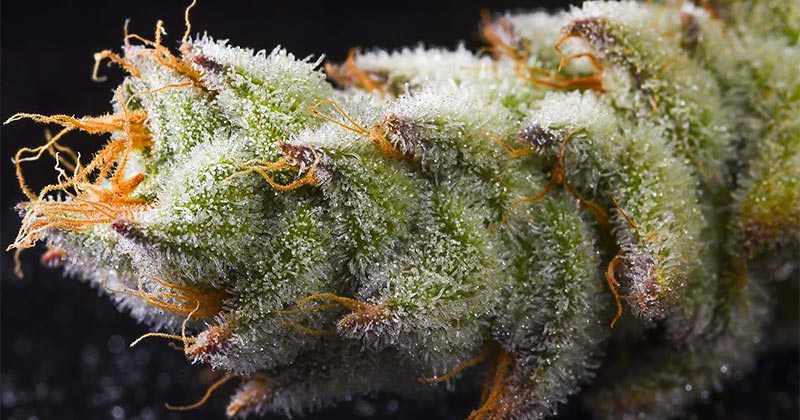
A study A study led by the University of British Columbia assesses the impact of cannabis domestication on the plant’s chemical and genetic profile. It also questions the relevance of the concept of “variety”: Does it correspond to the plant’s chemical composition, morphology, or genetic history?.
The research team studied the chemical profile of 33 «varieties» produced by official Canadian growers, looking for significant differences that would justify the use of these unique names. They found that most of the «varieties» are virtually identical from a chemical standpoint and concluded that there has been a depletion of the plant’s genetic diversity and a branding excessive, which points to the inadequacy of the concept of variety.
A poorly defined concept of variety
The practice of breeding The cannabis industry has given rise to a multitude of new strains created through unnatural genetic crossbreeding. The question researchers asked themselves was this: How different are these strains from one another?
Upon closer examination, the «varieties» sold by different producers are in fact largely similar and indistinguishable from a chemotaxonomic perspective (the branch of biology that groups and classifies living organisms based on their chemical properties). Among the 33 varieties studied, the study identifies five groups with identical taxonomic classifications.
In other words, these 33 «varieties» have different names and are sold as being distinct from one another, but their chemical composition is more than 95 % identical. The fact that the different varieties are so similar is, in their view, a sign of genetic impoverishment. However, varieties are distinguished not only by their chemical profile but also by morphological differences such as aroma, appearance, color, and trichome density. These characteristics are, for example, taken into account and evaluated in competitions such as The Cannabis Cup.
Strains also differ in terms of their pharmacological effects. From a commercial standpoint, only two compounds are used to explain these effects: THC and CBD. Their ratio in the plant is commonly used to determine the strain. However, pharmacological effects are also referred to by the terms “indica” and “sativa.” Yet these terms are not linked to the plant’s chemical composition, since both groups can have identical THC ratios. How, then, is it possible that identical chemical ratios produce different effects? Perhaps the THC/CBD ratio is too simplistic and fails to account for certain aspects of the plant.
Plant Breeding and Chemical Diversity
The domestication of the plant and the practice of breeding are driven by the pursuit of yield, whether in terms of flower quantity or cannabinoid concentration. The study shows that this process comes at the expense of the plant’s chemical diversity. For example, breeding plants to increase THC concentration leads to a reallocation of the plant’s metabolic resources, which are redirected toward THCA production at the expense of CBDA production—but that is not the only effect.
The study shows that six other cannabinoids are found exclusively in CBD-rich strains, while three others, on the other hand, were found exclusively in THC-rich strains. Consequently, this allocation of resources toward THC production affects not only CBD but also other cannabinoids present in small quantities in the plant, whose effects are currently little known or unknown. The practices of breeding Informal practices and the still widespread lack of knowledge about the cannabis plant are therefore leading to a reduction in its chemical diversity.
It is simplistic to generalize the benefits of cannabis based solely on CBD/THC ratios. There are more than 120 cannabinoids identified in cannabis. The presence of different effects despite similar THC/CBD ratios—although also influenced by individual factors—suggests that these cannabinoids, or at least their synergy, may have different effects and potentially therapeutic value. The study suggests conducting research on the medicinal value and role in the plant’s metabolism of certain cannabinoids that are less abundant than THC and CBD.
Plant Domestication and Genetic Depletion
«Domestication syndrome» includes phenotypic changes such as larger seeds and the absence of seed dispersal. Domestication has also altered the plants’ reproductive process through methods such as propagation by cuttings, seed feminization, or the practice of sinsemilla which involves separating the males from the females, thereby preventing seed formation and resulting in a higher THC concentration. Domestication also influences the plant’s molecular profile and, consequently, its metabolism, although the details of this impact remain largely unknown.
Over the past 30 years, the average THC content has risen from 6.3% to 11.5% thanks to breeding. An obsession with a plant high in THC appears to block the development of other cannabinoids and leads to a genetic and phytochemical impoverishment of the cannabis plant and a possible loss of therapeutic value. At the same time, the plant’s genetic development has been separated from the ecological conditions of its natural environment, making it less resilient and limiting its genetic variability compared to its ancestors. As a result, the genetic diversity of cannabis is becoming increasingly limited. This limitation is masked by confusion surrounding the concept of “variety,” which gives the impression of a profusion of new varieties when, in reality, the plants are becoming increasingly similar.








China's Yongji Health Takes Control of Tasmanian Botanics

Autism and Cannabis: Results from the First Placebo-Controlled Trial of NTI164

Which countries legalized medical cannabis before France?

From the boom in dispensaries to a purely medical approach: Thailand is revising its cannabis policy

South Korea is preparing to begin local production of medical cannabis to meet rising demand

In the United States, cannabis use among high school students has reached an all-time low

Medical cannabis use surges by 64 % in Denmark

Canopy Growth Enters the U.K. Market with Four Canadian Strains

CBD: Full-Spectrum Extracts Under Threat in Greece

Medical Cannabis and Back Pain: Opioid Use Has Dropped by 90 % in 10 Years
-
 Cannabis and driving2 weeks ago
Cannabis and CBD: French Drivers Can Now Lose Their License Even Without a Positive Test Result
-
Cannabis in France3 weeks ago
Cannabis Legalization: The LFI Bill Has a Major Problem—THC
-

 Cannabis in France21 hours ago
Which countries legalized medical cannabis before France?
-
Cannabis in the Netherlands2 weeks ago
One year after the launch of the Dutch cannabis experiment, the first trends are emerging
-
Cannabis in France2 weeks ago
French medical cannabis remains stalled at the Ministry of Health
-
Cannabis in Argentina1 week ago
Argentina Opens Its Market to Hemp Flowers Containing 1% of THC
-
Business2 weeks ago
The United Kingdom Is Moving Closer to a Regulated CBD Market
-
Cannabis in France1 week ago
Rima Hassan: When «Drugs» Become a Political Weapon














You must be logged in to post a comment Login