American MPs have become the agents of cannabis legalization

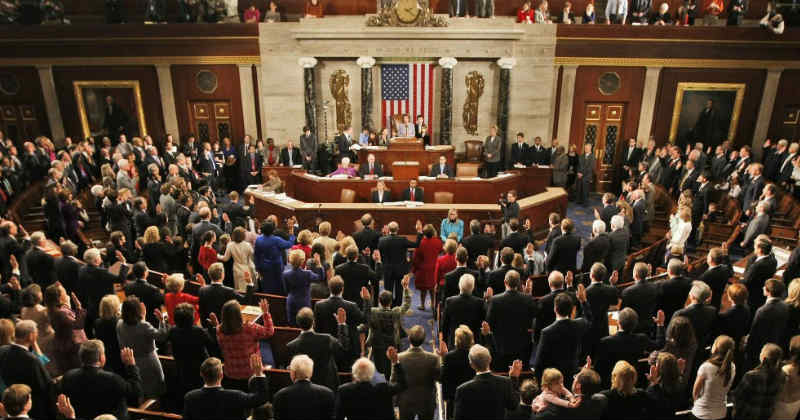
The wave of legalization in the United States is still gathering momentum, but it's changing face. In the past, legalization was almost always the result of a popular vote initiative, and thus emanated from the will of voters and civil society forces. Today, it's legislators who have become the main agents of this legalization, a sign that cannabis legalization is no longer a marginalized political posture in the USA.
The next states to legalize will surely New York, Connecticut and Illinois, but legalization initiatives introduced by local elected officials are also underway in Hawaii, Indiana, South Carolina, New Jersey, Missouri, Texas, Virginia, Nevada and New Mexico. The latest initiative from Minnesota legislators who introduced a bill and constitutional amendment to legalize recreational cannabis in the space of just one week.
The situation in Minnesota
Last week, 15 members of the House of Representatives signed a document that would authorize the regulated trade of cannabis in the form of a constitutional amendment. This initiative was followed by the introduction in the Senate of’a proposed law by Republican Scott Jensen and Democrat Melisa Franzen. A bipartisan initiative. The law proposes that adults should be able to legally possess, cultivate or purchase cannabis, and sets up a licensing system for producers, merchants and testing laboratories. It also includes the abolition of cannabis-related criminal records and a sales tax system that would redirect part of the revenue to communities hardest hit by the war on drugs.
Here, we find the same pattern of legalization as in many other states: a licensing system, permission for self-cultivation, and an emphasis on retroactive and redistributive justice. Above all, the same arguments are being put forward, with elected officials taking a more normalized stance on cannabis.
The normalization of cannabis in public debate
In the Minnesota legislature, as elsewhere in the United States, the same arguments are used to defend the legalization of cannabis:
- The safety argument For the sponsors of this type of initiative, the aim is to regain control of the cannabis market by regulating it, thus taking the wind out of the sails of drug traffickers. As Mike Freiberg, who introduced a copy of the bill in the House of Representatives, states: «Regulating cannabis would make our communities safer by removing the criminal element and empowering local and state governments to begin controlling production and sales».
- The economic argument It's also a question of economic and tax benefits. Although Minnesota legislators have insisted that the financial aspect is «secondary», it's usually a winning argument. According to Marijuana Policy Project (MPP), the cannabis market could bring in $300 million annually to Minnesota.
- The pragmatic argument The failure of prohibition is also highlighted. It seems to be increasingly perceived as an archaic policy: «Minnesota's outdated prohibition has become more of a problem than a solution. It forces cannabis into a murky parallel market that creates more potential harm for consumers and communities than cannabis itself,» explains Freiberg.
Finally, it seems simply a given to legislators that the legalization process is underway. At a press conference, the law's sponsors presented legalization as «inevitable»: «I'm here in part because the train has already left,» explains Jesen, who is a Republican and a physician. It seems that cannabis is now consensus in both American parties (although it is more widely supported on the Democratic side) and its legalization is convincing more and more MPs. It has even become a major electoral issue. The majority of presidential candidates on the Democratic side are already in favor.
Whereas Vermont legalization was the exception rather than the rule, since it was initiated by legislators, it seems that this approach is gradually becoming the norm. The latest legalizations in the United States had resorted to the popular vote, which forces Parliament to legislate despite the personal positions of MPs and partisan differences. Today, it is the MPs themselves who are taking the initiative to legislate on the issue.












JIHE 2026: Japan’s Largest Trade Show Dedicated to Hemp and CBD Returns to Tokyo with More Than 100 Industry Players

New Caledonia: The Courts Clear the Way for the Return of CBD

The Brazilian medical cannabis market continues to grow

Morocco: Three Cannabis-Based Medications Approved for the Treatment of Epilepsy

Canopy Growth Receives New EU-GMP Certification to Strengthen Its Presence in Europe

Three years after legalizing medical cannabis, Albania continues to establish regulations for it

The first plant-based medical THC spray arrives in the United Kingdom

Medical Cannabis in Germany: THC Prices Vary by a Factor of 12

France already has 3,000 cannabis retail outlets. None of them are legal.

Morocco's exports of legal cannabis have expanded to 15 countries
-
 Business2 weeks ago
The legal cannabis market in New York exceeds 4 billion $ in revenue
-

 Cannabis in France4 weeks ago
Which countries legalized medical cannabis before France?
-
Business4 weeks ago
South Korea is preparing to begin local production of medical cannabis to meet rising demand
-
Cannabis in France4 days ago
France already has 3,000 cannabis retail outlets. None of them are legal.
-
Cannabis in Thailand4 weeks ago
From the boom in dispensaries to a purely medical approach: Thailand is revising its cannabis policy
-
Cannabis in the U.S.5 days ago
A DEA report confirms that there are no fatal cannabis overdoses
-
Cannabis and driving3 weeks ago
Medical Cannabis and Driving: New South Wales Ends Automatic Penalties for THC
-
Cannabis in France3 weeks ago
France’s Drug Policy Chief Defends Cannabis Prohibition... and Runs Into the Facts

















You must be logged in to post a comment Login