Where does US cannabis tax money go?

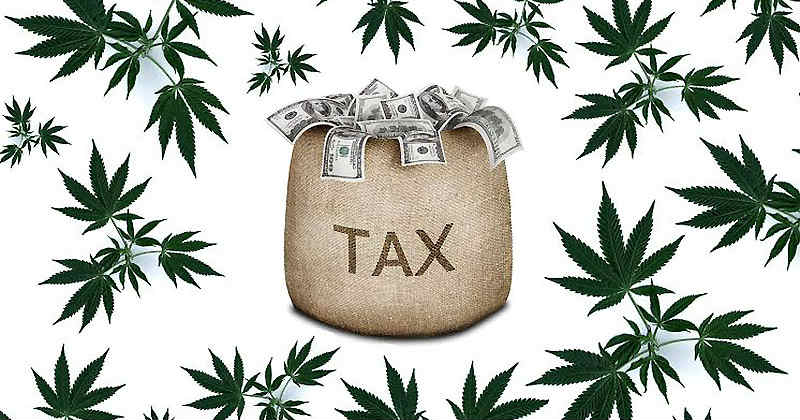
Taxing cannabis is a powerful argument for regulating it. By integrating the cannabis market into their economy, states reap the fiscal benefits, which they can then reinvest in public services. We are concerned here with recreational cannabis only, as in the case of medical cannabis sales are limited by the number of patients, and revenues are often used for research purposes. With sales of recreational cannabis running into millions, even billions of dollars in some states (California, Colorado, Washington), tax revenues from the legal cannabis industry are substantial. But what is this money invested in?
Financing education
Since legal sales began in Colorado (2014), the state has reaped more than $740 million from taxing cannabis sales at 17%. In the previous fiscal year (June 2017-June 2018) this revenue reached $250 million. Each year, $40 million goes to a public school renovation program, BEST. Revenues from a special tax are then allocated to programs to prevent substance abuse, school dropouts or harassment in schools. The rest goes to the Treasury. In all, the government spent nearly 47%, almost half, of the cannabis-related tax revenue on education.
Like Colorado, Oregon - where tax money totaled 82.2 million last year - has decided to allocate the majority of this budget to education, with 40% of the funds raised going to public schools. Likewise in Nevada, the emphasis is on education, with even license and application fees going in part to the account set aside for public schools. Last year, some $27.5 million (out of a total of $69.8 million) was transferred to this account. In Michigan, which recently legalized cannabis and where sales have yet to take off, the State Finance Agency plans to allocate a large percentage of the cannabis tax money to the $92 million School Aid Fund.
Offsetting the cost of regulation
In Massachusetts, which has just launched legal cannabis sales, the Department of Finance estimated that tax revenue would range from $44 million to $82 million for the first year. For the next year, revenues will range from $93 million to $172 million. Excise taxes (10.75%) and administrative fees will go into a special fund dedicated to cannabis, which will cover the expenses of the Cannabis Control Commission, which is responsible for setting up the new industry. Among other things, the commission will provide a form of retroactive justice, public awareness campaigns and technical assistance for the industry.
In Michigan, cannabis taxes are estimated to bring in $89 million for the state in 2020. These funds will be used primarily for enforcement, which also includes training law enforcement in this new legal environment. In Oregon, for example, 15% of cannabis tax revenue is allocated to state police, 10% to municipal police and another 10% to local (county) police. In Maine, which levies a 10% tax on legal sales, the legalization text specifies that, initially, a significant proportion of the funds raised will be allocated to the Criminal Justice Academy to train law enforcement in the new laws.
Prevention and health
From its 2016 revenues, Oregon redistributed $126.9 million to schools as well as regional and municipal governments for the implementation, in partnership with law enforcement and health authorities, of prevention and treatment programs against substance abuse and for the preservation of mental health. All states that have legalized allocate part of their tax revenues to prevention programs, but some also use tax money to develop other health and social initiatives.
In Washington State - one of the world's largest legalization pioneers with Colorado and one of the highest taxes (37%) - taxes on legal cannabis are used to expand the state's social security program, Medicaid. Each year, taxes amounting to hundreds of millions of dollars (estimated at $360 million for the coming year) are redistributed in fixed proportions: 8% is dedicated to prevention, 4% goes to cities hosting dispensaries, 3% to the regulatory agency and the Department of Health, 33% goes to the Treasury and is generally redirected to education. Most of these revenues (64%) are used for social and health care for the most disadvantaged.
In Colorado, too, tax money was used to set up programs to help the homeless and drug addicts, as well as mental health preservation initiatives. 15.3 million dollars were allocated to «permanent housing support» programs. The Department of Education received $9.7 million to integrate 150 mental health professionals into the state's high schools, and the Department of Social Services received $7.1 million to «end the use of prison against the mentally ill».
Renewing infrastructure
The idea of renewing infrastructure with cannabis money has been floated in Michigan, where a report commissioned by the governor in 2016 shows that $2.7 billion is lacking each year to renew road infrastructure. The newly elected governor had mentioned taxing cannabis to remedy the problem during his campaign. In New York, recreational cannabis is not yet legal but will soon be and some have already imagined repair the city's subway system with tax money. Nevertheless, as with Michigan's roads, New York's subway system needs billions of dollars of investment, a cost that cannabis money is incapable of covering.
Cannabis, a tax windfall?
The idea that cannabis is a tax windfall for states isn't entirely wrong, but it's not entirely right either. In most states, the money collected represents less than 5% of overall tax revenue. Secondly, regulations are expensive, as are retroactive justice measures - they cost California $14 million. Finally, some states, such as Oregon and California are still struggling to combat the black market. This represents a cost not only in terms of money spent, but also in terms of uncollected taxes. California, the largest market in the US, is forecasting tax revenues of 355$ million for June, half what the government was hoping for.
In California, one of the reasons the black market continues to overshadow legal cannabis is that taxes are too high. Growers pay a $9.25 tax on each ounce (28 grams) of flower and a $2.75 tax on each ounce of leaf. Then, a 15% tax is levied on retail sales. Added to this is a myriad of local taxes that municipalities or counties may levy. For example, unauthorized California producers have little interest in turning to the legal trade, and consumers prefer to continue buying on the black market, as do many Canadians.









Medical Cannabis in Germany: THC Prices Vary by a Factor of 12

France already has 3,000 cannabis retail outlets. None of them are legal.

Morocco's exports of legal cannabis have expanded to 15 countries

Aurora Cannabis Doubles Its Production Capacity in Germany

Tilray is accelerating its operations in Europe thanks to a license in Portugal

Boston will host the 10th annual State of the Cannabis Industry Conference on October 26

A DEA report confirms that there are no fatal cannabis overdoses

A British patient is challenging the NHS's refusal to reimburse medical cannabis

October 2026 CBD Highlights: 10 Strains and Hash to Discover from 5 French Producers

CBD in France: Traceability, Retail Stores, THC and Driving… What the New Bill Proposes
-
 Business2 weeks ago
The legal cannabis market in New York exceeds 4 billion $ in revenue
-

 Cannabis in France3 weeks ago
Which countries legalized medical cannabis before France?
-
Business3 weeks ago
South Korea is preparing to begin local production of medical cannabis to meet rising demand
-
Cannabis in Thailand3 weeks ago
From the boom in dispensaries to a purely medical approach: Thailand is revising its cannabis policy
-
Cannabis and driving3 weeks ago
Medical Cannabis and Driving: New South Wales Ends Automatic Penalties for THC
-
Cannabis in Argentina4 weeks ago
Argentina Opens Its Market to Hemp Flowers Containing 1% of THC
-
Autism3 weeks ago
Autism and Cannabis: Results from the First Placebo-Controlled Trial of NTI164
-
Cannabis in France2 weeks ago
France’s Drug Policy Chief Defends Cannabis Prohibition... and Runs Into the Facts

















You must be logged in to post a comment Login