Swiss Health Commission decides to legalize cannabis

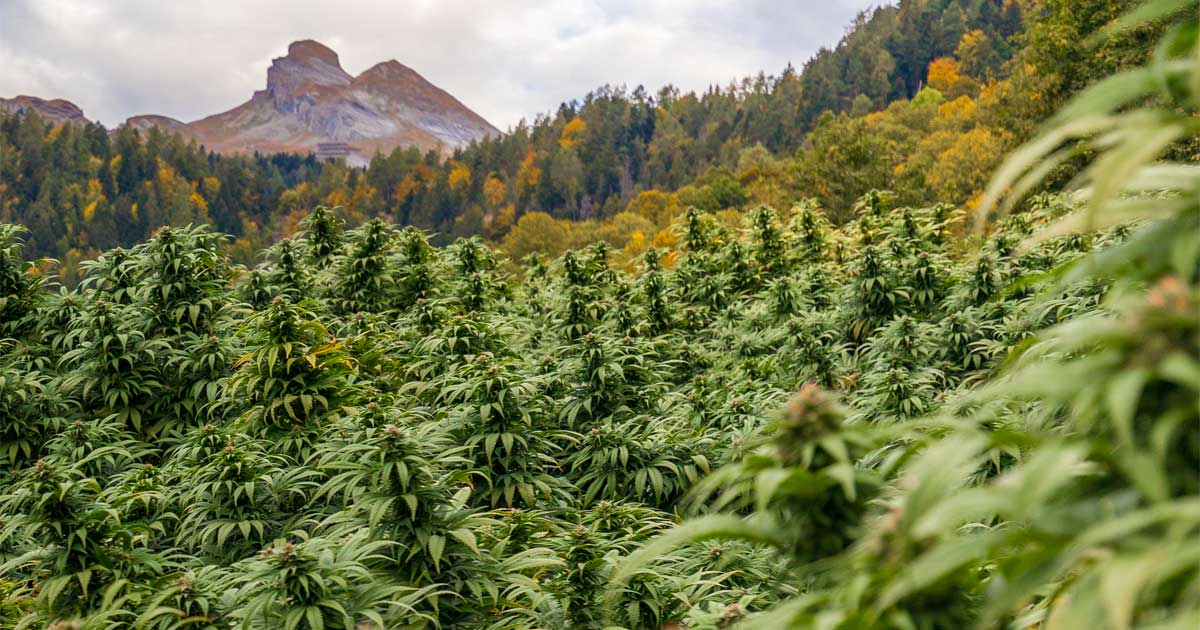
The National Council's Committee for Social Security and Public Health (SGK-N) has adopted on bill to legalize cannabis in Switzerland by 14 votes to 9, with 2 abstentions. The draft calls for Swiss adults to be «granted strictly regulated access to cannabis».
The next step will be to draw up an explanatory report on the preliminary draft, so that the Commission can examine these documents over the summer. Stakeholders will then have the opportunity to express their views as part of the consultation procedure. This will be followed by parliamentary debates and the determination of implementation procedures.
Arguments in favor of legalizing cannabis in Switzerland
At present, the cannabis is legally available in Switzerland for a medical use, if it contains less than’1% of THC or as part of various pilot programs that are testing the sale of cannabis for non-medical purposes who delivered their first conclusions. The vast majority of cannabis Swiss are always supplied through illegal channels.
The Health Commission cited a swiss health survey 2022, which revealed that 4% of Swiss citizens aged 15 to 64 years had illegally consumed cannabis in the previous month. Acknowledging that prohibition had failed to curb consumption, the commission argued that a new regulated framework would be more effective.
«The majority of the commission's members believe that the current situation is unsatisfactory and that the’prohibitive approach is a mistake», said the commission.
The legalization of cannabis within the framework of strict regulations would make it possible to control its sale, limit the risks associated with illegal markets and guarantee consumers products of verifiable quality. Public health and youth protection are at the heart of this new approach.
The law aims to regulate cultivation, production and trade without encouraging consumption, while acknowledging that the cannabis consumption entails health risks.
The Swiss Hemp Interest Group (IG Hanf) welcomed the proposal, calling it «a historic moment for the policy switzerland on cannabis ».
However, opposition remains strong, especially from from the Union démocratique du center (SVP), which argues that legalization would normalize «the drug» and minimize its dangers.
Main provisions of the proposal
The proposed law contains several key provisions that define how cannabis would be regulated in Switzerland:
- Adults (18+) would be allowed to grow, buy, possess and consume cannabis
- Strict public health measures would apply, including regulations on packaging with neutral branding, health warnings and child-resistant packs.
- Sales to minors would be strictly prohibited
- A maximum of three plants per individual may be grown for personal use
- Commercial production for profit would be permitted subject to strict licensing requirements.
- Online sales would be limited to a single licensed retailer
- Advertising for cannabis products, seeds and accessories would be banned
- A traceability system would be put in place to control the entire supply chain and prevent illegal detour.
The commission stresses that the law should be aligned with the policy switzerland the four pillars of drugs, which balances the prevention, therapy, harm reduction and law enforcement.
Strict product quality rules would be put in place to ensure that cannabis available on the legal market is fit for consumption. In addition non-smokable cannabis products and low-THC options would be proposed to encourage safer consumption habits.
A orientation tax on products cannabis would also be created. This tax would be based on THC content and product type, discouraging excessive consumption while generating income for prevention, harm reduction and assistance programs for drug addicts. The proceeds of the tax would be redistributed through the health insurance system application costs are deducted in advance.
Regulations and application
To prevent abuse, Switzerland plans to introduce a state monopoly on sales, by limiting the number of authorized sales outlets. The cantons would be responsible for’retail licensing, while the federal government would control the online market.
The law also proposes stiffer penalties for those who try to circumvent the legal market, with the aim of reducing the domination of the illicit networks.
Strict enforcement efforts will be maintained, particularly with regard to the drunk driving. The policy of zero tolerance for driving under the influence of drugs would be maintained, people found under the influence of cannabis considered unfit to drive.
Before being promulgated, the law must pass through both chambers of parliament, and will probably be submitted to a vote. popular vote, a key feature of the system of direct democracy of Switzerland.























Medical Cannabis in Germany: THC Prices Vary by a Factor of 12

France already has 3,000 cannabis retail outlets. None of them are legal.

Morocco's exports of legal cannabis have expanded to 15 countries

Aurora Cannabis Doubles Its Production Capacity in Germany

Tilray is accelerating its operations in Europe thanks to a license in Portugal

Boston will host the 10th annual State of the Cannabis Industry Conference on October 26

A DEA report confirms that there are no fatal cannabis overdoses

A British patient is challenging the NHS's refusal to reimburse medical cannabis

October 2026 CBD Highlights: 10 Strains and Hash to Discover from 5 French Producers

CBD in France: Traceability, Retail Stores, THC and Driving… What the New Bill Proposes
-
 Business2 weeks ago
The legal cannabis market in New York exceeds 4 billion $ in revenue
-

 Cannabis in France3 weeks ago
Which countries legalized medical cannabis before France?
-
Business3 weeks ago
South Korea is preparing to begin local production of medical cannabis to meet rising demand
-
Cannabis in Thailand3 weeks ago
From the boom in dispensaries to a purely medical approach: Thailand is revising its cannabis policy
-
Cannabis and driving3 weeks ago
Medical Cannabis and Driving: New South Wales Ends Automatic Penalties for THC
-
Cannabis in Argentina4 weeks ago
Argentina Opens Its Market to Hemp Flowers Containing 1% of THC
-
Autism3 weeks ago
Autism and Cannabis: Results from the First Placebo-Controlled Trial of NTI164
-
Cannabis in France2 weeks ago
France’s Drug Policy Chief Defends Cannabis Prohibition... and Runs Into the Facts

















You must be logged in to post a comment Login