How Switzerland wants to legalize cannabis


The August 29, 2025, the Swiss government has launched a three-month public consultation on its plans to legalize cannabis for adults, the Federal law on cannabis products (LPCan in French, CanPG in German), the full text of which can be found here.
The consultation, which runs until December 1st, gives citizens, political decision-makers, healthcare professionals and industry players the opportunity to comment on the company's proposals. before the legislation is debated in Parliament.
If adopted, Switzerland's legal framework would be both particularly restrictive and ambitious in the European context.
A framework based on risk reduction
LPCan is the the fruit of years of debate within the Swiss Health Committee and prioritizes public health over commercial opportunities.
According to the project that defines everything packaging rules at sales restrictions. the guiding principle is to create a non-profit cannabis market, by limiting profit motives and bringing legislation into line with the international law.
Retail and online sales: strictly controlled
According to the proposals, the cannabis retail stores will be authorized, but subject to cantonal concessions.
Cantons will have the power to limit the number of sales outlets in order to protect public health. They will also be able to choose whether to manage retail sales directly, delegate them to a public body or grant concessions to private entities in accordance with federal rules.
At the same time, there will be no only one Confederation-approved online sales channel, supervised by’Federal Office of Public Health (FOPH), who had already followed the legalization pilot trials. The FOPH may suspend or revoke the license in the event of a breach of the rules.
It should be noted that the’vertical integration is prohibited. Growers, manufacturers and importers cannot own retail outlets or participate in the online channel, and vice versa.
Possession and sales limits
One of the most striking features of the Swiss model is its approach to THC-based limits. Instead of measuring the possession and sale of cannabis in grams of product, the law sets limits in terms of total THC content.
At the point of sale, purchases may not exceed 5 grams of THC.
In public, citizens will be allowed to carry cannabis products containing up to 5 grams of THC, or the equivalent in dried flowers (30 grams) or hashish (15 grams). At home, adults will be allowed to grow up to three flowering female plants and store products equivalent to 75 grams of THC for personal use.
These limits are designed to restrict wholesale purchases and reduce the risk of detour to the illicit market.
Cannabis clubs and consumption rooms
The The project also leaves room for Cannabis Clubs. Although it is a minority proposal, the bill suggests authorizing non-profit associations to grow cannabis for their members, within strict membership limits and under cantonal supervision.
In addition, the consumption areas will be authorized under controlled conditions, but the consumption of alcohol indoors will remain prohibited.
Packaging, product standards and advertising bans
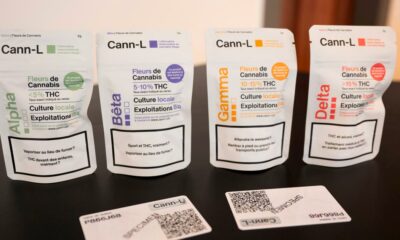
The LPCan introduces some of the packaging and marketing restrictions in Europe. All cannabis-based products must be sold in neutral, standardized packaging, without any branded elements. Each unit must contain no more than 5 grams of THC. Labels must show total THC content in milligrams and as a percentage.
From health warnings This includes illustrated labels on products intended for smoking. Additives such as nicotine, alcohol and caffeine are prohibited.
Advertising will be totally banned, both in person and online.
Taxation and public health objectives
The Swiss government is proposing a two-part taxation system on cannabis sales. Taxes will be based on both THC content of the product and health risks associated with its use.
Online retailers and dealers will be responsible for paying the tax, which will be collected by the Federal Office of Customer and Border Security using data from a new national seed-to-sale tracking system.
The government also sets ambitious public health targets. Ten years after implementation, less than 20% of cannabis sold should be smoked, at least 50% should be low-THC or additive-free products, and per capita THC sales should not exceed the current baseline.
Profits from the online channel are to be reinvested in prevention, harm reduction and addiction services, with annual audits to ensure compliance.
Switzerland and the European context
Although Switzerland is not a member of the’European Union, its participation in the’Schengen area obliges it to respect the free movement of goods. This has complicated reform efforts across Europe, but by basing its framework on the risk reduction, Switzerland may have found a model that satisfies international law while paving the way for a regulated domestic market.
If adopted, the Swiss legislation will mark a turning point in the european cannabis policy.
Other countries, such as Germany, the Netherlands and Malta, have introduced or proposed limited reforms, but none has set up a national non-profit market with such detailed rules on production, sale and consumption.
What next?
The outcome of the consultation period will determine how much political momentum the LPCan will retain. Proposals such as a single online channel and a ban on vertical integration could meet with resistance from industry players.
However, the emphasis on public health, prevention and social responsibility could help secure broader political support and give the project a chance of success.























Medical Cannabis in Germany: THC Prices Vary by a Factor of 12

France already has 3,000 cannabis retail outlets. None of them are legal.

Morocco's exports of legal cannabis have expanded to 15 countries

Aurora Cannabis Doubles Its Production Capacity in Germany

Tilray is accelerating its operations in Europe thanks to a license in Portugal

Boston will host the 10th annual State of the Cannabis Industry Conference on October 26

A DEA report confirms that there are no fatal cannabis overdoses

A British patient is challenging the NHS's refusal to reimburse medical cannabis

October 2026 CBD Highlights: 10 Strains and Hash to Discover from 5 French Producers

CBD in France: Traceability, Retail Stores, THC and Driving… What the New Bill Proposes
-
 Business2 weeks ago
The legal cannabis market in New York exceeds 4 billion $ in revenue
-

 Cannabis in France3 weeks ago
Which countries legalized medical cannabis before France?
-
Business3 weeks ago
South Korea is preparing to begin local production of medical cannabis to meet rising demand
-
Cannabis in Thailand3 weeks ago
From the boom in dispensaries to a purely medical approach: Thailand is revising its cannabis policy
-
Cannabis and driving3 weeks ago
Medical Cannabis and Driving: New South Wales Ends Automatic Penalties for THC
-
Autism3 weeks ago
Autism and Cannabis: Results from the First Placebo-Controlled Trial of NTI164
-
Cannabis in France2 weeks ago
France’s Drug Policy Chief Defends Cannabis Prohibition... and Runs Into the Facts
-
CBD1 week ago
In Brazil, researchers are developing an innovative CBD eye drop

















You must be logged in to post a comment Login