
Cannabis: OFDT deciphers the Swiss method for legalizing without excesses


While the debate on cannabis legalization While progress remains stalled in many European countries, Switzerland is bucking the trend. Rather than taking an ideological stance, the country has chosen to test, measure, and evaluate. A strategy outlined in a document published by the’French Observatory on Drugs and Addiction Trends (OFDT), written by Frank Zobel, one of Switzerland's leading experts on drug policy.
Entitled Reform Through Experimentation: Switzerland and Cannabis, this analysis provides an in-depth look at pilot programs for the legal sale of cannabis launched in Switzerland since 2021, their interim results, and how they are currently contributing to a national bill. A textbook example in Europe.
Expertise Gained from the Field
The OFDT document was written by Frank Zobel, deputy director of’Addiction Switzerland, head of the Cann-L Project in Lausanne, and a key player directly involved in the design and implementation of the Swiss pilot trials. A leading researcher on drug policy in Europe, Franck Zobel has also contributed to numerous studies on harm reduction, cannabis regulation, and the evaluation of public policies.
As the OFDT points out, until recently, any legalization of cannabis seemed incompatible in accordance with the UN's international conventions and the political balance of power in Europe. Meanwhile, the United States, Canada and Uruguay have established largely commercial legal markets, often modeled after those for alcohol.
These models have helped reduce arrests and weaken the black market, but they have also led to product diversification (edibles, concentrates, etc.) and an increase in the number of retail outlets, as well as an increase in the active ingredient content of products and a decrease in their prices, and a rise in regular cannabis use among adults.
The Swiss Approach: Experimenting Rather Than Making Decisions
According to the OFDT’s analysis, Switzerland has opted for a unique strategy: Reform Through Experimentation, a method already used in the 1990s for the medical prescription of heroin or in drug consumption rooms.
Since 2021, a specific provision of the Narcotics Act has authorized, for a limited period, scientific pilot programs for cannabis sales. The goal is not to create a market, but to produce reliable data on the effects of strictly regulated legal access.
The rules are particularly restrictive: participation is limited to adults who are already users; THC is capped at 20 %; products must be Swiss and organic; there is a complete ban on advertising; quantities are limited; and the inclusion of prevention and harm-reduction measures is mandatory.
By the end of 2025, Seven pilot projects are currently underway, involving approximately 13,000 participants. Frank Zobel's report distinguishes three main approaches:
- The first one is medical, with sales in pharmacies and strong involvement from universities, particularly in Zurich, Bern or Basel
- The second, more community-based and public health-oriented, concerns Geneva and Lausanne. These projects are nonprofit organizations, with simple retail locations and staff trained in harm reduction
- The Third Approach is led by private entities, which are more commercially oriented and are already testing the limits of the legal framework with a view to a possible future national market
Initial results fall far short of expectations
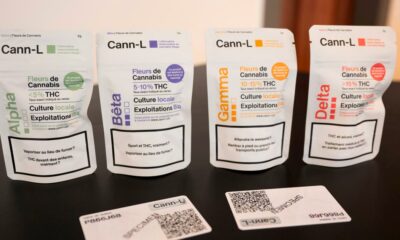
According to the OFDT, the initial data available do not confirm either a surge in consumption or a deterioration in public safety. The project Cann-L, led by Frank Zobel in Lausanne, shows, for example, overall stability in usage, a massive shift away from the black market and a gradual shift toward less risky consumption methods, such as vaping.
The profile of the participants is also revealing: mostly men who are employed, often long-term users—a group that is largely overlooked in traditional surveys.
From an economic standpoint, these projects have already made it possible to to remove several million euros from the black market, while being self-financing and funding public health initiatives.
A national law in the works
Building on these experiments, the Swiss Parliament is now working on a Federal Law on Cannabis Products, introduced in 2025 and analyzed in the OFDT document. The text proposes a novel model: public sales monopolies, a non-profit structure, incentive-based taxation based on health risks, a total ban on advertising, and full traceability.
Inspired by the Quebec model, this project explicitly aims to avoid the commercial excesses seen in North America, while offering a credible alternative to the black market.
As Frank Zobel points out in his analysis for the OFDT, Switzerland does not claim to have a perfect model. But it demonstrates that it is possible to break free from ideological deadlock based on data, real-world experiments, and ongoing dialogue between researchers and policymakers.
At a time when several European countries are struggling to reform or adopt partial measures that are difficult to implement, the Swiss approach could very well become a major source of inspiration to rethink cannabis regulation on the continent.





















France’s Drug Policy Chief Defends Cannabis Prohibition... and Runs Into the Facts

Cannabis and the Adolescent Brain: French Scientists Make a Key Discovery

EFSA Gives Initial Approval for Synthetic CBD; Natural Extracts Still Pending

Federal Cannabis Reform Once Again on Hold in the United States

Contest: Win a trip to Quebec to experience the hemp harvest firsthand

Bedrocan on Hold Amid Uncertainty Over Medical Cannabis

Newsweed Launches Its Own AI

A new tax of 0.5% could disrupt the hemp industry in Canada

Medical Cannabis and Driving: New South Wales Ends Automatic Penalties for THC

China's Yongji Health Takes Control of Tasmanian Botanics
-
 Cannabis and driving3 weeks ago
Cannabis and CBD: French Drivers Can Now Lose Their License Even Without a Positive Test Result
-

 Cannabis in France1 week ago
Which countries legalized medical cannabis before France?
-
Cannabis in France4 weeks ago
Cannabis Legalization: The LFI Bill Has a Major Problem—THC
-
Cannabis in the Netherlands3 weeks ago
One year after the launch of the Dutch cannabis experiment, the first trends are emerging
-
Business1 week ago
South Korea is preparing to begin local production of medical cannabis to meet rising demand
-
Cannabis in Thailand1 week ago
From the boom in dispensaries to a purely medical approach: Thailand is revising its cannabis policy
-
Cannabis in Argentina2 weeks ago
Argentina Opens Its Market to Hemp Flowers Containing 1% of THC
-
Cannabis in France3 weeks ago
French medical cannabis remains stalled at the Ministry of Health

















nousvousjugerons
January 28, 2026 at 8:07 p.m.
The Swiss have such a different approach that it’s hard to imagine something like that in France. It’s based on a humanistic vision. Abstinence has never been part of their approach to drug use, and it’s clear that Zurich’s method of distributing medical heroin is a success. Users aren’t required to be abstinent, even though in practice, 78% of the patients who ultimately participate in the program are abstinent. What the Swiss want is for users to be able to use drugs without health problems and without being excluded. This changes everything; it’s not a moral stance, but a pragmatic and humanistic one—unlike in France, which seeks to uphold moral order and save face. Nothing must be visible, and users are inevitably institutionalized—whether by the justice system, the police, or the medical system. When it comes to cannabis in Switzerland, their methods do not aim to hide consumption but to regulate it to make it safer.In France, since the medical community doesn’t see why it should be involved in treating people who don’t have a problematic use of cannabis, France therefore refers them to other repressive institutions—even if it’s just through a simple fine. The taboo is protected. No nationwide movement… Even though, in the end, this worsens the health, social, and legal situation, encouraging organized crime and trafficking.