The European Commission authorizes the use of hemp leaves in cosmetics

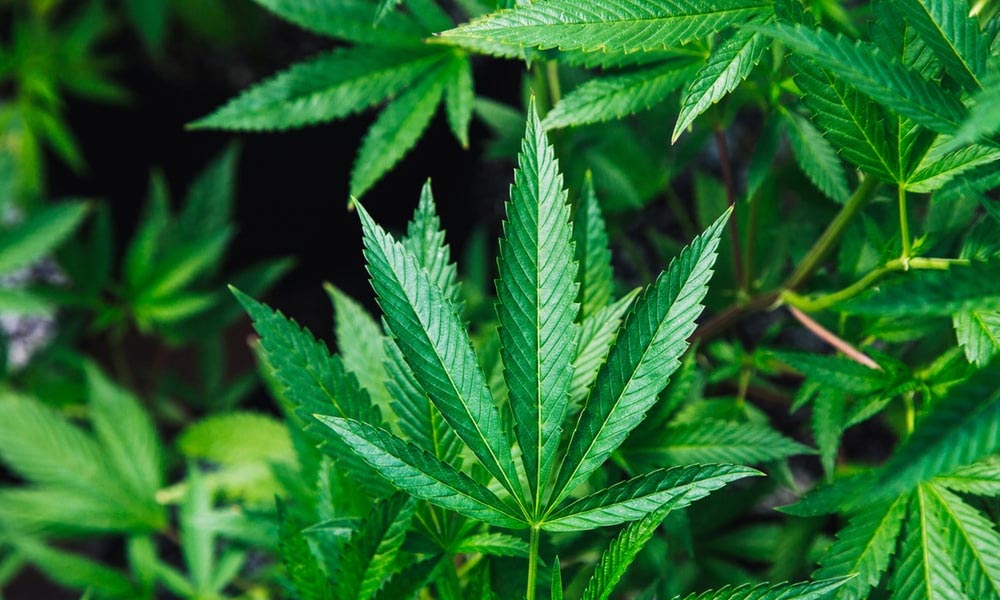
Recent changes to the European register of authorized cosmetic ingredients (CosIng) now include the possibility of using hemp leaf extracts, according to information revealed by CBD-Intel and available for consultation on the European portal.
Context
Cannabidiol (CBD) has been added to Annex II (list of prohibited substances) of the EU Cosmetics Regulation, due to the classification of cannabis in international treaties, in particular «all substances listed in Schedules I and II of the Single Convention on Narcotic Drugs signed in New York on March 30, 1961», which includes cannabis, cannabis resin and cannabis extracts and tinctures.
In principle, therefore, CBD cannot be used in cosmetic products in Europe. The definitions provided by the aforementioned UN Convention stipulate, however, that CBD may not be extracted from either «the flowers/fruiting tops» or «the separated resin» (as these entail higher percentages of THC) of the plant.
Seeds «when not accompanied by the head» are therefore excluded from the Convention's definition of cannabis. They do, however, contain minute quantities of cannabinoids.
Consequently, only CBD not derived from hemp (natural CBD or Synthetic CBD) is authorized for use in cosmetics in Europe, as follows in the CosIng :
«The cannabidiol (CBD) as such, whatever its source, is not listed in the 1961 Single Convention on Narcotic Drugs. However, its use in cosmetic products (II / 306) is prohibited if it is prepared from cannabis extract, tincture or resin in accordance with the Single Convention. Please note that national legislation on controlled substances may also apply.»
According to the catalog, natural extracts (leaves and flowers) have been banned until now.
Flowers still banned
Hemp flower extracts are therefore still listed among the substances prohibited in cosmetics. According to CBD-Intel, a process is underway to authorize the use of cannabis roots, but flowers remain «problematic», even in the medium term.
Questioned by CBD-Intel, the European Industrial Hemp Association (EIHA) argues that there is no reason for Europe to persist in banning hemp-derived CBD. It would like the CosIng entry to read as follows: «Pure cannabidiol (CBD) as such, whatever its source, is not listed in the Single Convention on Narcotic Drugs (1961) and is therefore not a controlled substance. However, its use in cosmetic products is prohibited if it is isolated from an extract, tincture or resin of Cannabis sativa L. different from industrial hemp.»
EIHA also points out that hemp extracts are manufactured from a starting material that is already low in THC, which is then purified to remain within the limits set by the regulatory authorities. «Thus, because of their low THC content, these products cannot in practice be abused, nor can the THC recovered. Hemp plant extracts« therefore become »products not covered by the 1961 Convention« - they are neither narcotic drugs nor psychotropic substances», added the EIHA.















Medical Cannabis in Germany: THC Prices Vary by a Factor of 12

France already has 3,000 cannabis retail outlets. None of them are legal.

Morocco's exports of legal cannabis have expanded to 15 countries

Aurora Cannabis Doubles Its Production Capacity in Germany

Tilray is accelerating its operations in Europe thanks to a license in Portugal

Boston will host the 10th annual State of the Cannabis Industry Conference on October 26

A DEA report confirms that there are no fatal cannabis overdoses

A British patient is challenging the NHS's refusal to reimburse medical cannabis

October 2026 CBD Highlights: 10 Strains and Hash to Discover from 5 French Producers

CBD in France: Traceability, Retail Stores, THC and Driving… What the New Bill Proposes
-
 Business2 weeks ago
The legal cannabis market in New York exceeds 4 billion $ in revenue
-

 Cannabis in France3 weeks ago
Which countries legalized medical cannabis before France?
-
Business3 weeks ago
South Korea is preparing to begin local production of medical cannabis to meet rising demand
-
Cannabis in Thailand3 weeks ago
From the boom in dispensaries to a purely medical approach: Thailand is revising its cannabis policy
-
Cannabis and driving3 weeks ago
Medical Cannabis and Driving: New South Wales Ends Automatic Penalties for THC
-
Cannabis in Argentina4 weeks ago
Argentina Opens Its Market to Hemp Flowers Containing 1% of THC
-
Autism3 weeks ago
Autism and Cannabis: Results from the First Placebo-Controlled Trial of NTI164
-
Cannabis in France2 weeks ago
France’s Drug Policy Chief Defends Cannabis Prohibition... and Runs Into the Facts
















You must be logged in to post a comment Login