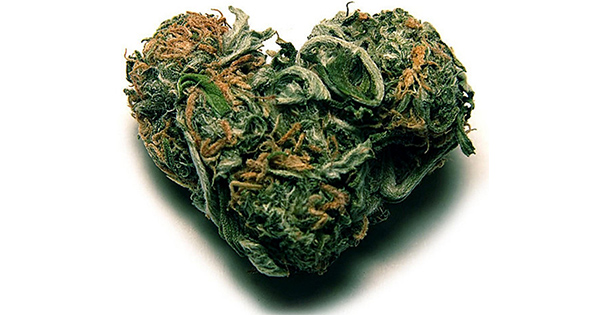
Cannabis and the menstrual cycle: effects on menstruation, fertility and PMS
Cannabis has been used for thousands of years to treat gynaecological disorders - the cannabinoids THC and CBD interact directly with the endocannabinoid system, which plays a central role in regulating the female reproductive cycle. Scientific research on this subject has accelerated since the 2010s, shedding more precise - and sometimes more nuanced - light on these interactions.
The endocannabinoid system and the menstrual cycle
The endocannabinoid system is present throughout the female reproductive system: ovaries, fallopian tubes, uterus and endometrium all express cannabinoid receptors CB1 and CB2. The endocannabinoid anandamide - often dubbed the «happiness molecule» - plays a key regulatory role at several stages of the cycle.
Studies have shown that anandamide levels fluctuate significantly during the menstrual cycle, reaching their peak during ovulation and their lowest level during the window of nidation. This natural variation suggests that the endocannabinoid system is actively involved in hormonal regulation and preparation for conception. THC and CBD, as agonists or modulators of these same receptors, can therefore interfere with these processes - for better or worse, depending on the context.
1. Cannabis and menstrual pain (dysmenorrhea)
This is the most widespread use, and the best documented anecdotally. Dysmenorrhea - pelvic pain during menstruation - affects between 50 and 90% of women of childbearing age, depending on the study, and is one of the leading causes of absenteeism among young women.
The THC is a powerful analgesic (painkiller) and antinociceptive (inhibits transmission of pain signals) agent. The CBD acts as a complementary anti-inflammatory, inhibiting the production of prostaglandins - the molecules responsible for painful uterine contractions during menstruation, by a mechanism similar to that of ibuprofen. The THC + CBD combination produces a so-called «entourage effect»: the two cannabinoids potentiate each other.
The use of cannabis for menstrual pain is not new. Nineteenth-century medical writings mention its use in obstetrics and gynecology, and Queen Victoria is said to have resorted to cannabis-based preparations to relieve her menstrual cramps - an anecdote often cited but whose primary sources remain difficult to verify with certainty.
Recent surveys (including a 2020 Australian study published in the Journal of Women's Health) show that cannabis is one of the most widely used complementary therapies for endometriosis and dysmenorrhea, with high self-reported relief rates. However, controlled clinical research remains limited, not least for regulatory reasons.
2. Cannabis and premenstrual syndrome (PMS)
During the luteal phase (the 7 to 14 days preceding menstruation), hormonal fluctuations - a drop in estrogen, a peak and then a fall in progesterone - give rise to the symptoms of premenstrual syndrome: pain, irritability, mood swings, anxiety, fatigue, bloating and sleep disorders.
The endocannabinoid system is directly involved in the regulation of mood, anxiety and sleep via CB1 receptors in the central nervous system. THC and CBD can modulate these functions, which explains the subjective relief reported by many women during the premenstrual phase.
THC THC: its relaxing and euphoric effects can alleviate the irritability and anxiety of PMS. However, in some women, THC can actually amplify anxiety and mood swings - sensitivity to cannabinoids varies considerably between individuals and phases of the cycle. Studies suggest that sensitivity to the effects of THC is highest during the pre-ovulatory phase.
CBD CBD: without psychoactive effects, CBD is often preferred for PMS management, notably for its anxiolytic, anti-inflammatory and potentially sleep-regulating action. It can be used as a sublingual oil, capsule or infusion, without the risk of undesirable psychoactive effects.
3. Cannabis and ovulation: a suppressive effect
Several studies - most of them conducted on animal models (primates, rodents) between the 1970s and 1990s - suggest that THC can block or delay ovulation by suppresses secretion of luteinizing hormone (LH), the hormonal signal that triggers the ovary to release the egg. In women who use cannabis regularly, anovulatory cycles (without ovulation) have been observed in some studies.
This mechanism is consistent with the fact that anandamide reaches its natural peak precisely at the moment of ovulation - an artificial increase in cannabinoid agonists (via THC) could therefore disrupt this precise signal.
Note: these effects seem to be dose-dependent and linked to regular, intensive consumption. Occasional use is unlikely to significantly affect the ovulatory cycle. But for women trying to conceive, caution is called for.
4. Cannabis and menstrual cycle length
A 1986 study published in the Journal of Pharmacology and Experimental Therapeutics noted a significantly shorter menstrual cycle length in women who received THC compared to the placebo group, probably related to the suppressive effect on luteinizing hormone described above.
More recent studies, including a longitudinal analysis of over 4,000 women (2019, Epidemiology), have confirmed an association between regular cannabis use and shorter or irregular menstrual cycles. The precise mechanisms remain to be elucidated, but the involvement of the endocannabinoid system in hormonal regulation is increasingly well documented.
5. Cannabis and embryonic implantation
The timing of implantation - the window of around 3 days, 6 to 9 days after ovulation, during which the embryo can implant in the uterine mucosa - is regulated in part by anandamide levels. These levels are naturally at their lowest during this window: studies on animal models have shown that an artificial increase in cannabinoid agonists during this period compromises implantation.
Extrapolation to human cannabis consumption remains cautious - the endocannabinoid system is complex and the mechanisms do not automatically transpose. Nevertheless, for women seeking to conceive, it is generally recommended to avoid all cannabis consumption during the nidation window and ideally for the entire duration of a planned pregnancy.
6. Topical gynecological cannabis products
An emerging market, particularly visible in countries where medical or recreational cannabis is legalized, offers topical products for gynecological use CBD/THC vaginal suppositories, pelvic massage oils, infused tampons and heating patches.
The idea is to deliver the anti-inflammatory and antispasmodic properties of cannabinoids directly to the uterus and pelvic muscles, without passing through systemic circulation and therefore without significant psychoactive effects (particularly for CBD-only products).
Rigorous clinical evidence is still lacking for these products, but user feedback - particularly for endometriosis and severe dysmenorrhea - is encouraging. These products are not legally available in France in their active cannabinoid form.
7. Cannabis, pregnancy and breastfeeding
This is the point on which the medical consensus is clearest and firmest: cannabis use during pregnancy and breast-feeding is not recommended.
THC readily crosses the placental barrier and is found in breast milk. Studies associate cannabis use during pregnancy with an increased risk of low birth weight, premature birth, and potential effects on the child's neurological development. These effects are particularly well documented for regular, intensive use in the first trimester.
CBD is also not recommended during pregnancy and breastfeeding, due to insufficient safety data in pregnant women.
Summary: cannabis and the menstrual cycle
| Effect | THC | CBD | Level of evidence |
|---|---|---|---|
| Cramp relief | ✅ Yes (analgesic) | ✅ Yes (anti-inflammatory) | Moderate (limited clinical studies) |
| PMS reduction | ✅ Partial (anxiety, mood) | ✅ Yes (anxiety, sleep) | Low to moderate |
| Disruption of ovulation | ⚠️ Possible (regular consumption) | ❌ Not documented | Moderate (animal studies) |
| Cycle shortening | ⚠️ Possible | ❌ Not documented | Low to moderate |
| Embryo implantation | ⚠️ Potential risk | ❌ Not documented | Low (animal models) |
| Pregnancy / breastfeeding | ❌ Not recommended | ❌ Not recommended | Strong (medical consensus) |















JIHE 2026: Japan’s Largest Trade Show Dedicated to Hemp and CBD Returns to Tokyo with More Than 100 Industry Players

New Caledonia: The Courts Clear the Way for the Return of CBD

The Brazilian medical cannabis market continues to grow

Morocco: Three Cannabis-Based Medications Approved for the Treatment of Epilepsy

Canopy Growth Receives New EU-GMP Certification to Strengthen Its Presence in Europe

Three years after legalizing medical cannabis, Albania continues to establish regulations for it

The first plant-based medical THC spray arrives in the United Kingdom

Medical Cannabis in Germany: THC Prices Vary by a Factor of 12

France already has 3,000 cannabis retail outlets. None of them are legal.

