Cannabis laws are evolving, but France is stuck in the past

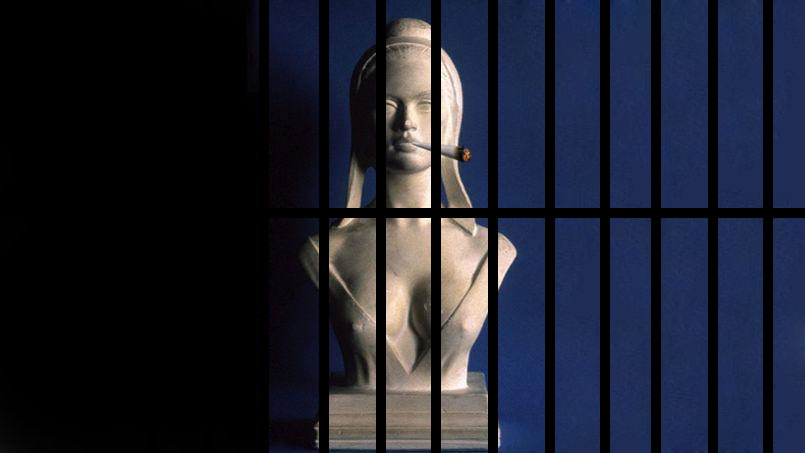
Edito. Since November 8, more than half of all Americans have had access to medical cannabis, and 1 in 5 to cannabis altogether. As of January 2018, nearly 30 million Californians over the age of majority will have access to 100% weed that is legal, regulated, controlled and tested by the state. California legalized medical cannabis in 1996. It will have taken 20 years to move to full legalization.
On our side of Europe, things aren't as static as you might think. Ireland, Italy, Switzerland, Germany or the Denmark are very interested in reforming their cannabis laws. Spain and Portugal have already got their foot in the door by allowing Cannabis Social Clubs, on the other by decriminalizing all drugs. The consequences of this new legislation in Portugal are «dramatic»: a drop in cannabis consumption, particularly among young people, a significant reduction in overdoses, and a drop in drug-related viral infections (HIV, hepatitis, etc.).
It's as if today's drug prohibition has only worsened drug use, and problematic drug use at that. Because that's where the problem lies: problem drug use. Make no mistake about it: drugs are bad. Some are legal (tobacco, cigarettes), but their consequences for health and society are far more serious than those of cannabis alone.
The prohibition of drugs, and cannabis in particular, has had two definite effects: it has stigmatized a segment of the consumer population (blacks in the USA, Arabs in France) who account for the same percentage of smokers as whites, but are more likely to end up in police custody or prison for possession or use; and it has set up very powerful illegal production, import and sales networks, whose revenues feed more or less unknown, possibly dangerous, networks.
The problem is not so much the harm that cannabis does to its users, but the strong consequences of cannabis prohibition.
Prohibition has never stopped our children from smoking, our teenagers from finding a cool joint, young executives from buying in Saint-Ouen, resourceful people from growing at home, but it denies our grandmother the right to use a cannabis cream to treat her arthritis.
In France, the situation has reached a standstill. The 1970 law on health measures to combat drug addiction and repress the illicit trafficking and use of poisonous substances, passed on December 31, is now clearly obsolete. Its aim at the time was to combat the French Connection and the heroin epidemic, and it no longer takes into account today's uses.
Today, we have many examples of state regulation of cannabis, some good, some bad, so that we can start thinking in depth about a change in the law, which could guarantee both a secure production and distribution chain controlled by a government body, and communication and prevention policies aimed at old and new users. This would undoubtedly be a courageous policy. There are many issues at stake: integration of the illegal sector into a legal circuit, road and school prevention, medical cannabis, etc. On the other hand, to do nothing is to submit to a situation that no longer works.
How many are going to rub shoulders with them on this election eve? Very few. NKM, in a vain attempt to distance herself from the right-wing male cohort, Hamon, Macron perhaps. But that's still no reason to accept the status quo. Some, off the record, are more sensitive to the subject than others. Some others, for family reasons for example, will never go for it.
Democracy must not be reduced to a struggle between the pro and anti sides. This issue in particular needs to be driven by a population that has understood that the situation today is skewed. 5 million people smoke. You either like it or you don't, but you can't deny it any longer. You can be a non-smoker, have a relative who died of lung cancer after a lifetime of smoking Gitane corn, and still be in favor of legal tobacco purchasing. How many adulterated products would otherwise be available?
If we look at the facts, the conclusion to the current situation is pretty clear. The state must take the matter into its own hands. With all its might and with all its will. It's up to us to show it that this is possible and desirable.
And in the meantime, long live California!











«Vincy Gold»: Humboldt Seed Company on the Hunt for Saint Vincent Sativas

Cronos Completes the Acquisition of CanAdelaar for 57.5 million euros

Cannabis with a "bloody" twist: Discover Sensi True Blood and Sensi Sangria, the two new strains from Sensi Seeds

Hemp: The Council of the EU Takes a Stand on New Production and Marketing Rules

Missouri's legal cannabis market accounts for 93 % of consumer spending

THC Gummies: How to Read a Certificate of Analysis Before Buying

British patients now have access to THCV-rich cannabis flowers

Spain: Medical Cannabis Is Coming to About 50 Hospitals

JIHE 2026: Japan’s Largest Trade Show Dedicated to Hemp and CBD Returns to Tokyo with More Than 100 Industry Players

New Caledonia: The Courts Clear the Way for the Return of CBD
-
 Business3 weeks ago
The legal cannabis market in New York exceeds 4 billion $ in revenue
-

 Cannabis in France4 weeks ago
Which countries legalized medical cannabis before France?
-
Cannabis in France1 week ago
France already has 3,000 cannabis retail outlets. None of them are legal.
-
Business4 weeks ago
South Korea is preparing to begin local production of medical cannabis to meet rising demand
-
Cannabis in the U.S.1 week ago
A DEA report confirms that there are no fatal cannabis overdoses
-
Cannabis in Thailand4 weeks ago
From the boom in dispensaries to a purely medical approach: Thailand is revising its cannabis policy
-
Cannabis and driving4 weeks ago
Medical Cannabis and Driving: New South Wales Ends Automatic Penalties for THC
-
Cannabis in France3 weeks ago
France’s Drug Policy Chief Defends Cannabis Prohibition... and Runs Into the Facts
















You must be logged in to post a comment Login