Will Brazil become the equivalent of the Philippines in the fight against drugs?

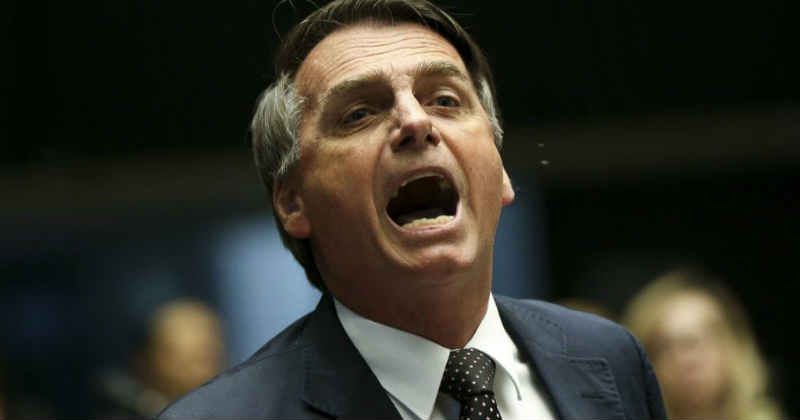
Against a backdrop of political and economic crisis, Brazil is set to elect a new president. On Sunday October 7, two candidates qualified for the second round: Jair Bolsonaro and Fernando Haddad. The two men have radically different visions of the fight against drugs. The position of Bolsonaro, the favorite in the first round, looks dangerously similar to that of Fernando Haddad. to that of Philippine President Rodrigo Duterte.
Brazil and cannabis
Brazil is considered South America's leading cannabis consumer. For some years now, cannabis consumption has been tolerated for personal use, but the determination of «use» is left to the discretion of police and judges. This has led to unequal treatment that has tended to exacerbate ethnic and social differences. The omnipresence of the cartels in society and the intensification and militarization of the war on drugs have stifled this policy of tolerance to the point where consumers are prosecuted and incarcerated as suspected traffickers.
Moreover, the country is plagued by violence and crime: the country's prison population is currently the fourth largest in the world, and the homicide rate is four times the global average. Violence linked to cannabis trafficking amounts to 60,000 homicides a year, whether in gang wars for control of the production and distribution chain, or in clashes with the police. At present, the most influential cartel is the First Capital Commando (PCC). It has succeeded in setting up a transnational drug trafficking network, unofficially called «Narcosul», which brings in cannabis from Paraguay and cocaine from Bolivia.
Liberal voices were raised in favor of legalizing cannabis (notably by’a Supreme Court judge, Roberto Barroso) to combat drug trafficking. A position also envisaged by countries in the region such as Mexico or Uruguay. Particularly in the context of Brazil, a country plagued by poverty, radical anti-drug policies seem to ignore the deep-rooted societal causes that drive some people to drug use and trafficking. Their effectiveness is questionable, since it is often the replaceable hands who are killed by the forces of law and order, not the drug barons. While these policies probably slow down the cartels, they are not enough to combat them in the long term.
Bolsonaro the Brazilian «Trump» or «Duterte
The first-round favorite is on the extreme right of the political spectrum. Nicknamed the Brazilian Trump, he shares with the latter a taste for provocation. His populist, conservative rhetoric is appealing to an increasing number of voters, thanks to a general sense of frustration. In addition, he has publicly declared his opposition to abortion and drug liberalization, and advocates.., in the image of Trump, an intensification of the war on drugs.
Um chefe de Estado deve tomar posições, decidir, mostrar a todos sua verdadeira face. Sempre me posicionei contra a liberação das drogas e aborto.
Marina ao sugerir plebiscito, sem dizer sua posição para temas tão relevantes, se esquiva e lava suas mãos no politicamente correto.- Jair M. Bolsonaro (@jairbolsonaro) June 23, 2018
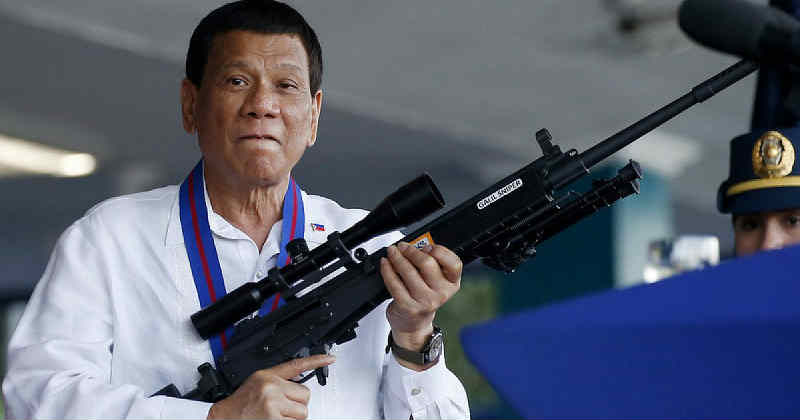
Bolsonaro also shares with Trump a common admiration for the «effectiveness» of Philippine President Duterte in the fight against drugs. The latter has declared a real war on drugs and even went so far as to propose arming civilians. Like Trump, who had mentioned the death penalty for drug dealers, and like Duterte, whom he considers to be doing «a good thing for his country», Bolsonaro has declared himself in favor of the police killing drug dealers. He also wants to further militarize the fight against drugs, and reinforce the army's presence «in the streets, and even in schools, [where] bandidos sell drugs and openly smoke marijuana».» he asserted.
In contrast to these eradication policies, his rival, Fernando Haddad, seems to be taking a more measured stance. He points out that his party has historically approached drug problems as public health issues. In an interview with El pais, He also denounced the ineffectiveness of current policies, which they regard as misleading, and expressed the need to «analyze the subject with a more scientific, pragmatic and less fundamentalist vision, looking for concrete objectives, such as improving public health».
While mayor of Sao Paulo, Haddad initiated the «A Bras Ouverts» (Open Arms) program, which provided drug addicts with hotel accommodation, hot meals, access to health services and the opportunity to work and get paid, thus diverting them from the conveniences and easy money on offer from the drug cartels.















«Vincy Gold»: Humboldt Seed Company on the Hunt for Saint Vincent Sativas

Cronos Completes the Acquisition of CanAdelaar for 57.5 million euros

Cannabis with a "bloody" twist: Discover Sensi True Blood and Sensi Sangria, the two new strains from Sensi Seeds

Hemp: The Council of the EU Takes a Stand on New Production and Marketing Rules

Missouri's legal cannabis market accounts for 93 % of consumer spending

THC Gummies: How to Read a Certificate of Analysis Before Buying

British patients now have access to THCV-rich cannabis flowers

Spain: Medical Cannabis Is Coming to About 50 Hospitals

JIHE 2026: Japan’s Largest Trade Show Dedicated to Hemp and CBD Returns to Tokyo with More Than 100 Industry Players

New Caledonia: The Courts Clear the Way for the Return of CBD
-
 Business3 weeks ago
The legal cannabis market in New York exceeds 4 billion $ in revenue
-

 Cannabis in France4 weeks ago
Which countries legalized medical cannabis before France?
-
Cannabis in France1 week ago
France already has 3,000 cannabis retail outlets. None of them are legal.
-
Business4 weeks ago
South Korea is preparing to begin local production of medical cannabis to meet rising demand
-
Cannabis in the U.S.1 week ago
A DEA report confirms that there are no fatal cannabis overdoses
-
Cannabis in Thailand4 weeks ago
From the boom in dispensaries to a purely medical approach: Thailand is revising its cannabis policy
-
Cannabis and driving4 weeks ago
Medical Cannabis and Driving: New South Wales Ends Automatic Penalties for THC
-
Cannabis in France3 weeks ago
France’s Drug Policy Chief Defends Cannabis Prohibition... and Runs Into the Facts















You must be logged in to post a comment Login