
Brazil: Supreme Court judge calls for legalization to fight gangs

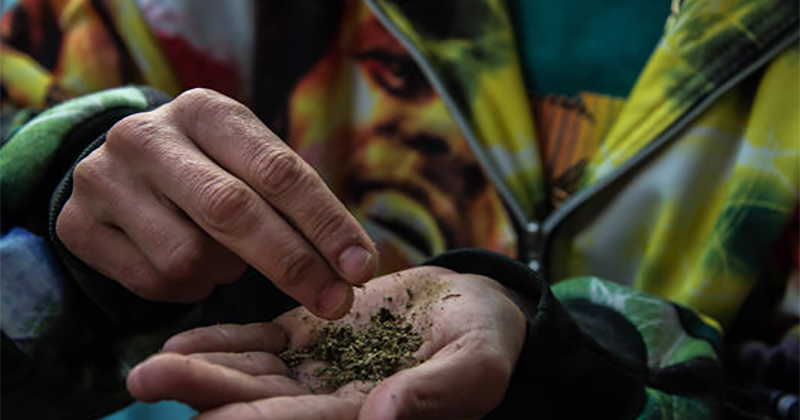
A Brazilian Supreme Court judge has called for the legalization of cannabis and cocaine to weaken the growing power of the gangs that have recently unleashed violence and rocked Latin America's largest country.
Judge Roberto Barroso, a Yale graduate and professor of constitutional law, explains that 50 years of the war on drugs has failed miserably, sending small-time dealers to prison while fueling violent gang rivalries for control of a highly lucrative market.
«Unlike in the United States or Europe, where the problems are based on the impact of drugs on consumers, in Brazil the problems stem from the power that drug traffickers have over poor communities,» he said. Barroso told Reuters.
«I can assure you it's only a matter of time. Either we legalize cannabis now, or we do it later after spending billions and incarcerating thousands of people.».
This rare appeal from a representative of Brazil's judiciary reflects the growing fears engendered by violence in overcrowded prisons and shantytowns.
On New Year's Eve, inmates beheaded a dozen rival gang members, triggering prison riots across the country. Last week, a police strike in the state of Espirito Santo triggered a wave of murders of over 120 people, most of them gang-related.
Regulating the production, sale and consumption of cannabis, like their Uruguayan neighbor, could be the first step towards reducing the crime rate.
«If this works, we can easily legalize cocaine,» says Barroso, who also advocates stem cell research and gay rights. «If you want to break the power of traffickers, you have to consider legalizing cocaine.
While most of its neighbors have decriminalized cannabis, Brazil remains divided. Barroso is one of only 3 judges out of 11 on the Supreme Court to have recently voted in favor of decriminalizing cannabis. decriminalization of cannabis.
Since a 2006 law gave judges the power to determine who was a user and who was a dealer, the prison population has increased by 55%. 1/4 of male inmates are in prison for drug trafficking, the number one reason for incarceration in the country.
«I'm not sure that my proposal for legalization will work, but I'm sure that the war on drugs hasn't worked,» explains Barroso. «We can't just repeat the same mistakes over and over again.




Argentina Opens Its Market to Hemp Flowers Containing 1% of THC

The French Socialist Party still doesn't know how to approach the legalization of cannabis

Science in the City International: Paris at the Heart of Transatlantic Scientific and Medical Dialogue

Christine Fréchette is alienating Quebec’s cannabis industry

Rima Hassan: When «Drugs» Become a Political Weapon

From Marathons to Ultratrails: How Extreme Running Affects the Endocannabinoid System

Four days of THC may make breast cancer less aggressive, according to a new study

Medical Cannabis: 14 Organizations Finally Call for Enforcement of the Law

One year after the launch of the Dutch cannabis experiment, the first trends are emerging

High Ground: The Crash of a Plane Full of Marijuana That Made History in Yosemite
-
 Cannabis and driving1 week ago
Cannabis and CBD: French Drivers Can Now Lose Their License Even Without a Positive Test Result
-
Cannabis in France2 weeks ago
Cannabis Legalization: The LFI Bill Has a Major Problem—THC
-

 Cannabis in the Netherlands5 days ago
One year after the launch of the Dutch cannabis experiment, the first trends are emerging
-
Cannabis in France6 days ago
French medical cannabis remains stalled at the Ministry of Health
-
Business5 days ago
The United Kingdom Is Moving Closer to a Regulated CBD Market
-
Cannabis in Europe2 weeks ago
Andorra Paves the Way for Medical Cannabis Cultivation
-
Cannabis in France2 weeks ago
Drought: Could Hemp Become the New Hope for French Farmers?
-
Cannabis in Argentina2 days ago
Argentina Opens Its Market to Hemp Flowers Containing 1% of THC













You must be logged in to post a comment Login