Scientists discover anti-cancer compounds in hemp roots


Recent research conducted by the Agricultural Research Service (ARS) of the U.S. Department of Agriculture suggest that the roots of the Cannabis sativa L. contain bioactive compounds that may be of interest for cancer research.
A chemical anomaly leads to a major discovery
The breakthrough began in National Center for Agricultural Utilization Research in Peoria, Illinois. While performing routine chemical analyses on hemp roots, the chemist Dr. Korey Brownstein noticed several unknown signals. A more detailed investigation revealed that these peaks corresponded to a group of molecules called neolignans, a class of plant-derived compounds rarely associated with hemp.
After three years of complex extraction, purification, and structural analysis, Brownstein's team succeeded in isolating four distinct neolignans from hemp roots. This was the first time such compounds had been fully characterized from this part of the plant. Two of them were identified as Dadahol A and Dadahol B, molecules that have already been reported in other plant species but have never been confirmed in hemp at this level of detail.
The results were published in the Journal of Cannabis Research.
Moderate cytotoxic effects observed in laboratory models
To assess the biological relevance of these neolignans, the ARS team partnered with scientists from the Pediatric Oncology Laboratory at Peoria Medical University in Illinois. Under controlled laboratory conditions, the isolated compounds were tested on several pediatric cancer cell lines, including models of neuroblastoma, hepatoblastoma, and Hodgkin's lymphoma.
The results showed that the fractions containing dadahol A and dadahol B exhibited a moderate cytotoxic activity, reducing the viability of cancer cells. Among the compounds tested, dadahol A consistently showed the lowest IC50 values across several cell lines, indicating a greater inhibitory effect on cell proliferation.
«Further refinement and understanding of this molecule’s effect on pediatric cancers will open up new treatment options for childhood cancers that do not respond to current therapies,» said the ARS research team. It is important to note that the researchers emphasize that this is early-stage in vitro results and that extensive research remains to be done before any therapeutic application can be considered.
The research team is now focusing on the’increased mining and the conduct of more comprehensive studies on a wider range of cancer cell lines. Future work will aim to clarify the mechanisms of action of these neolignans, including their effects on cell cycles and programmed cell death.
From an agricultural byproduct to a value-added crop
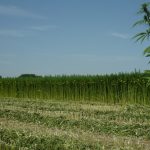
Beyond its biomedical implications, this discovery could have significant economic consequences for the industrial hemp sector.
The roots are usually discarded or buried in the fields, without generating direct revenue. The identification of pharmaceutically interesting compounds could be a game-changer. «If we view hemp as a multipurpose crop, we can expand its applications and market: paper, seeds, fibers, and now, potentially, pharmaceutical compounds derived from the roots,» said Mr. Brownstein.





















Dr. Pascal Douek, a tireless advocate for medical cannabis in France, has died

Kentucky now has 26 medical cannabis dispensaries

«Vincy Gold»: Humboldt Seed Company on the Hunt for Saint Vincent Sativas

Cronos Completes the Acquisition of CanAdelaar for 57.5 million euros

Cannabis with a "bloody" twist: Discover Sensi True Blood and Sensi Sangria, the two new strains from Sensi Seeds

Hemp: The Council of the EU Takes a Stand on New Production and Marketing Rules

Missouri's legal cannabis market accounts for 93 % of consumer spending

THC Gummies: How to Read a Certificate of Analysis Before Buying

British patients now have access to THCV-rich cannabis flowers

Spain: Medical Cannabis Is Coming to About 50 Hospitals
-
 Business3 weeks ago
The legal cannabis market in New York exceeds 4 billion $ in revenue
-
Cannabis in France2 weeks ago
France already has 3,000 cannabis retail outlets. None of them are legal.
-
Cannabis in the U.S.2 weeks ago
A DEA report confirms that there are no fatal cannabis overdoses
-
Cannabis in France4 weeks ago
France’s Drug Policy Chief Defends Cannabis Prohibition... and Runs Into the Facts
-
Studies on cannabis2 weeks ago
Cannabis Oil and Endometriosis: A Promising Study for Pain Relief
-
Business2 weeks ago
Tilray is accelerating its operations in Europe thanks to a license in Portugal
-
CBD3 weeks ago
In Brazil, researchers are developing an innovative CBD eye drop
-
Cannabis in France2 weeks ago
CBD in France: Traceability, Retail Stores, THC and Driving… What the New Bill Proposes













cbdtech
January 15, 2026 at 9:24 PM
This is a fascinating discovery that confirms what we at CBDTech had long suspected: hemp is an inexhaustible resource that we’ve only just begun to explore. While most attention is focused on the flowers and leaves for their cannabinoids (CBD, CBG, etc.), Dr. Brownstein reminds us that the root—historically used in ancient pharmacopoeias—holds bioengineering treasures such as these neolignans.
The identification of dadahols A and B opens up a promising avenue, particularly for research in pediatric oncology. Although the results are still at the in vitro stage, the possibility of offering new treatment options holds immense promise.
From an industrial perspective, this study is also excellent news for a more sustainable hemp industry. Transforming what was previously considered ‘agricultural waste’ into a high-value-added pharmaceutical compound would make it possible to utilize the entire plant, from root to seed. This is yet more proof that hemp is the plant of the future par excellence, both for health and for the circular economy!