How to keep Cannabis roots healthy?

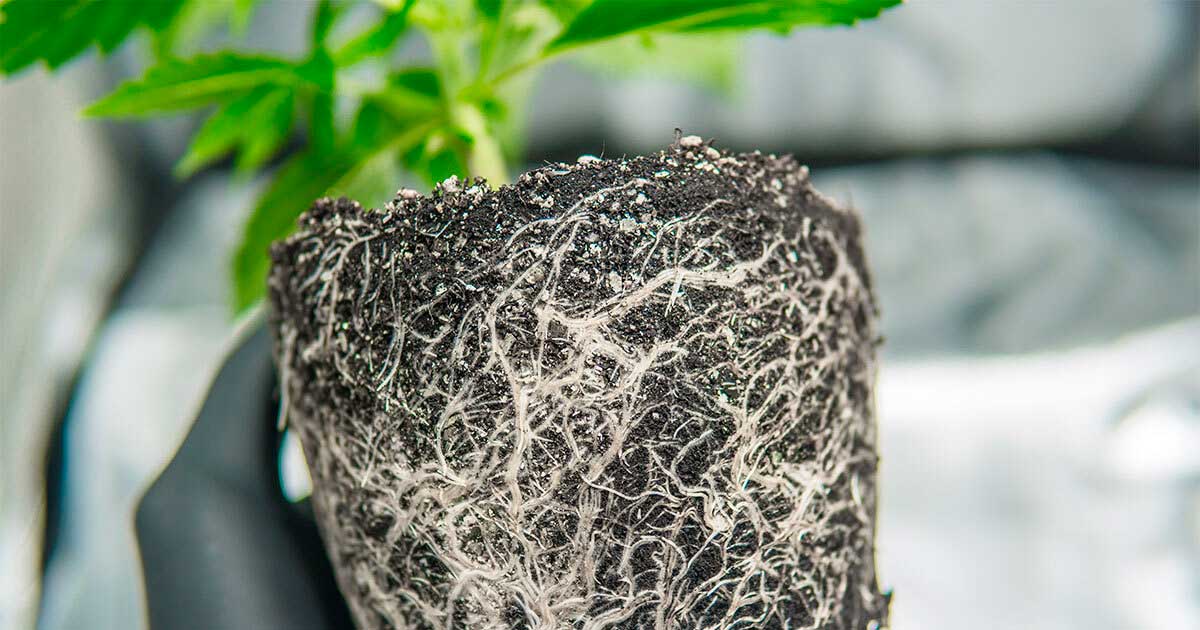
Cannabis plants, whether for industrial hemp, CBD hemp or medical cannabis, depend on their environment to harvest their energy, initiate photosynthesis and grow.
The roots are the digestive system of Cannabis plants. And, like any other living creature, when plants can't feed themselves properly, they can develop nutrient deficiencies which will significantly weaken their immune system and slow down their overall development, ultimately leading to a slow but certain death.
It is perhaps because they are underground and therefore invisible that we forget about the the vital multifunctional and symbiotic role of Cannabis roots.
The experts at Silent Seeds tell us all about how to keep Cannabis roots healthy!
Roots: a multifunctional vital machine
As explained above, roots - also known as the root system or root mass - are in fact the digestive system and backbone of plants. Roots are responsible for optimal plant nutrition: they facilitate the absorption and assimilation of nutrients present in the soil or substrate.
The root system has three main functions that make it comparable to the immune system in humans: firstly, it ensures hydration and nutrient supply; secondly, it anchors plants firmly in the soil; and thirdly, it stores food for periods of nutrient deficiency or drought stress.
Roots are made up of four main parts, from top to bottom: the primary root, which is the first to develop and where the lateral roots are formed; the maturation zone, where the root hairs appear to absorb mineral salts and water, making it the main contact zone between the plant and the soil; the meristematic zone, which includes the apical meristem responsible for cell growth and therefore root elongation; and finally the root cap, which facilitates movement of the root tip in the soil and thus protects it from breakage.
Cannabis plants mainly produce taproots, but can also develop adventitious roots when propagated by cuttings. These roots are located at the top of the stem and develop accidentally through this propagation technique.
Healthy, vigorous roots at every stage of plant growth
The development of a healthy, vigorous root system is essential for plants to become strong, grow rapidly and ultimately provide a productive, high-quality harvest. Oxygenation of the soil is therefore very important for all plant metabolisms, with the soil acting as the plant's second respiratory organ.
The growth phase
The development of the root system of your cannabis plants requires particular attention during the growth phase: the more the vegetative structure of the plants develops during this period, the greater their yield capacity and the stronger their immune system, so they will be better equipped to fight pathogens or parasites.
Before you start growing, make sure you have a quality, nutrient-rich substrate. It's essential to use fresh soil containing components that facilitate soil aeration, drainage and a certain amount of moisture retention (e.g. perlite, sphagnum moss, coco-coir, blond peat, etc.).
The soil is home to millions of beneficial micro-organisms that protect the root mass, promote its development and maintain its balance. Before planting seedlings in the soil, it's best to add trichodermas, endomycorrhizae and bacteria such as rhizobacteria. These organisms regulate and protect the substrate and are extremely effective!
It's also important to ensure that the soil is able to breathe, so that it doesn't become too compact or waterlogged, hampering the movement of roots in the soil and eventually suffocating them.
Beginning growers tend to over-water their plants and often end up with waterlogged soils, which can hamper plant growth and weaken roots that eventually rot. Soil that is too wet also encourages the development of fungi and parasites, and gives plants a bad start to their future development. Good irrigation management is therefore essential to avoid ending up with fragile, diseased plants right from the start.
As far as containers are concerned, it's best to use geotextile pots, which facilitate oxygenation of the substrate. It's essential to understand the soil's respiratory cycle, i.e. the alternating mechanisms between dry and moist soil.
If your plants are properly watered, their roots will develop optimally. This is essential to prevent the appearance of insects and fungi (especially Pythium and Fusarium).
The opposite situation can also be detrimental to your plants: soil that is too dry can cause drought stress (i.e. a lack of water and nutrients), which can lead to a weakened immune system and the appearance of parasites. Striking a balance between these two extremes is vital for optimum root mass development.
It's important to pay particular attention to the time when seedlings develop their first roots. They need a stable climate, i.e. humidity between 75 and 80 %, and temperature between 23 and 28ºC.
It's best not to use root stimulators for the first 8-10 days of growth. Wait until the plants are at least 10-15 cm tall, and have already developed at least 1 or 2 sets of leaves. At this point, adjust the pH of the water to between 6.0 and 6.2, then add 0.2 - 0.4 ml/L of root stimulator, depending on the specific concentration of the product.
The recommended frequency of application is once a week throughout your plants' life cycle (during vegetation and flowering periods). During the second week, increase the dosage to 0.8 - 1 ml/L, always with a pH between 6.0 and 6.2, and continue to gradually increase the dosage from the third week onwards until you reach a concentration of 1.8 - 2 ml/L.
During the third week, humidity should be close to 65 % and temperature between 22 and 26°C. Gradually increase dosage to 3.6 - 4 ml/L, this time with a pH close to 6.2 - 6.4 (end of growth phase).
To avoid thermal shock, the water temperature should be the same as, or close to, the ambient temperature of your growing area.
You need to be aware of the importance of being rigorous during this phase of development, as the elements essential to the proper evolution of your plants are at stake at this time. The plant's immune system is really vulnerable in this phase, and a successful vegetative period guarantees the development of healthy, vigorous plants that will go on to produce abundant, high-quality cannabis flowers. In short, it's a beneficial chain reaction at every level.
The flowering phase
Once your Cannabis plants have succeeded in developing a solid structure with a strong immune system thanks to good management of their growth phase, it's time to take care of the flowering phase.
During this period, everything is much simpler: just continue the same watering regime and add 4 ml/L of root stimulator to your nutrient solution once a week. You'll need to stop using cannabis fertilizers and root and flowering stimulators altogether when you rinse your plants' roots during the last 15 to 20 days of the cycle. Then it's just a matter of harvesting the fruits of your labor...
















«Vincy Gold»: Humboldt Seed Company on the Hunt for Saint Vincent Sativas

Cronos Completes the Acquisition of CanAdelaar for 57.5 million euros

Cannabis with a "bloody" twist: Discover Sensi True Blood and Sensi Sangria, the two new strains from Sensi Seeds

Hemp: The Council of the EU Takes a Stand on New Production and Marketing Rules

Missouri's legal cannabis market accounts for 93 % of consumer spending

THC Gummies: How to Read a Certificate of Analysis Before Buying

British patients now have access to THCV-rich cannabis flowers

Spain: Medical Cannabis Is Coming to About 50 Hospitals

JIHE 2026: Japan’s Largest Trade Show Dedicated to Hemp and CBD Returns to Tokyo with More Than 100 Industry Players

New Caledonia: The Courts Clear the Way for the Return of CBD
-
 Business3 weeks ago
The legal cannabis market in New York exceeds 4 billion $ in revenue
-

 Cannabis in France4 weeks ago
Which countries legalized medical cannabis before France?
-
Cannabis in France1 week ago
France already has 3,000 cannabis retail outlets. None of them are legal.
-
Business4 weeks ago
South Korea is preparing to begin local production of medical cannabis to meet rising demand
-
Cannabis in the U.S.1 week ago
A DEA report confirms that there are no fatal cannabis overdoses
-
Cannabis in Thailand4 weeks ago
From the boom in dispensaries to a purely medical approach: Thailand is revising its cannabis policy
-
Cannabis and driving4 weeks ago
Medical Cannabis and Driving: New South Wales Ends Automatic Penalties for THC
-
Cannabis in France3 weeks ago
France’s Drug Policy Chief Defends Cannabis Prohibition... and Runs Into the Facts
















You must be logged in to post a comment Login