
PROFILE - GaléTerpshunter, the discreet breeder shaking up French CBD

In the world of cannabis, the varieties of Type 1 (THC-dominant strains) are usually the center of attention: competitions, hype, elite cups, legendary strains, precision breeding… Meanwhile, the Type 3 (CBD-dominant) still carries a reputation for being «weak» cannabis—lacking character and flavor—and is often associated with industrial production intended for biomass.
But in the Southern Alps, a young French coach wants to change that story. His name is Galé, also known as GaléTerpshunter on social media. At 29, he has been developing a small-scale farm since 2022, in stark contrast to industrial standards. And above all, he has specialized in a line of work that is still rare in France: convert Type 1 varieties to Type 3 varieties, while preserving their aromatic intensity, resin, structure, and character.
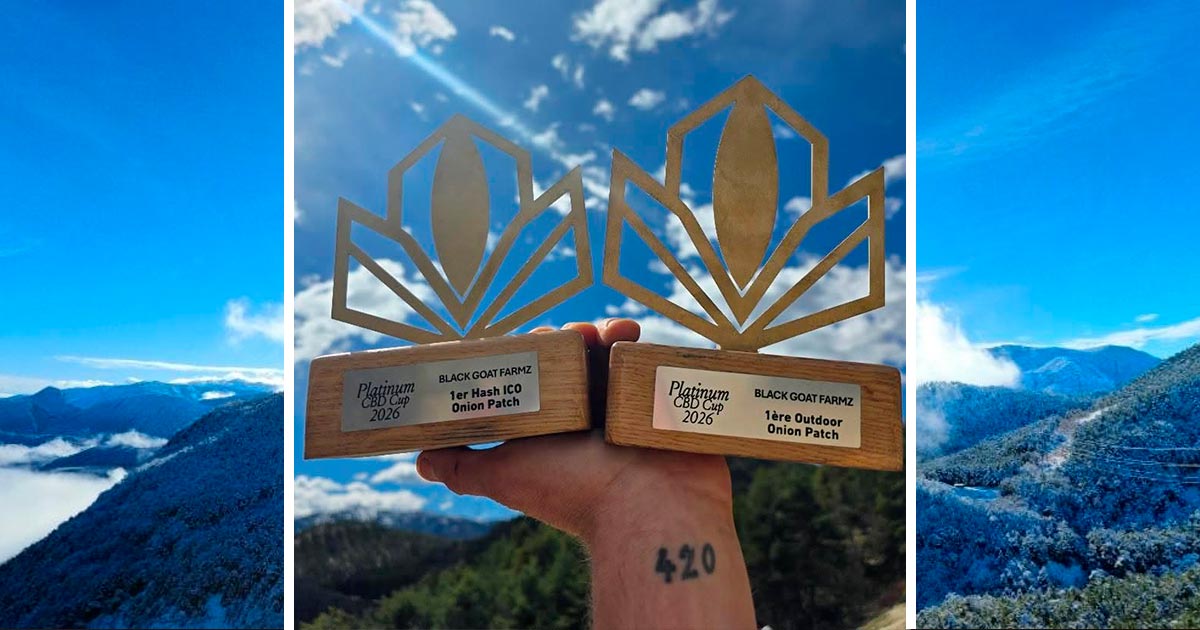
His approach was recently endorsed by one of the most respected CBD events in France: the Platinum Cup, where he won four first prizes in flowers and hashish, including a strain developed through his work, the Onion Patch. An interview with a grower who refuses to view CBD cannabis as a separate category.
A cannabis “farmer,” not a lab breeder
«I consider myself a farmer—so a bit of everything, really—simply passionate about living things,» Galé sums up. The term is important. Here, we’re not talking about a breeder disconnected from the culture, nor a mere producer. Galé advocates a holistic approach: selection, production, processing, extraction, and sales. An integrated, artisanal model.
«I manage every aspect of my farm—from selection and production to hash-making and resale—a 100% artisanal model that’s the complete opposite of industrial operations,» he explains.
This project really began to take shape in 2022, when he managed to acquire «a piece of an abandoned farm» in the Southern Alps. But the story actually begins much earlier. «It’s the culmination of a close connection with cannabis that dates back to my early teens.»
CBD: A Market Dominated by Biomass
When Galé arrived in the CBD, he made a simple observation: most of the strains available aren't designed to produce high-quality flowers or hash.
In Europe, the CBD industry initially developed around an industrial model: mass-producing cannabinoids from biomass using fiber-rich varieties derived from agricultural hemp. The result: plants suited for field cultivation but often unable to meet the organoleptic standards of THC-rich cannabis.
«CBD first emerged on an industrial scale for the production of raw CBD from biomass. The smallholder model requires genetics suited to high-quality flowers or hash, and these are virtually absent from the market.»
In other words: we’ve built a consumer market around plants that were originally intended for something else. For him, the issue is less about the molecule and more about the experience. And that experience comes down to the terpenes, the resin, the flower’s structure, and the smoke test.
Transforming Type 1 into Type 3: A Strategic Choice
At first, Galé thinks the logic is simple: to make Type 3, you have to cross Type 3 with Type 3. But he quickly realizes that another approach is possible.
«At first, I thought the only way to improve a Type 3 strain was to cross CBD with CBD, but then I realized I could start with any strain and stabilize the CBD in it.»
This breakthrough is pivotal. Because it opens up a vast field: that of the entire history of THC breeding as applied to CBD.
«So I had the choice between building on more than 200 years of breeding for fiber quality to make it pleasant to consume, or building on more than 40 years of breeding for medicinal and organoleptic qualities.»
In his view, the conclusion is obvious. Why try to make a base designed for fiber suitable for consumption when you can infuse CBD with everything that modern cannabis has built up over decades?
Breaking Down the Quality Barrier Between the “Types”
The word comes up often in his speech: barrier. Galé isn’t just talking about genetic or legal differences. He’s talking about a cultural divide. For him, Type 3 is still too often seen as a inferior version of cannabis, a substitute.
«I want to break down the quality barrier between the different types, so that Type 3 is no longer seen as «junk» but as an ally for certain times of the day when it's nice to enjoy something of quality without being «smogo.»»
This sentence sums up his entire philosophy: consuming CBD shouldn’t be a compromise. It should be a choice, just like choosing a THC strain, depending on the time of day, your state of mind, and your needs. His goal isn’t to make “adequate” CBD. He wants to make “desirable” CBD.
What he wants to preserve from Type 1… and what he wants to eliminate from industrial hemp
Turning a Type 1 into a Type 3 isn't just about “changing the molecule.” Above all, it's a battle against the traits inherited from fiber hemp.
«The goal is to pass on the trait that determines which cannabinoid will be produced, while retaining as many Type 1 traits as possible—such as the quantity of cannabinoids produced, the quality of the trichomes, and the ability to focus on flowers rather than fiber.»
Above all, he wants to avoid the traits that have given many CBD strains a bad reputation: «Eliminate all characteristics associated with Type 3 fiber, such as a thick stem, dense and bushy foliage, poor flower formation, and tiny trichomes…»
Behind this list lies a diagnosis: the problem with CBD is not just a matter of terpenes, but also of morphology and historical selection.
Mendel, backcrossing, and on-farm labs: a structured selection process
Galé describes a highly organized approach, based on Mendel's laws, with a plan that focuses on a single CBD cross, followed by generations of selection.
«The breeding plan is based on Mendel's laws, and there are many ways to reverse the types, but my plan involves a single cross with a CBD plant, and then I work either with F2/F3 generations, etc., or with backcrosses to Type 1 to better stabilize the traits if necessary.»
The most revealing detail lies elsewhere: the need to analyze each plant. Because Type 3 cannot be guessed—it must be measured.
«Obviously, we need to perform chemotype analyses on each specimen, which is why we've set up a lab on the farm equipped with rapid and reliable analytical methods.»
In terms of timing, he estimates that it will take at least three generations before we start seeing new Type 3s.
«It takes at least three generations for the first new Type 3 models to appear, and that could take 18 months if everything is planned properly.»
The hardest part? Getting rid of the hidden “special characters”
The problem, he says, isn't producing CBD. The problem is producing CBD without carrying the genetic burden of industrial hemp.
«The hardest part is managing to remove as many characters as possible from the T3 fiber, because that's what affects the final quality.»
And some flaws only become apparent at the very end, during the ultimate test: burning, taste, and the overall experience.
«Hidden fiber characteristics that sometimes only become apparent during a smoke test.»
In other words: a plant may look good on paper, but be mediocre in reality.
A selection chosen for aroma and resin, not for yield
While many breeders focus on “commercial” varieties, Galé prioritizes something else: cultural and organoleptic impact.
«First, I look at the impact it has had on the community. Yield doesn't matter, because I'm not trying to create commercial or industrial strains.»
His priority is clear: terpenes first, resin second.
«The flavor profile ranks highest, followed by the quality of the washable resin and bud formation.»
As for resilience or vigor, he lets nature take its course.
«I don't focus much on strength and endurance, but the alpine/Mediterranean climate takes care of that better than I do.»
A brutal but effective selection process: if it survives here, it will survive elsewhere.
GMO Lucid Edition: Thiols, Animal Odors, and Deliberately “Dirty” Cannabis
His first “reverse” success is called GMO Lucid Edition, and it certainly lives up to its name. No fruity or sweet terpenes. Galé embraces animalistic, sulfurous, and sometimes shocking notes… but they’re cult favorites.
«My GMO LUCID EDITION strain is my first successful reverse-breeding project. It is unique in that it is rich in volatile sulfur compounds (VSCs)—thiols that evoke animal-like odors.»
These compounds are part of the DNA of certain legendary strains: «And they’re what make the Skunk, Cheese, Catpiss, and GMO strains so famous.»
This is a far cry from the «lightly lemony» CBD meant to put first-time users at ease, and much closer to the cannabis that connoisseurs seek out.
Onion Patch: Top 4 Finishes at the Platinum Cup
It is with the’Onion Patch, straight out of his GMO, Galé is making a big splash. The result: four first-place prizes at the Platinum Cup.
«I’ve won four first prizes in the hash and flower categories with my »Onion Patch’ strain. This is the first time I’ve entered my results after three years of hard work.”
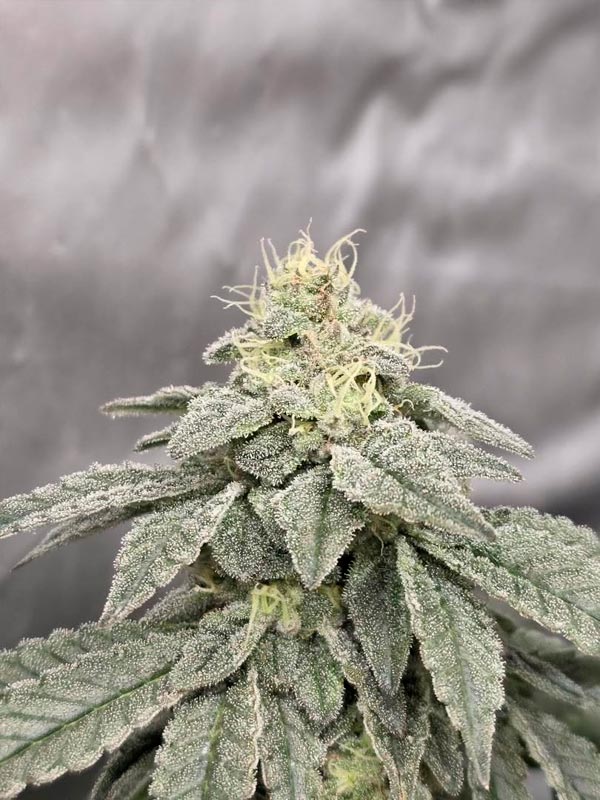
Onion Patch, the first Type 3 specimen derived from GMO
This success is more than just a trophy: it’s also a way to show that the Type 3 can be competitive and desirable when judged by the same criteria as the Type 1. And it also confirms a broader trend: some consumers are no longer just looking for CBD, but for a complete experience.
«This shows that some people are looking for more than just CBD in Type 3: a complete, enjoyable, and clear-headed experience.»
CBC, terpenes, and “local strains”: a view of cannabis as a product of its terroir
Galé doesn't stop at CBD. He says he has found specimens that are particularly rich in CBC, a minor cannabinoid that has yet to be fully explored.
«Nature has provided me with some of the highest CBC-grade specimens currently in existence, with 3.14 % and 4.6 % of CBC.»
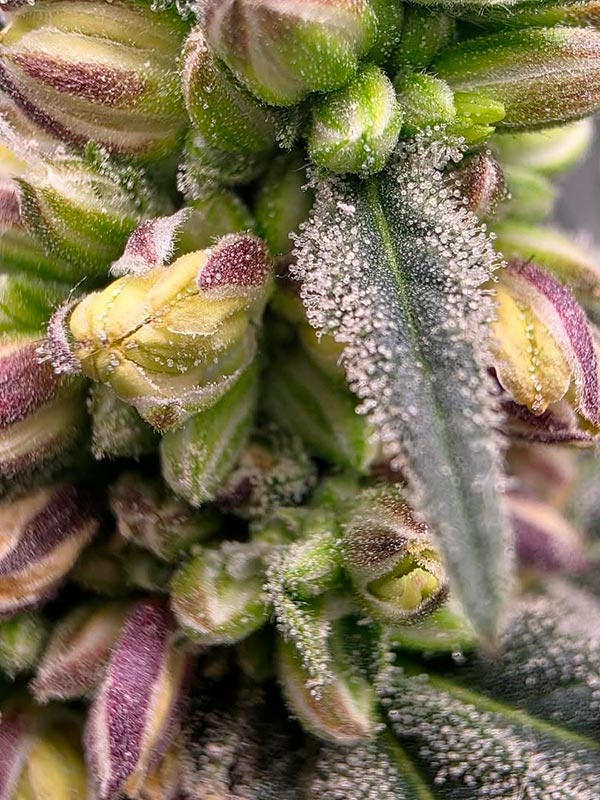
«Pi» male cut onion patch with 3.14 % of CBCa
And he wants to establish this characteristic as a constant. But his most radical view concerns the very notion of “perfect” variety. In his view, it does not exist.
«The best variety will be the one that's local to you—the one that grows where you live.»
He directly links terpenes to the environment and to humans: «Terpenes are produced naturally to adapt to the local climate—the very same climate in which you live.»
Here we see a philosophy that is almost “wine-like”: cannabis as terroir, as adaptation, as a living, rooted product.
A French Legacy in the Making
Beyond breeding techniques and awards, Galé focuses above all on history. On heritage. And on a France that could finally develop its own cannabis culture.
«What really moves me today is seeing us build a new legacy that we will pass on to our children: the culture of cannabis in France.»
The comparison he makes is telling: «It’s like allowing cheese or cold cuts for the first time.»
And he goes even further, raising the idea of a future AOP/AOC-style certification.
Like any breeder, Galé has his favorites: artisanal hash with Frenchy Cannoli, organic and living cultivation with Mendo Dope, mountain breeding with Humboldt Seeds, rigor with Doja. A constellation of influences that clearly reflects his DNA: at once old-school, modern, technical, and cultural.
Z and Type 3: The Next Challenge
Currently, its genetics are not yet widely available to the public, except through its farm store.
«My genetic work developed through Hexagone Genetics is not yet available to the public, except through my farm shop at blackgoatfarmz.fr.»
But he promises an upcoming wave of «new school» Type 3 strains and even some Type 2 (balanced THC/CBD) strains. His next big goal: to bring back Z a pure Type 3, a variety known for being difficult to grow because it is highly recessive.
«Z is very recessive and must be crossed with BX multiple times to continue to be expressed in crosses.»
“Don’t set limits”: A lesson from a farmer-breeder
In conclusion, Galé frames his work within an agricultural context: diversity. He points out that in the 18th century, there was a wide variety of local cabbage varieties, which have now been replaced by a few dominant hybrids.
His message is crystal clear: «Don’t set any limits on yourself when creating new varieties; set specific goals for yourself and document each project thoroughly.»
In a CBD market often dominated by volume, industry standards, and soulless flowers, Galé embodies something else: an attempt to bring Type 3 into the modern era, without compromise. And if the Platinum Cup has confirmed one thing, it’s this: CBD isn’t doomed to remain a niche market, provided it’s treated as cannabis and not just as a derivative product.
























France’s Drug Policy Chief Defends Cannabis Prohibition... and Runs Into the Facts

Cannabis and the Adolescent Brain: French Scientists Make a Key Discovery

EFSA Gives Initial Approval for Synthetic CBD; Natural Extracts Still Pending

Federal Cannabis Reform Once Again on Hold in the United States

Contest: Win a trip to Quebec to experience the hemp harvest firsthand

Bedrocan on Hold Amid Uncertainty Over Medical Cannabis

Newsweed Launches Its Own AI
A new tax of 0.5% could disrupt the hemp industry in Canada

Medical Cannabis and Driving: New South Wales Ends Automatic Penalties for THC

China's Yongji Health Takes Control of Tasmanian Botanics
-
 Cannabis and driving4 weeks ago
Cannabis and CBD: French Drivers Can Now Lose Their License Even Without a Positive Test Result
-

 Cannabis in France1 week ago
Which countries legalized medical cannabis before France?
-
Cannabis in France4 weeks ago
Cannabis Legalization: The LFI Bill Has a Major Problem—THC
-
Cannabis in the Netherlands3 weeks ago
One year after the launch of the Dutch cannabis experiment, the first trends are emerging
-
Business1 week ago
South Korea is preparing to begin local production of medical cannabis to meet rising demand
-
Cannabis in Thailand1 week ago
From the boom in dispensaries to a purely medical approach: Thailand is revising its cannabis policy
-
Cannabis in Argentina2 weeks ago
Argentina Opens Its Market to Hemp Flowers Containing 1% of THC
-
Cannabis in France3 weeks ago
French medical cannabis remains stalled at the Ministry of Health
















You must be logged in to post a comment Login