Two American universities receive a private donation of 9$ million to conduct large-scale research on cannabis

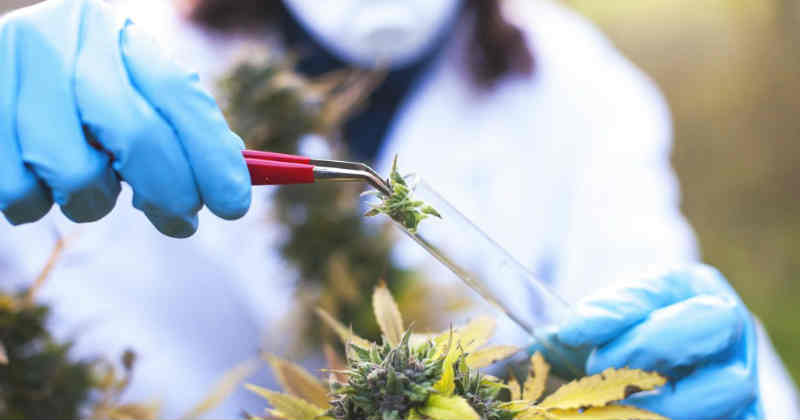
Scientific research on cannabis was severely limited by prohibition. Although research into cannabinoids is on the increase today, certain obstacles remain. The question of funding, for example, remains problematic: public funding is limited, and private funding raises the question of potential conflicts of interest.
The Harvard Medical School and the Massachusetts Institute of Technology (MIT) have just receive a $9 million donation to be shared by a private investor: The Broderick Fund for Phytocannabinoid Research. This is the largest private donation ever made to cannabis research in the United States.
Research limitations
Cannabis and its derivatives are still classified in the most restrictive tier of the U.S. controlled substances list. Visit research is authorized at federal level but under extremely strict conditions. Researchers can only work with cannabis cultivated by the DEA, and not with products currently on the market.
Although the agency has provisions for more research, independent research is still not eligible for public funding due to the controlled status of cannabis. As a result, most research relies on limited private funding, which makes it impossible to conduct studies and the independence of the results cannot be guaranteed.
John Gabrieli, an MIT cognitive science professor associated with the project, explains that it's «incredibly difficult» to get funding for cannabis research: «It's been illegal everywhere until very recently. Without philanthropic support, answering all these questions could take years.
A «philanthropic» donation»
“The absence of scientific research The lack of basic knowledge allows people to put forward unfounded hypotheses that are either anecdotal or based on ancient science. For generations we haven't been able to study cannabis for all sorts of societal reasons. This has to stop now, just as prohibition has to stop,» explains Charles R. “Bob” Broderick, the generous donor. The latter has invested heavily in the emerging cannabis industry in the USA and Canada - notably in Aphria and Tweed Marijuana, the subsidiary of Canopy - through its investment fund Uji Capital.
While he would obviously benefit from positive results, the researchers and universities at Harvard and MIT have guaranteed that he will have no influence on the research process and are committed to publishing the results even if they show cannabis to be ineffective or harmful. In addition, both universities are credible and respected institutions with independent funding policies.
Researchers at other universities also welcomed the initiative: «Research in this sphere has really been slow to develop,» explains Dr. Igor Grant, Director of the Medical Cannabis Research Center at the University of California, San Diego. He believes that this donation «will allow [universities] to move forward with this kind of research". research that is generally difficult to finance».».
Studies in preparation
MIT students plan to use plant extracts to study the effects of cannabis on people suffering from schizophrenia. The aim is to understand the correlation between the disease and the patients' pre-disposition to cannabis. daily cannabis use. The researchers want to study the effects of THC and CBD on cognition schizophrenia patients and examine whether chronic exposure to these molecules is likely to lead to changes in the structure of the cells involved in schizophrenia.
This could prove or disprove once and for all the hypotheses concerning the causal link between schizophrenia and cannabis, as well as drawing conclusions about the possible consequences of chronic exposure in young people. Other MIT researchers will examine the effects of cannabis on attention and working memory. Finally, still others will study whether cannabis components can be effective in the treatment of autism and Huntington's disease, a degenerative neurological disorder.
At Harvard, the $4.5 million donation will be used to investigate the effects of the various cannabinoids on memory, appetite and stress. «Cannabis has almost 100 different cannabinoids. We know very little about the specific effect of each of them on the nervous system,» explains Bruce Bean, a Harvard neurobiology professor associated with the project. He points out that some studies suggest that cannabis relieves pain and aids sleep, but it's not known exactly which ingredients cause these effects. This data could pave the way for further research.














Medical Cannabis in Germany: THC Prices Vary by a Factor of 12

France already has 3,000 cannabis retail outlets. None of them are legal.

Morocco's exports of legal cannabis have expanded to 15 countries

Aurora Cannabis Doubles Its Production Capacity in Germany

Tilray is accelerating its operations in Europe thanks to a license in Portugal

Boston will host the 10th annual State of the Cannabis Industry Conference on October 26

A DEA report confirms that there are no fatal cannabis overdoses

A British patient is challenging the NHS's refusal to reimburse medical cannabis

October 2026 CBD Highlights: 10 Strains and Hash to Discover from 5 French Producers

CBD in France: Traceability, Retail Stores, THC and Driving… What the New Bill Proposes
-
 Business2 weeks ago
The legal cannabis market in New York exceeds 4 billion $ in revenue
-

 Cannabis in France3 weeks ago
Which countries legalized medical cannabis before France?
-
Business3 weeks ago
South Korea is preparing to begin local production of medical cannabis to meet rising demand
-
Cannabis in Thailand3 weeks ago
From the boom in dispensaries to a purely medical approach: Thailand is revising its cannabis policy
-
Cannabis and driving3 weeks ago
Medical Cannabis and Driving: New South Wales Ends Automatic Penalties for THC
-
Cannabis in Argentina4 weeks ago
Argentina Opens Its Market to Hemp Flowers Containing 1% of THC
-
Autism3 weeks ago
Autism and Cannabis: Results from the First Placebo-Controlled Trial of NTI164
-
Cannabis in France2 weeks ago
France’s Drug Policy Chief Defends Cannabis Prohibition... and Runs Into the Facts

















You must be logged in to post a comment Login