
In the USA, the number of children accidentally eating an edible is rising steadily

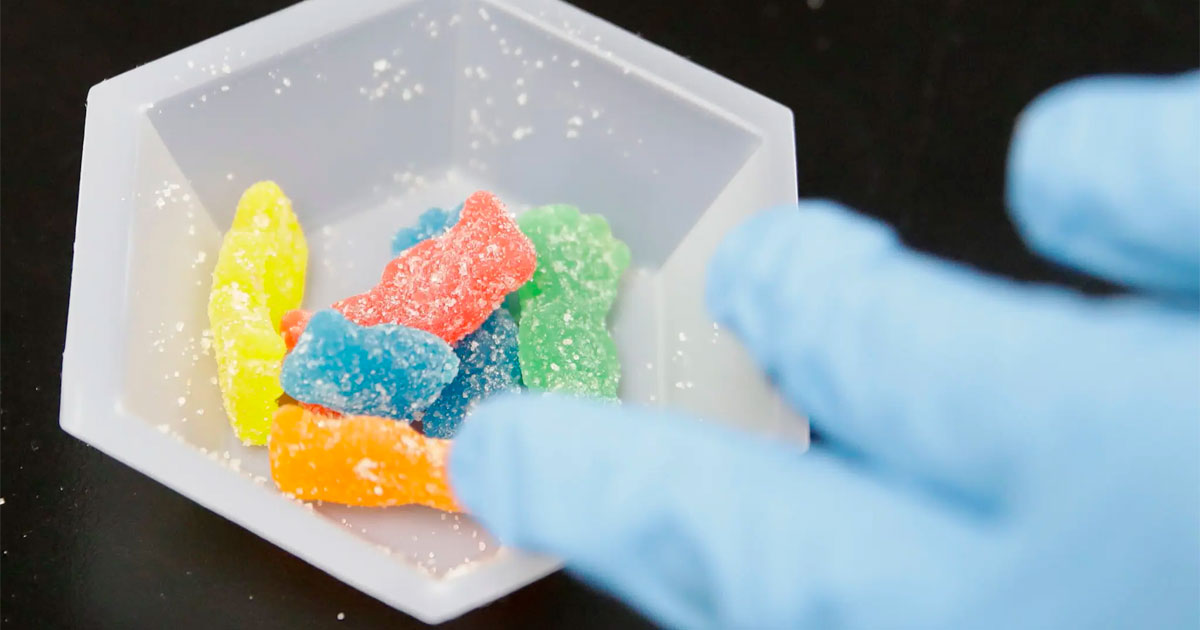
According to a new study, accidental consumption edibles, such as brownies or cannabis-infused candies, among children under 6 has increased in recent years, while the number of’U.S. states that have legalized cannabis It has more than doubled in five years.
The study, published in Pediatrics, reveals that in 2017, there were just over 200 cases of accidental ingestion of cannabis edibles involving children under the age of 6 were reported. In 2021, that number rose to 3,054, an increase of 1,375 %.
In total, 7,043 cases of exposure to ingestible cannabis were reported to the poison control center between 2017 and 2021 among children under the age of 6.
«These exposures can cause significant toxicity and are responsible for a growing number of hospitalizations,», the authors wrote.
Main place of ingestion: the home
The vast majority of children found these edibles in their own homes. While most children suffered only minor injuries, 22.7 % of the exposed children had to be hospitalized, and 8 % of them—573 children over the five years of the study—required critical care.
Marit Tweet, an emergency physician at SIU Medicine in Springfield, Illinois, is the lead author of the study. Tweet’s curiosity about the subject was piqued in 2019, when she began a research fellowship at the Illinois Poison Center.
«The big buzz at the time was that cannabis was going to be legalized for recreational use by adults, January 1, 2020 »in Illinois," she said.
A a study conducted in Colorado showed that the number of children aged 10 and under who were accidentally exposed to marijuana-based products increased between 2009 and 2015.
Tweet therefore wanted to know if this would also happen on a national scale, as more states legalize cannabis. She was particularly concerned about children aged 5 and under, an age group that is especially vulnerable to accidental poisoning.
«This age group accounts for about 40 % of all calls received by poison control centers nationwide,» explains Ms. Tweet.
The authors proposed several possible explanations for the increase in cases, including the time spent at home during the early months of the COVID-19 pandemic, when schools and daycare centers were closed, and the greater availability of legal cannabis products over the past decade.
They also note that many edible cannabis products are «marketed in brightly colored, eye-catching packaging, similar to the marketing style used for candy and snacks,» which contributes to their appeal to young children.
Packaging and Education
Tweet and his colleagues analyzed the data from the National Poison Data System, which is based on calls received by the 55 regional poison control centers serving the United States and its territories.
Finally, the study draws attention to the way in which the edibles are packaged and sold, according to Nora Volkow, who heads the National Institute on Drug Abuse (NIDA).
«If you’ve ever been curious, go to a dispensary or a store that sells cannabis products—which, of course, as a curious person, I’ve done,» says Volkow. «And the edibles are extremely appealing in terms of packaging.».
She adds that parents and caregivers who consume cannabis-infused edibles should store them in child-resistant containers and keep them out of children’s reach.
«It is important for healthcare providers to be aware of this in their practice, and this represents a significant opportunity for education and prevention,» the study concludes.
























China's Yongji Health Takes Control of Tasmanian Botanics

Autism and Cannabis: Results from the First Placebo-Controlled Trial of NTI164

Which countries legalized medical cannabis before France?

From the boom in dispensaries to a purely medical approach: Thailand is revising its cannabis policy

South Korea is preparing to begin local production of medical cannabis to meet rising demand

In the United States, cannabis use among high school students has reached an all-time low

Medical cannabis use surges by 64 % in Denmark

Canopy Growth Enters the U.K. Market with Four Canadian Strains

CBD: Full-Spectrum Extracts Under Threat in Greece

Medical Cannabis and Back Pain: Opioid Use Has Dropped by 90 % in 10 Years
-
 Cannabis and driving2 weeks ago
Cannabis and CBD: French Drivers Can Now Lose Their License Even Without a Positive Test Result
-
Cannabis in France3 weeks ago
Cannabis Legalization: The LFI Bill Has a Major Problem—THC
-

 Cannabis in France22 hours ago
Which countries legalized medical cannabis before France?
-
Cannabis in the Netherlands2 weeks ago
One year after the launch of the Dutch cannabis experiment, the first trends are emerging
-
Cannabis in France2 weeks ago
French medical cannabis remains stalled at the Ministry of Health
-
Cannabis in Argentina1 week ago
Argentina Opens Its Market to Hemp Flowers Containing 1% of THC
-
Business2 weeks ago
The United Kingdom Is Moving Closer to a Regulated CBD Market
-
Cannabis in France1 week ago
Rima Hassan: When «Drugs» Become a Political Weapon
















You must be logged in to post a comment Login