Why do people react so differently when they use cannabis?

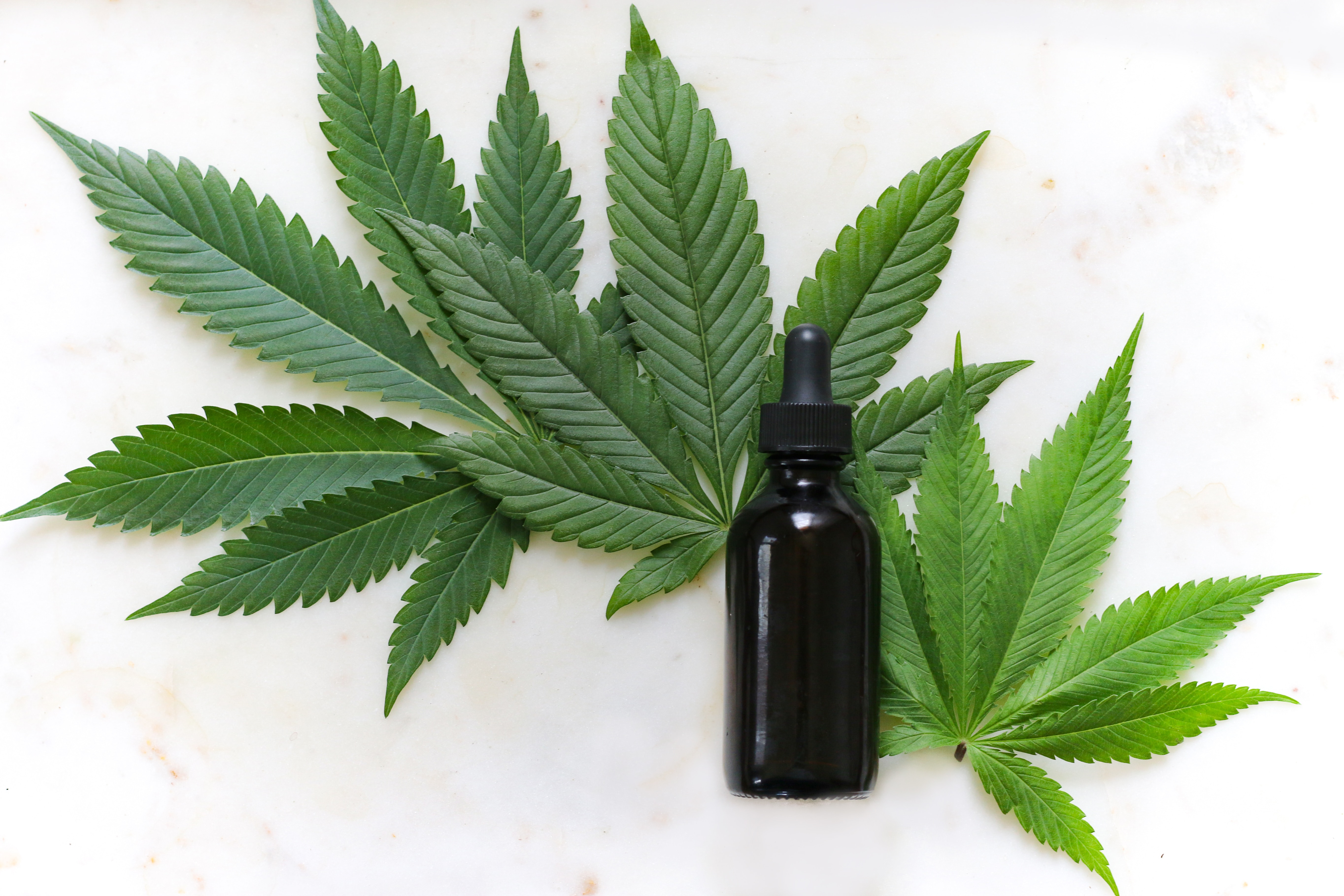
Why does cannabis allow one person to have a pleasant experience, and another to have a paranoid attack? Is there a scientific explanation behind this phenomenon? That's what Dr. Christopher Norris and his research team set out to find out. The aim of the’study is to understand why cannabis creates «divergent psychological effects», depending on who uses it.
Cannabis' main psychoactive compound, Δ9-tetrahydrocannabinol (THC), is capable of producing bivalent rewarding or aversive affective states, through interactions with the mesolimbic system. However, the precise mechanisms of these interactions are not yet understood. Substantial evidence points to the nucleus accumbens (NAc) as an important domain for the effects of THC on cognitive and affective processing. The accumbens is a highly complex limbic structure involved in the processing of reward- and aversive-related behaviors. The ANc is involved in both reward and aversive processing, and also in motivational salience, processing of emotional stimuli, reinforcement and dependence.
The study was carried out on rats, separated into two groups. In the first group, the researchers administered THC in the form of a micro-infusion. The second was the control group, so the rats were not drugged. The scientists then placed the control rats in a central cage. For the sociability test, a male rat on THC was placed in the central cage for 5 minutes, where the researchers were able to examine its behavior and reactions to other rats. Further social experiments were carried out, before the rats were euthanized to study their brains.
Histological analysis revealed which parts of the brain had been most stimulated. If it's the anterior (front) part of the brain, consuming cannabis will produce gratifying effects. If it's the posterior (back) region, the most sensitive to THC, it will produce negative reactions.
This is good news for those who suffer from paranoia when using cannabis, since’a study by Oxford University had suggested in 2014 that anxious, distressed people with low self-esteem were more likely to have a paranoid attack. It would seem, however, that the cause is genetic rather than psychological.
The next step should be to carry out this experiment on human brains.














Medical Cannabis in Germany: THC Prices Vary by a Factor of 12

France already has 3,000 cannabis retail outlets. None of them are legal.

Morocco's exports of legal cannabis have expanded to 15 countries

Aurora Cannabis Doubles Its Production Capacity in Germany

Tilray is accelerating its operations in Europe thanks to a license in Portugal

Boston will host the 10th annual State of the Cannabis Industry Conference on October 26

A DEA report confirms that there are no fatal cannabis overdoses

A British patient is challenging the NHS's refusal to reimburse medical cannabis

October 2026 CBD Highlights: 10 Strains and Hash to Discover from 5 French Producers

CBD in France: Traceability, Retail Stores, THC and Driving… What the New Bill Proposes
-
 Business2 weeks ago
The legal cannabis market in New York exceeds 4 billion $ in revenue
-

 Cannabis in France3 weeks ago
Which countries legalized medical cannabis before France?
-
Business3 weeks ago
South Korea is preparing to begin local production of medical cannabis to meet rising demand
-
Cannabis in Thailand3 weeks ago
From the boom in dispensaries to a purely medical approach: Thailand is revising its cannabis policy
-
Cannabis and driving3 weeks ago
Medical Cannabis and Driving: New South Wales Ends Automatic Penalties for THC
-
Cannabis in Argentina4 weeks ago
Argentina Opens Its Market to Hemp Flowers Containing 1% of THC
-
Autism3 weeks ago
Autism and Cannabis: Results from the First Placebo-Controlled Trial of NTI164
-
Cannabis in France2 weeks ago
France’s Drug Policy Chief Defends Cannabis Prohibition... and Runs Into the Facts

















You must be logged in to post a comment Login