New study warns of risk of heavy metals in vape pens

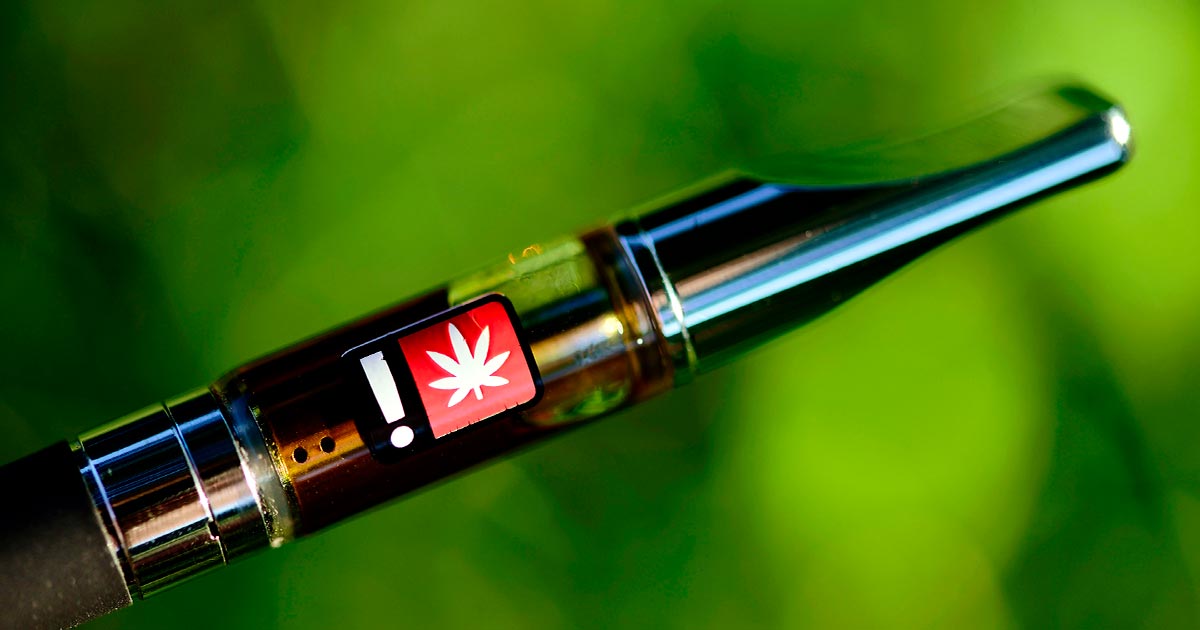
As the spray cartridges containing cannabis extracts are gaining in popularity and availability, their use is raising concerns about exposure to heavy metals.
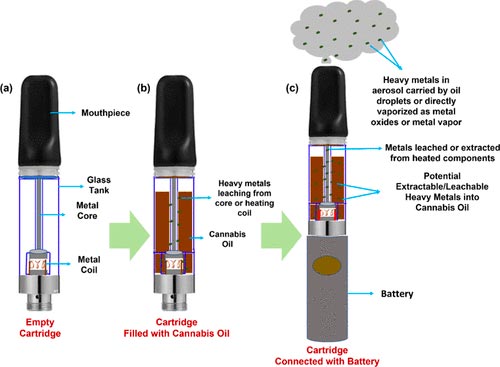
A study recently published in Chemical Research in Toxicology tested 13 American brands, as well as several standard cartridges filled with various extracts. The tests suggest that chromium, copper, nickel, as well as small amounts of manganese, lead and tin, may leak over time from the vape material into the vape liquid, and then into the aerosol produced by the vape.
Finally, the researchers believe that the regulatory requirements for heavy metal testing need to be reconsidered to properly reflect the real risks presented by cannabis vaping products, which normally represent a healthier way to consume cannabis.
Metals found in the liquids of commercial vaping products
For this study, the researchers purchased a number of «standard» cartridges and filled them with either virgin concentrate, virgin distillate, terpenized concentrate or terpenized distillate. Thirteen different brands of THC were also purchased. Several of these were taken apart and ground into small pieces, so that the basic composition of typical vaping equipment could be assessed.
Tests on cannabis extracts were carried out prior to vaporization, and again after two-thirds of the liquid had been consumed. In the pre-vaporized samples, measurable levels of chromium, copper and nickel were found, as well as small amounts of manganese. However, levels of the classic «big four» heavy metals that are routinely tested for - arsenic (As), cadmium (Cd), mercury (Hg) and lead (Pb) - were all well below regulatory limits.
These same metals were detected in extract samples after vaping, but in generally higher average quantities than those recorded before vaping.
«The results suggest that the cartridges themselves leach [ed. note: emit] metals, and potentially at higher rates when the components are heated,» the scientists warned.
«Since most states and other regulatory agencies generally only require screening for As, Cd, Hg and Pb, these potential exposure profiles would pass current regulatory standards.»
Metals can be transferred from cartridge components to inhaled vapour
Aerosols produced by commercial cartridges, as well as a terpenized distillate model and a terpenized concentrate, were also analyzed for the presence of ten different heavy metals: arsenic, cadmium, cobalt, chromium, copper, mercury, manganese, nickel, lead and tin.
Although there is no single, accepted standard method for analyzing cannabis aerosols, the team at Medicine Creek Analytics recently published an effective method for screening aerosols for heavy metals, which was also used in this study.
Vaping devices were roughly sorted into three groups - model systems, commercial vapes with a cartridge design similar to the models («Group 1» cartridges), and a third group consisting of various material designs («Group 2» cartridges) - and the cannabis extracts in each were tested by the team.
«Copper, nickel and manganese were detected in all three groups,» the researchers reported. «Chromium was detected in all groups except the terpene model systems, and lead was detected in both model systems and Group 2 cartridges.»
«Group 2 cartridges generally showed higher concentrations overall, but it's unclear whether this is due to the difference between cartridge components, or battery voltage/temperature inconsistencies.»
To confirm whether the source of this contamination was the leaching of heavy metals from the vape material into the oils and the resulting aerosol, the researchers conducted an additional experiment in which six of the model cartridges were filled with unterpenized model concentrate. Three of these were left in an oven at room temperature and the others in an oven at 42 degrees Celsius to simulate warm conditions, such as the interior of a car. The concentrate contained in these cartridges was removed and tested for heavy metals after three weeks, then after seven months.
Before being added to the cartridges, the levels of metals present in the concentrate were all below the limit of detection/limit of quantification values for each metal. After seven months at room temperature, significant amounts of copper and nickel were observed. Cartridges stored at 42 degrees Celsius showed even higher levels of these metals, as well as notable levels of lead, tin, chromium and manganese.























Medical Cannabis in Germany: THC Prices Vary by a Factor of 12

France already has 3,000 cannabis retail outlets. None of them are legal.

Morocco's exports of legal cannabis have expanded to 15 countries

Aurora Cannabis Doubles Its Production Capacity in Germany

Tilray is accelerating its operations in Europe thanks to a license in Portugal

Boston will host the 10th annual State of the Cannabis Industry Conference on October 26

A DEA report confirms that there are no fatal cannabis overdoses

A British patient is challenging the NHS's refusal to reimburse medical cannabis

October 2026 CBD Highlights: 10 Strains and Hash to Discover from 5 French Producers

CBD in France: Traceability, Retail Stores, THC and Driving… What the New Bill Proposes
-
 Business2 weeks ago
The legal cannabis market in New York exceeds 4 billion $ in revenue
-

 Cannabis in France3 weeks ago
Which countries legalized medical cannabis before France?
-
Business3 weeks ago
South Korea is preparing to begin local production of medical cannabis to meet rising demand
-
Cannabis in Thailand3 weeks ago
From the boom in dispensaries to a purely medical approach: Thailand is revising its cannabis policy
-
Cannabis and driving3 weeks ago
Medical Cannabis and Driving: New South Wales Ends Automatic Penalties for THC
-
Autism3 weeks ago
Autism and Cannabis: Results from the First Placebo-Controlled Trial of NTI164
-
Cannabis in France2 weeks ago
France’s Drug Policy Chief Defends Cannabis Prohibition... and Runs Into the Facts
-
CBD1 week ago
In Brazil, researchers are developing an innovative CBD eye drop

















You must be logged in to post a comment Login